Right angle drills for stud bays and joist boring
Milwaukee 2708-20 M18 FUEL Hole Hawg leads for augers and self feed bits in joists, thanks to a 1/2 inch chuck and two speed ranges. DeWalt DCD740C1 fits a 14 inch stud bay on its 4 inch head. Bosch PS11-102 pivots into cabinet backs.
Milwaukee 2708-20 M18 FUEL Hole Hawg suits anyone pushing self feed bits through framing all day. Low range holds 350 RPM where big bits need torque, and the 1/2 inch chuck grips their shanks. Bulk is the tradeoff, because a head that long cannot drop into a standard stud bay.
Two distinct tools share the name. Compacts slip between studs for cable holes and driving; stud and joist drills swing augers through structural timber. We compared head length, chuck size, speed ranges, battery platforms and clutch behavior, then read owner feedback on kickback, stalling and runtime.
What matters most
What to look for in a right angle drill Three numbers settle most of this decision. Chuck size caps bit diameter, with 3/8 inch covering spade bits and small hole saws while 1/2 inch opens up augers and self feed bits. Speed range tells you whether one tool can drive screws slowly and still bore quickly. Head length decides where it physically fits. Brushless motors and battery platform affect runtime and cost, not capability. Clutch or kickback control belongs on any tool turning bits over about 2 inches.
How head length decides where the tool fits Studs at 16 inches on center leave roughly 14 inches of clear bay. Compacts near 4 inches, like the DeWalt DCD740C1, slide in with room left to angle the bit. Anything approaching 9 inches, the Hole Hawg included, has to work from the open face of the wall. Joist bays are more forgiving, since you can attack from below. Measure the tightest spot you actually work in before buying, because torque you cannot get to the hole is wasted.
Best right angle drills for electrical and plumbing rough in Cable runs mean many small holes, so a light body beats raw torque. Electricians drilling ceiling boxes tend to reach for the Milwaukee 2415-20, which stays steady overhead on an M12 pack. Cabinet installers get more from the pivoting Bosch PS11-102, since the grip folds away from the panel. Plumbers boring for 1/2 inch and 3/4 inch supply lines want the 1/2 inch chuck of the Makita XAD02Z. Sharp bits matter as much as the drill; a dull spade bit stalls any compact.
Framing, joists and kickback control Self feed bits pull themselves into timber, so the tool resists twist rather than supplying push. Torque that high makes kickback the real hazard, which is why the 2708-20 carries AUTOSTOP and the DWD460 uses an electronic clutch. Fit the side handle for any bit over about 2 inches and keep your body out of the swing path. Corded models suit remodel days spent boring one wall; cordless wins wherever a cord and a ladder fight each other. Plan on a second battery if you choose cordless for a full day of augering.
Our top picks

Milwaukee 2708-20 M18 FUEL Hole Hawg Right Angle Drill
Two gear ranges split the work: 350 RPM for self feed bits, 950 RPM for augers and hole saws. AUTOSTOP kickback control cuts power the instant the tool senses a bind, which matters at this torque. Milwaukee ships it bare, so budget for an M18 pack and charger if the platform is new to you.
Pros
- Drives large self feed bits through joists
- AUTOSTOP kickback control saves wrists
- Two speed gearbox covers augers and hole saws
Cons
- Long head will not fit a 14 in stud bay
- Sold as a bare tool

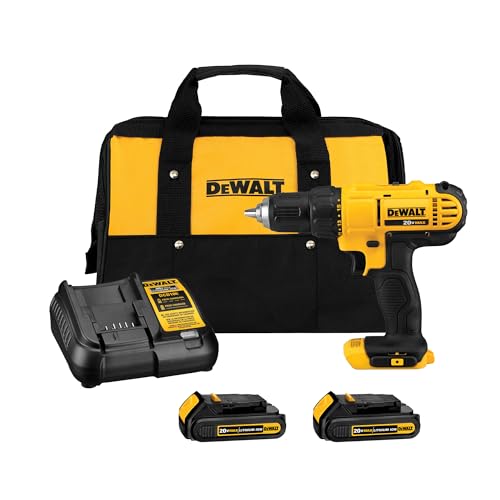
DeWalt DCD740C1 20V MAX Right Angle Drill
Four inches from chuck to tail means it drops into a framing bay the Hole Hawg has to work around. Low range drives screws with control while high range spins to 2,000 RPM for pilot holes. Kit form brings a compact 20V pack, a charger and a bag, so nothing else is needed on day one.
Pros
- 4 in head clears a standard stud bay
- Arrives as a kit with battery and charger
- Dual range covers driving and drilling
Cons
- 3/8 in chuck limits large auger bits
- Brushed motor shortens runtime per charge

Makita XAD02Z 18V LXT Brushless Right Angle Drill
Makita puts a 1/2 inch chuck on an 18V body, landing between the compact and framing classes. Low range near 350 RPM turns hole saws, and high range reaches 1,400 RPM for twist bits. A rubberized paddle switch feeds power gradually, which helps when a bit starts to grab.
Pros
- 1/2 in chuck accepts larger bit shanks
- Brushless motor stretches runtime per pack
- Paddle switch gives fine speed control
Cons
- Bare tool only
- Taller head than 3/8 in compacts

Bosch PS11-102 12V Max Right Angle Drill
Five locking head positions let the grip sit inline, angled or square to the bit. That flexibility reaches cabinet backs and under sink panels where a fixed head jams against the frame. Output stays modest, which is the price of a 12V body this short.
Pros
- Five head positions reach awkward angles
- Light enough for long overhead stints
- Short 12V body keeps overall length down
Cons
- Not suited to large hole saws
- Single speed range only

Milwaukee 2415-20 M12 Right Angle Drill
About 3.5 inches of head and an M12 pack keep the whole tool light on a ladder. Speed stops near 800 RPM, which fits driving and pilot holes rather than heavy boring. Existing M12 owners only need the bare tool, since batteries carry over from drivers and lights.
Pros
- Stays controllable above shoulder height
- Short head reaches inside cabinets
- Shares M12 packs with other tools
Cons
- 800 RPM ceiling slows larger bits
- Bare tool with no battery

DeWalt DWD460 Stud and Joist Drill
Mains power runs self feed bits for a full shift with no fuel gauge to watch. Two mechanical speeds split duty between 300 RPM for big bits and 1,200 RPM for smaller holes. An electronic clutch kills the motor on a bind, and the two position side handle gives you something solid to brace.
Pros
- No battery to run flat mid hole
- Electronic clutch limits kickback
- Keyed 1/2 in chuck grips big augers
Cons
- Cord management on ladders is awkward
- Heavier than any cordless compact here

Ryobi P241 18V ONE+ Right Angle Drill
Cheapest way into a right angle tool for anyone already holding ONE+ packs. Speed peaks near 1,100 RPM through a 3/8 inch chuck, which handles cable holes and light hole saw work. Sustained framing loads will stall it, so treat it as an occasional use drill.
Pros
- Short head fits a standard stud bay
- Runs on any ONE+ battery
- Light enough for one handed use
Cons
- Stalls under sustained heavy load
- No two speed gearbox
Compared at a glance
| # | Model | Chuck | Best for | Score | Price |
|---|---|---|---|---|---|
| 1 | Milwaukee 2708-20 M18 FUEL Hole Hawg Right Angle Drill | 1/2 in | Best overall | 9.4 | Check price |
| 2 | DeWalt DCD740C1 20V MAX Right Angle Drill | 3/8 in keyless | Best value | 9.1 | Check price |
| 3 | Makita XAD02Z 18V LXT Brushless Right Angle Drill | 1/2 in keyless | Best for LXT battery owners | 9.0 | Check price |
| 4 | Bosch PS11-102 12V Max Right Angle Drill | 3/8 in keyless | Best for tight spaces | 8.8 | Check price |
| 5 | Milwaukee 2415-20 M12 Right Angle Drill | 3/8 in keyless | Best for overhead work | 8.6 | Check price |
| 6 | DeWalt DWD460 Stud and Joist Drill | 11 amp corded | Best corded for heavy boring | 8.4 | Check price |
| 7 | Ryobi P241 18V ONE+ Right Angle Drill | 3/8 in keyless | Best budget | 8.0 | Check price |
Frequently asked questions
What is a right angle drill used for?
Boring and driving where a standard drill body will not fit: between studs, inside cabinets, under sinks and between floor joists. Electricians run cable through framing with them. Framers use the larger versions to swing self feed bits through plates and joists.
How small a space can a right angle drill fit?
Compacts measure roughly 3.4 to 4 inches from chuck to tail, which clears a 14 inch stud bay with room to spare. Pivoting tools such as the Bosch PS11-102 squeeze tighter because the grip folds out of line. Stud and joist drills need an open wall face.
Is a 3/8 inch chuck enough for a right angle drill?
For cable holes, small spade bits and driving, yes. Augers and self feed bits past roughly 2 inches need the shank support of a 1/2 inch chuck. Anyone who does both jobs tends to land on the Makita XAD02Z.
Corded vs cordless right angle drill: which is better?
Cordless wins on ladders, in crawl spaces and anywhere a cord snags on framing. Corded tools like the DWD460 win on long boring sessions, since battery drain never interrupts a hole. Plenty of trades keep one of each.
Can a right angle drill replace a regular drill?
No. Offset heads trade top speed and balance for access, and most stop well short of a standard drill driver. Keep it as the second tool for holes you cannot otherwise reach.
Which right angle drill is best for electricians?
Short and light beats powerful, because most electrical holes are small and often overhead. Milwaukee 2415-20 and DeWalt DCD740C1 both clear a stud bay and stay controllable at shoulder height. Leave the 1/2 inch chuck tools to framing crews.
Do right angle drills kick back?
Yes, and harder than a straight drill because the offset head multiplies the twist. Bind a large bit and the body swings toward your wrist. Kickback sensors and electronic clutches cut power early, while a side handle gives you leverage to hold it.
Does a right angle drill need a side handle?
Fit one for any bit over about 2 inches. Small pilot holes are fine with a hand on the body. Framing tools include a handle for a reason, so attach it before the first self feed bit.
How many RPM do you need in a right angle drill?
Around 300 to 400 RPM suits self feed bits and large hole saws, where torque matters more than speed. Twist bits and driving want 1,000 RPM or more. A two range gearbox covers both, which single speed compacts cannot.
Is a cordless right angle drill worth it for occasional DIY?
Worth it if you already own batteries on a platform, since a bare tool like the Ryobi P241 handles cable holes and light hole saw work. Buying a new platform for one weekend job is harder to justify. Renting a stud and joist drill makes more sense for a single round of heavy boring.
The bottom line
Milwaukee 2708-20 M18 FUEL Hole Hawg is the pick when the job involves augers and self feed bits, because it holds 350 RPM under load and stops itself on a bind. Anyone wiring a remodel should buy the DeWalt DCD740C1 instead: its 4 inch head enters the bay, and the kit includes a battery. Occasional users already on ONE+ get enough drill from the Ryobi P241 for cable runs, provided they accept it will stall in framing.
Jake Monroe
Jake worked as a residential contractor for over a decade before shifting to full-time writing. He evaluates power tools, hand tools and workshop gear through the lens of someone who has actually used them on job sites, not just read the box.