How Often Should a Table Saw Blade Be Replaced for Clean Cuts?
There is no fixed mileage number. A table saw blade should be replaced or sharpened once cuts start showing burn marks, splintering, or you need noticeably more feed pressure to push material through, which for a hobbyist cutting a few hours a week often works out to once every one to three years, while daily production use can need attention every few months.
The signs that actually matter more than a timeline
Burning on the cut edge, tear out on the underside of plywood, chipping along laminate edges, and needing to push harder than usual to feed material through are all more reliable indicators of a dull blade than any calendar based schedule.
What actually dulls a blade in the first place
Carbide tips wear down gradually as they cut against wood grain, resin and pitch buildup from softwoods reduces effective sharpness long before the carbide itself wears, and hitting embedded nails or staples in reclaimed lumber can chip a tooth instantly.
Sharpening vs replacing
Carbide tipped blades can usually be professionally resharpened two to three times before the remaining carbide gets too thin to hold an edge safely. Resin buildup, on the other hand, often just needs cleaning with a blade and bit cleaner rather than sharpening or replacement at all.
Blade type changes the math
A general purpose combination blade dulls more slowly under mixed use since its tooth geometry balances rip and crosscut work. A rip blade with fewer, larger teeth stays sharp longer per board foot because each tooth removes more material less often, while a fine crosscut blade with many thin teeth dulls faster relative to how it feels in use, since its edges are thinner to begin with.
Material matters as much as hours
Cutting MDF, plywood with glue heavy layers, or pressure treated lumber wears a blade noticeably faster than clean hardwood or softwood, since the resin, glue, and chemical treatments in those materials are more abrasive to the cutting edge than plain wood fiber.
A simple maintenance habit that extends blade life
Cleaning pitch and resin buildup off the blade regularly keeps it cutting like new for far longer than tooth sharpness alone would suggest, since a gummed up blade can feel dull and burn wood even when the carbide edges underneath are still in decent shape.
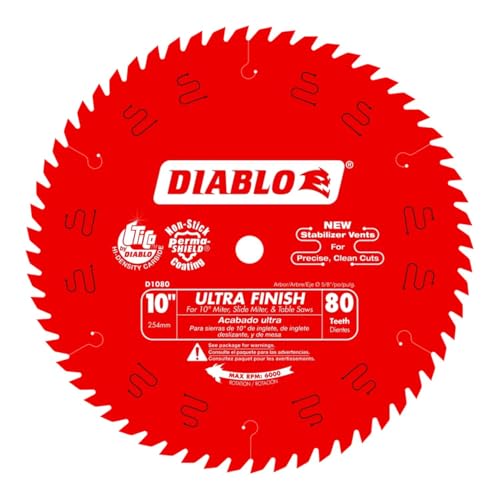
Diablo D1080X 10 Inch 80 Tooth Fine Finish Blade
A fine tooth crosscut blade commonly used for clean cuts on plywood and laminate where chip out is the main concern.

Freud LU83R011 10 Inch 50 Tooth Combination Blade
A general purpose combination blade built to handle both rip and crosscut work without swapping blades constantly.
Questions worth asking
How do I know my table saw blade is actually dull vs just dirty?
Clean the blade first with a dedicated blade and bit cleaner, then make a test cut. If burning and rough edges persist on clean wood after cleaning, the blade itself is dull rather than just gummed up.
Can a resin coated blade be cleaned instead of replaced?
Yes, in most cases. A soak or spray with a pitch and resin remover followed by a soft brush restores much of the cutting performance that looked like dullness but was really just buildup.
How many times can a carbide blade be resharpened?
Most carbide tipped blades can handle two to three professional sharpenings before the remaining carbide is too thin to hold a safe, durable edge, after which replacement is the better option.
Does blade material affect replacement frequency?
Carbide tipped blades hold an edge far longer than plain steel blades, which have mostly been phased out for serious work since they dull quickly and cannot be resharpened to the same standard.
Why does my saw burn the wood even with a sharp blade?
Burning can also come from feeding too slowly, a blade height set too low or high for the material, or a rip fence that is not perfectly parallel to the blade, not just from dullness.
Is it normal for a new blade to need adjustment out of the box?
Most new blades cut well immediately, but it is worth checking that the arbor washer and nut are seated correctly and that the blade runs true, since a bent or warped new blade is rare but possible.
Does the number of teeth affect how often a blade needs sharpening?
Blades with more, thinner teeth tend to dull faster per cutting hour than blades with fewer, heavier teeth, since each individual edge is thinner and does proportionally more of the cutting work.
Can cutting plywood ruin a blade faster than solid wood?
Yes, the glue lines between plywood layers are more abrasive to a cutting edge than solid wood grain, which is one reason dedicated plywood blades exist separately from general purpose ones.
How much does blade wobble affect cut quality?
Even slight wobble from a bent blade or worn arbor bearing shows up as inconsistent cut width and rough edges, and no amount of sharpening fixes a wobble problem since it is mechanical, not a sharpness issue.
Should I use a different blade for rip cuts vs crosscuts?
For the cleanest results yes, since rip blades and crosscut blades use different tooth geometry optimized for each cut direction, though a quality combination blade is a reasonable middle ground for most home shops.
What is the lifespan difference between a budget and premium blade?
Premium blades generally use higher grade carbide and more precise tooth grinding, which holds an edge longer and resharpens more cleanly, though a budget blade can still be perfectly adequate for occasional use.
Can hitting a nail in reclaimed wood permanently damage a blade?
It can chip one or more teeth instantly, and a chipped tooth usually cannot be fully restored by sharpening alone, which is a common reason an otherwise young blade needs early replacement.
Is it worth keeping a dedicated blade just for plywood and laminate?
For anyone cutting a meaningful amount of sheet goods, yes, since it protects the general purpose blade from faster wear and gives consistently cleaner edges on material that is prone to chipping.
How do I store blades to prevent rust affecting sharpness?
Keep blades dry, lightly oiled if stored for long periods, and separated so the teeth do not knock against each other, since surface rust and tooth damage from careless storage both shorten usable blade life.
Does blade coating like a non-stick finish wear off over time?
Yes, the thin anti-friction coating on some blades wears down with use and repeated cleaning, after which the blade still cuts but may generate slightly more heat and resin buildup than when new.
Can a blade be too sharp for certain materials?
Not really in a practical sense, though an extremely fine tooth blade meant for laminate can feel like it is working harder on thick solid lumber simply because of its tooth geometry, not because it is too sharp.
Is it safe to keep using a blade with one chipped tooth?
It is not recommended, since a chipped tooth creates uneven cutting forces and vibration that can affect cut quality and, in some cases, pose a safety risk during the cut.
Does blade diameter affect how often sharpening is needed?
Diameter itself matters less than tooth count and material being cut, though a larger blade spinning at the same RPM covers more surface speed per rotation, which can factor into wear slightly.
How do I know if my blade arbor hole is worn out?
A worn or oversized arbor hole typically shows up as noticeable wobble or an inability to tighten the blade securely, which is a safety issue separate from tooth sharpness and means the blade should be retired.
Can a dirty blade cause more kickback risk than a dull one?
Both dirty and dull blades increase resistance and binding risk during a cut, so either condition raises kickback risk, which is part of why routine cleaning matters as much as sharpening.
Should hobbyists buy a cheaper blade and replace often, or invest once?
For occasional use, a quality mid range combination blade cleaned regularly often outlasts expectations, while someone cutting daily tends to get more value investing in a premium blade with better resharpening life.
The bottom line
Watch the cut, not the calendar. A blade that is burning, tearing, or fighting you to feed through material is telling you something a logbook of hours never will, and a quick cleaning first often answers the question before a new blade is even needed.
Jake Monroe
Jake worked as a residential contractor for over a decade before shifting to full-time writing. He evaluates power tools, hand tools and workshop gear through the lens of someone who has actually used them on job sites, not just read the box.