Table Saw Buying Guide: Fence Accuracy, Capacity and Safety
DeWalt’s DWE7491RS jobsite saw covers most shops with a rack-and-pinion fence and strong rip capacity. SawStop’s PCS adds a flesh-detection brake for anyone prioritizing hand safety. Skilsaw’s SPT99-11 delivers serious portable power at a lower price than a cabinet saw.
DeWalt’s DWE7491RS handles most shop needs without forcing a compromise between portability and cutting power. SawStop’s PCS leads on safety through its flesh-detecting blade brake. Skilsaw’s SPT99-11 is the value pick for portable work that still demands real torque.
Fence accuracy and motor power vary more between models than the sticker price suggests, and a cheap saw can hide a wobbly fence or a weak rip capacity behind a low number. We compared specifications, fence design, cutting capacity and safety features to rank these seven table saws.
Before you buy
Match the saw type to how you actually work Portable jobsite saws prioritize low weight and packability for moving between sites, while contractor and cabinet saws favor mass and accuracy for a fixed shop. Deciding between portability and stability first narrows the field faster than any single spec. Few buyers need both qualities at once.
Fence quality decides real-world accuracy A saw is only as accurate as its fence, and rack-and-pinion or square-locking designs stay parallel to the blade while gliding smoothly. Owners repeatedly cite fence quality as the feature that saves the most time per cut. A wobbly fence undermines even a powerful motor underneath it.
Rip capacity and motor power for your material Rip capacity determines how wide a panel fits under the blade, and 30 inches or more lets a full sheet of plywood pass comfortably. A 15-amp motor handles most hardwoods without strain. Dense stock benefits from the added torque of worm-drive designs that resist bogging down under load.
Safety features worth paying extra for Riving knives and blade guards ship standard on modern saws, and using them consistently prevents kickback. Flesh-detection systems add another layer by stopping the blade on skin contact, a meaningful upgrade for anyone weighing hand safety heavily in the decision.
Our top picks
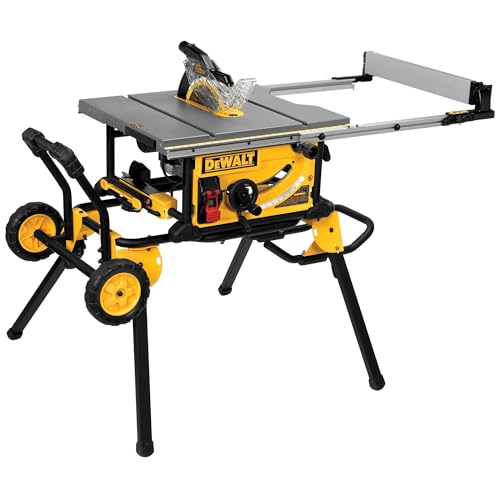
DeWalt DWE7491RS Jobsite Table Saw
A smooth rack-and-pinion fence pairs with a generous rip capacity that handles full sheet goods on a rolling stand. Trades and serious home shops both favor this saw for balancing portability against real cutting power. Setup takes minutes thanks to the folding stand.
Pros
- Accurate rack-and-pinion fence
- Large rip capacity for a portable
- Sturdy rolling stand included
Cons
- Heavy to lift solo
- Stock blade is basic
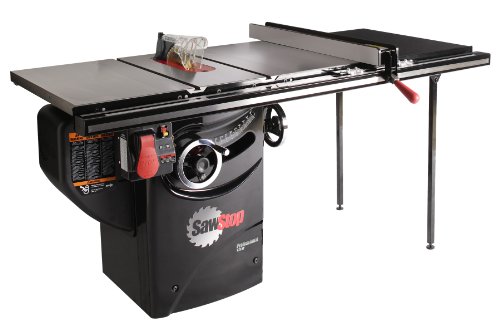
SawStop PCS 1.75-HP Professional Cabinet Saw
A flesh-detection system stops the blade almost instantly on skin contact, the defining feature here. Cabinet-saw accuracy, strong dust collection and a rock-solid fence come standard beyond the safety system. Fine woodworking shops gain the most from the added precision.
Pros
- Flesh-detecting blade brake
- Cabinet-grade fence accuracy
- Effective dust collection
Cons
- Premium price point
- Brake cartridge needs replacing after a trip
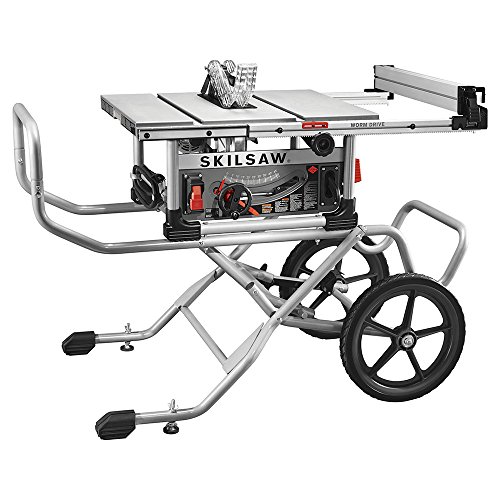
Skilsaw SPT99-11 Worm Drive Table Saw
A worm-drive motor delivers torque that muscles through thick stock without bogging down. Framing crews on a budget get a large rip capacity and a durable build without paying cabinet-saw money. Noise runs higher than direct-drive alternatives.
Pros
- High-torque worm-drive motor
- Big rip capacity for the price
- Rugged jobsite build
Cons
- Notably heavy
- Louder than direct-drive saws

Bosch 4100XC-10 Jobsite Table Saw
A SquareLock fence locks square without fuss, the feature Bosch built its reputation on here. A gravity-rise stand folds quickly for tradespeople moving between job sites often. Dust port design keeps the work area noticeably cleaner than most jobsite saws.
Pros
- Precise SquareLock fence
- Fast gravity-rise stand
- Good dust port design
Cons
- Stand is bulky when stored
- Premium for a jobsite saw

Delta 36-5152T2 Contractor Table Saw
A large cast-iron work surface pairs with a smooth-running motor built for stationary shop use, not job sites. Wide rip capacity and a stable base suit cabinetry and repeat cuts well. Assembly takes real time out of the box, unlike folding jobsite models.
Pros
- Large cast-iron table
- Stable for repeat cuts
- Smooth belt-driven motor
Cons
- Not designed to be portable
- Assembly takes time

Metabo HPT C10RJS Jobsite Table Saw
A big rip capacity and a rolling stand come at an approachable price point for weekend builders. Sheet goods break down without needing a full shop setup or cabinet-saw budget. Fit and finish feel basic next to pricier jobsite saws, though function holds up.
Pros
- Very wide rip capacity
- Rolling stand included
- Approachable pricing
Cons
- Fence needs careful setup
- Fit and finish feels basic

Craftsman CMXETAX69434502 Compact Table Saw
A lightweight, compact build trades outright capacity for easy storage and a friendly entry price. Occasional users with limited shop space get a saw sized for small trim and hobby cuts. Setup stays simple, with none of the folding-stand complexity of larger jobsite saws.
Pros
- Light and easy to store
- Simple to set up
- Wallet-friendly price
Cons
- Smaller rip capacity
- Fence flexes under load
The lineup, side by side
| # | Model | Blade size | Best for | Score | Price |
|---|---|---|---|---|---|
| 1 | DeWalt DWE7491RS Jobsite Table Saw | 10 in | Best overall | 9.4 | Check price |
| 2 | SawStop PCS 1.75-HP Professional Cabinet Saw | 10 in | Best for safety | 9.3 | Check price |
| 3 | Skilsaw SPT99-11 Worm Drive Table Saw | 10 in | Best value | 9.0 | Check price |
| 4 | Bosch 4100XC-10 Jobsite Table Saw | 10 in | Best fence system | 8.9 | Check price |
| 5 | Delta 36-5152T2 Contractor Table Saw | 10 in | Best for the home shop | 8.6 | Check price |
| 6 | Metabo HPT C10RJS Jobsite Table Saw | 10 in | Best for tight budgets | 8.3 | Check price |
| 7 | Craftsman CMXETAX69434502 Compact Table Saw | 10 in | Best budget | 8.0 | Check price |
Questions worth asking
What is the difference between a jobsite and a cabinet table saw?
Jobsite saws are compact and portable, built to move between locations, while cabinet saws are heavy stationary machines built for precision and strong dust collection. Contractor saws sit in between, offering a larger table without full cabinet mass.
How much rip capacity do I need on a table saw?
Look for at least 30 inches of rip capacity to break down full sheets of plywood. Smaller compact saws around 24 inches work fine for trim and hobby cuts but feel limiting on larger panels.
Is a worm-drive table saw better than a direct-drive saw?
Worm-drive motors deliver extra torque that pushes through dense or thick stock without bogging down. They run heavier and louder, so the trade-off comes down to power versus portability.
Are flesh-detection table saws worth the extra cost?
A blade brake that stops on skin contact can prevent serious injury, and many owners consider that well worth the premium. The trade-off is a higher purchase price plus a replacement cartridge if the brake ever triggers.
Do I need a stand for a portable table saw?
A rolling or gravity-rise stand keeps the saw at a comfortable working height and improves stability. Many jobsite models include one, and it makes a real difference for accuracy and back comfort during long sessions.
What blade should I use for finish cuts on a table saw?
The stock blade usually handles general-purpose work, so upgrading to a higher-tooth-count blade improves smoothness on plywood and finish work. Keeping separate blades for ripping and crosscutting yields the cleanest results.
Can a table saw run on a standard household outlet?
Most 15-amp jobsite and contractor saws run fine on a standard household circuit. Larger cabinet saws may need a dedicated higher-amperage circuit, so check electrical requirements before buying.
How do I reduce dust from a table saw?
Connecting a dust port to a shop vacuum or collector captures much of the debris at the source. Cabinet saws generally offer the best dust collection thanks to their enclosed design and larger ports.
Table saw vs miter saw, which do I need first?
A table saw handles ripping boards to width and cutting sheet goods, jobs a miter saw cannot do. A miter saw excels at crosscuts and angles. Most home shops eventually want both, but a table saw covers more tasks alone.
The verdict
DeWalt’s DWE7491RS offers the strongest mix of accuracy, capacity and portability for most workshops. SawStop’s PCS is the clear pick for anyone who weighs hand safety above all else. Budget-focused framers get serious cutting power from the Skilsaw SPT99-11 without paying cabinet-saw prices.
Jake Monroe
Jake worked as a residential contractor for over a decade before shifting to full-time writing. He evaluates power tools, hand tools and workshop gear through the lens of someone who has actually used them on job sites, not just read the box.