How Often Should a Shop Vacuum’s Filter Be Cleaned?
A shop vacuum’s filter generally needs checking and cleaning after every one to a few uses for dry debris like drywall dust or sawdust, since these fine particles clog a filter’s pores far faster than the dirt a household vacuum typically handles. The better indicator than a fixed schedule is a noticeable drop in suction, which almost always means the filter has loaded up with fine debris before you expected it to.
Why shop vacuum filters clog faster than household vacuum filters
Shop vacuums are routinely used for fine, dense debris like drywall dust, concrete dust, sawdust, and ash, which pack into a filter’s pores far more aggressively than typical household dust and hair. This is a fundamental difference in what the machine is being asked to filter, not a flaw in shop vacuum design, and it is the main reason the cleaning interval is so much shorter than people expect coming from a regular vacuum.
How to tell suction loss is actually a filter problem
If a shop vacuum that was pulling strong suction recently now feels noticeably weaker on the same attachment and setting, with no visible clog in the hose, the filter is the most likely cause. Fine dust builds an invisible layer across the filter’s surface that restricts airflow long before the canister itself looks full, so a half-empty tank with weak suction is a classic sign it is time to clean the filter.
Why wet use changes the cleaning interval significantly
After vacuuming liquid, most shop vacuum filters need to be removed and allowed to dry completely before the next use, both because a wet standard filter performs poorly and because trapped moisture can promote mold growth inside the canister. Switching to a dedicated wet filter or foam sleeve for liquid pickup, where the vacuum supports it, avoids this drying delay between dry and wet tasks.
Does filter material change how often cleaning is needed
Pleated paper filters have more surface area and can handle moderate fine dust longer before clogging, but once the pleats pack with very fine material like drywall dust, they are harder to fully clean than foam. Foam filters are easier to rinse clean but have less surface area to begin with, so they can clog faster under heavy fine-dust use despite being simpler to maintain.
Why tapping or brushing alone sometimes is not enough
For moderate dust buildup, tapping the filter against a hard surface or brushing it off can restore a meaningful amount of suction. But once fine dust has packed deep into a pleated filter’s folds, a light tap only removes the loose surface layer, and the deeper clogging needs a more thorough rinse or compressed air cleaning to actually restore original airflow.
What happens if the filter is never cleaned at all
A severely clogged filter forces the motor to work harder to pull any air through at all, which reduces suction dramatically and can increase motor strain and heat over time. Beyond the performance loss, an overloaded filter is also more likely to let fine particles bypass filtration entirely once it reaches capacity, sending dust back out through the exhaust instead of trapping it.
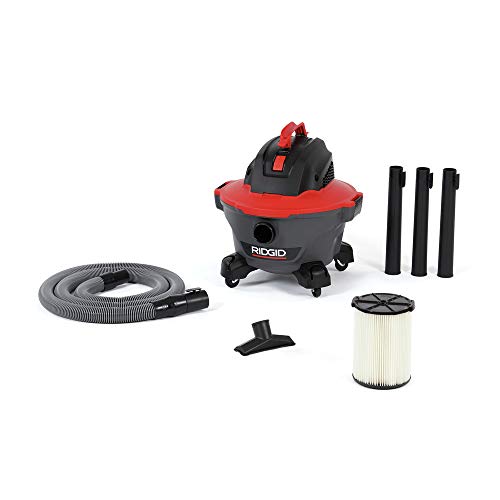
RIDGID 6 Gallon Wet/Dry Shop Vacuum
A common garage and job site shop vacuum where the included pleated filter needs regular tapping or rinsing to maintain suction during drywall and sawdust cleanup.

Shop-Vac Genuine Replacement Cartridge Filter
A widely used replacement filter for multiple shop vacuum brands, relevant when cleaning no longer restores adequate suction and the filter needs full replacement instead.
Common questions
Can a shop vacuum filter be washed with water?
Many foam and some pleated filters can be rinsed with water, but this depends on the specific filter material. Paper-based filters not rated for wet cleaning should generally be cleaned dry with tapping or compressed air instead.
How do I know if my shop vacuum filter needs replacing instead of cleaning?
If cleaning no longer restores reasonable suction, or if the filter material shows visible tears, thinning, or permanent discoloration that will not come clean, replacement is the more reliable fix than continued cleaning attempts.
Does drywall dust clog a shop vacuum filter faster than sawdust?
Yes, drywall dust particles are extremely fine and pack densely into filter pores, generally clogging a filter faster than coarser sawdust from typical woodworking.
Is it bad to run a shop vacuum with a visibly dirty filter?
Yes, a heavily loaded filter reduces suction and increases strain on the motor, and in severe cases can let fine particles pass through filtration instead of being trapped as intended.
Should I clean the filter after every single use?
For fine dust tasks like drywall sanding or concrete work, checking after every use is reasonable. For lighter, less dusty tasks, every few uses is often sufficient, with suction performance as the real guide.
Can compressed air damage a shop vacuum filter if used to clean it?
Yes, aiming compressed air at very high pressure directly into pleated folds can tear delicate filter material, so a moderate pressure and some distance from the filter surface is the safer approach.
Does a dirty filter affect how well a shop vacuum handles liquids?
A clogged standard filter can reduce suction for wet pickup as well, though the bigger concern with liquids is usually using the wrong filter type at all rather than just a dirty one.
Why does my shop vacuum lose suction even with a clean filter?
If suction is still weak after cleaning the filter, check for hose clogs, a full canister, or a torn filter seal allowing unfiltered air to bypass the filter entirely.
Do HEPA filters on a shop vacuum need cleaning differently than standard filters?
HEPA filters are generally more delicate and should be cleaned according to manufacturer instructions specifically, since aggressive tapping or washing can damage the fine filtration media that makes them effective.
Can letting a filter dry out completely after wet use damage it?
No, thoroughly drying a filter after wet use is the recommended practice and helps prevent mold growth, as long as the filter material itself was rated for wet pickup in the first place.
Does filter cleaning frequency change with how often the shop vacuum is used?
Yes, more frequent use on dusty tasks naturally means more frequent cleaning is needed, while occasional light use can stretch the interval out considerably.
Is there a way to extend filter life between cleanings?
Using a disposable collection bag inside the canister, where the vacuum supports one, can catch a large portion of debris before it ever reaches the filter, extending the time between cleanings.
Does a dirty filter increase the risk of motor burnout?
A severely restricted filter forces the motor to work harder against reduced airflow, which can contribute to increased heat and wear over time, though a single dirty filter use is unlikely to cause immediate burnout.
Should I clean the filter before or after emptying the canister?
Either order works, though emptying the canister first generally makes it easier to see and access the filter without dust falling back into an already-cleaned canister.
Does using a dust collection bag change how I should clean the filter?
A bag reduces how much debris reaches the filter directly, which can extend cleaning intervals somewhat, but fine dust still bypasses the bag to some degree and reaches the filter, so periodic checks remain necessary even with a bag installed.
Can running a shop vacuum with a damaged filter seal cause problems beyond dust escaping?
Yes, a gap in the filter seal lets unfiltered air bypass the filter entirely, which both reduces effective suction at the hose and sends more fine dust through the motor and out the exhaust than the filter was meant to allow.
Where this leaves you
A shop vacuum filter is working hard against exactly the kind of fine, dense debris that clogs filtration fastest, so treating it like a household vacuum filter you check once a season leads to disappointing suction long before the canister ever looks full. Watching performance rather than the calendar is the more reliable way to know when it is actually time to clean it.
Jake Monroe
Jake worked as a residential contractor for over a decade before shifting to full-time writing. He evaluates power tools, hand tools and workshop gear through the lens of someone who has actually used them on job sites, not just read the box.