How Does an Electric Fireplace Heat a Room Without Real Flame?
An electric fireplace heats a room using a standard electric heating element, either a fan-forced ceramic or coil heater or an infrared quartz heater, that works on the exact same principle as any plug-in space heater, it has nothing to do with the visual flame. The flame effect is a separate lighting illusion, typically LED lights reflecting off a rotating or textured surface, which is why most electric fireplaces let you run the flame display with the heater completely switched off.
The flame you see and the heat you feel are unrelated systems
Inside almost every electric fireplace, there are two entirely independent components, a lighting and visual effect system that creates the flame illusion and a separate electric heating element that produces actual warmth. This separation is intentional, it lets the fireplace be used purely for ambiance in warmer months without running a heater at all.
How the flame effect is actually created
Most units use LED lights shining through or reflecting off a rotating reflective surface, often a spinning drum with cut flame shapes or a textured mylar sheet, which creates a flickering, moving light pattern that reads visually as flame. Higher-end models take this further with an ultrasonic mist generator that produces a fine water vapor lit from below or behind, creating a more three-dimensional flame-like effect, but even that version is still just lighting and a visual trick, not combustion of any kind.
How the actual heat is generated
The heating element is ordinary resistance heating, the same basic technology used in toasters and standard space heaters, where electricity passing through a resistive material generates heat directly. Some models use a fan to push that heat out into the room through convection the same way a typical space heater does, while others use infrared quartz elements that radiate heat more directly toward people and objects in the room rather than relying mainly on warming the air.
Why you can run the flame display with the heater turned off
Because the two systems have separate controls and separate power draws, most electric fireplaces let you enjoy the flame visual on its own during warmer weather without generating any heat, which is a common and genuinely useful feature rather than a workaround, and it is part of why many people keep an electric fireplace running for atmosphere even in summer.
Why no chimney or venting is needed
Since there is no real combustion happening anywhere in the unit, there are no combustion byproducts like carbon monoxide or real smoke to vent outside, which is the main reason electric fireplaces can be installed virtually anywhere with an outlet, unlike gas or wood fireplaces that require proper ventilation.
What room size an electric fireplace can realistically heat
The heating element inside most electric fireplaces is capped around 1500 watts, the same practical ceiling as a standard plug-in space heater due to typical household circuit limits, which means an electric fireplace heats a single room effectively but is not meant to warm an entire open floor plan or multiple connected rooms the way a central heating system would.

Dimplex Multi-Fire XHD Electric Fireplace Insert
An insert that pairs an infrared quartz heating element with a flame display, allowing the heater and the visual flame effect to be controlled and run independently of each other.
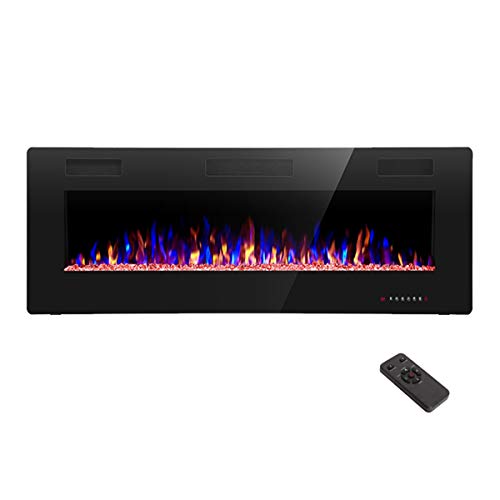
R.W.FLAME 50 Inch Electric Fireplace Insert
A widely sold electric fireplace insert with a fan-forced heater and an adjustable flame brightness and color effect, built to be used for ambiance alone or combined with heat.
Common questions
Does the flame effect on an electric fireplace use any real fire or smoke?
No, it is entirely a lighting effect created with LEDs and a rotating or reflective surface, sometimes combined with a water vapor mist in higher-end models, there is no combustion or smoke involved at any point.
Can I run an electric fireplace’s flame display without using any heat?
Yes, on most models the flame visual and the heating element are controlled independently, letting you enjoy the flame effect alone without running the heater, which is commonly used during warmer months.
Is an infrared electric fireplace heater better than a fan-forced one?
Infrared heaters radiate heat more directly toward people and objects in their path, which can feel warmer sooner at closer range, fan-forced models distribute heat more evenly throughout the room’s air over a longer period.
Does an electric fireplace need professional installation like a gas fireplace does?
No, since there is no combustion or venting requirement, most electric fireplaces only need a standard electrical outlet and can be installed without any professional help, unlike gas units which require proper venting and often professional setup.
Why does my electric fireplace’s heater turn off even though the flame is still displaying?
This is normal if the unit has a thermostat or timer controlling the heater separately from the flame display, the heater cycling off once the room reaches a set temperature does not affect the visual flame at all.
Can an electric fireplace actually heat an entire open living room and kitchen area?
Generally not effectively, since the heating element is capped at a wattage similar to a standard space heater, it is better suited to warming a single enclosed room than a large open floor plan.
Is it safe to leave the flame effect running overnight if the heater is off?
The flame-only mode uses minimal electricity and generates negligible heat, making it a lower-risk use than running the heater unattended, though general appliance safety guidance still applies to leaving any electrical device running overnight.
Do all electric fireplaces use the same method to create the flame illusion?
No, methods vary by model and price point, from simple rotating LED light drums to more advanced ultrasonic mist systems that create a more three-dimensional, realistic flame appearance.
Does an electric fireplace’s heater use more electricity than a regular space heater?
Generally not, the heating elements used are comparable in wattage and efficiency to standard space heaters, the fireplace styling and flame effect do not inherently make the heating function less efficient.
Can the flame effect on an electric fireplace be adjusted in brightness or color?
Many models allow adjusting flame brightness, speed, and sometimes color, since the effect is purely an LED lighting display, these settings are software or dial controlled independently from the heating function.
Is it normal for an electric fireplace to feel like a regular room instead of near a real fire’s radiant heat?
To some degree, yes, a fan-forced electric fireplace warms air convectively like a space heater, which feels different from the strong direct radiant heat of a real wood or gas fire, infrared models get closer to that radiant feel.
Does running an electric fireplace’s heater continuously wear out the unit faster than cycling it on and off?
Thermostatically controlled cycling is the normal designed operation and does not meaningfully shorten the heater’s lifespan compared to continuous running, most units are built to handle regular cycling without issue.
Can an electric fireplace insert be added into an existing non-working wood fireplace?
Yes, this is a common use case, many electric inserts are sized to fit into an existing fireplace opening, providing ambiance and supplemental heat without needing the original fireplace to be functional.
Is there a real fire risk with an electric fireplace the way there is with a gas or wood one?
The risk profile is different and generally lower since there is no open flame or combustion, though the heating element itself still carries the same basic electrical heater precautions as any other electric space heater.
Does an electric fireplace’s heat output change based on which flame effect setting is selected?
No, the flame display and the heat output are controlled by separate systems, selecting a different flame color or style does not change how much heat the unit produces.
Where this leaves you
The flame is theater, the heat is a plain electric heater wearing a costume, and keeping those two facts straight explains almost every question people have about how these units work. Once you know the heating element is just a space heater in a nicer enclosure, expectations about room size, running cost, and what the flame-only mode is actually for all make a lot more sense.
Dana Whitfield
Dana spent eight years buying and merchandising for a regional kitchenware retailer before moving into editorial work. She has handled thousands of SKUs across cookware, small appliances and kitchen organization, and focuses on the practical differences that matter once a product is actually in daily use.
You might also need

How Does a Meat Thermometer Know When Food Is Actually Safe to Eat?

How Does a Bidet Attachment Actually Connect to an Existing Toilet?
Do Electric Kettles Really Boil Water Faster Than a Stovetop?
