Do Electric Kettles Really Boil Water Faster Than a Stovetop?
Yes, a typical electric kettle boils water faster than most stovetop methods because it delivers heat directly into the water through an internal element rather than heating a pot from the outside first, and most electric kettles run at 1,200 to 1,500 watts or higher, which is more concentrated power than many stovetop burners deliver to a kettle or pot in practice.
Where the heat actually goes in each method
An electric kettle’s heating element sits submerged directly in the water, transferring heat with almost no loss to the surrounding air. A stovetop burner has to first heat the pot or kettle’s metal base, which then transfers heat to the water, losing some energy to the air and the pot material itself along the way before the water ever starts warming.
Wattage comparisons aren’t always apples to apples
A standard electric kettle in the 1,200 to 1,500 watt range delivers that power efficiently and directly into a relatively small volume of water. A stovetop gas burner’s actual heat output reaching the water is harder to measure directly and often less efficient in practice, even if the burner’s rated output sounds comparable on paper, since much of that heat escapes around the sides of the pot rather than transferring into it.
Why electric kettles with exposed coil elements boil even faster
Some electric kettles use an exposed heating coil that sits directly in the water rather than a hidden element beneath a flat plate, which transfers heat with even less material in between, often shaving additional time off the boil compared to concealed element designs.
Water volume changes the comparison significantly
A kettle boiling a single cup of water will always be faster than boiling the same amount in a large stovetop pot, partly because the stovetop pot itself has more thermal mass to heat up before the water inside gets fully hot. Comparing a kettle to a stovetop using genuinely equivalent volumes and vessel sizes is the only fair test, and the kettle still generally wins in most of those comparisons.
Altitude and starting water temperature affect both methods equally
Water boils at a lower temperature at high altitude regardless of which heating method you use, and starting with already warm tap water speeds up both an electric kettle and a stovetop pot similarly, so neither of those variables changes which method is actually faster relative to the other.
Where a stovetop can occasionally win
A very high output gas burner paired with a wide, thin bottomed pot and a small amount of water can sometimes approach or match a standard electric kettle’s speed, though this is a less common setup than most people have in a typical home kitchen.
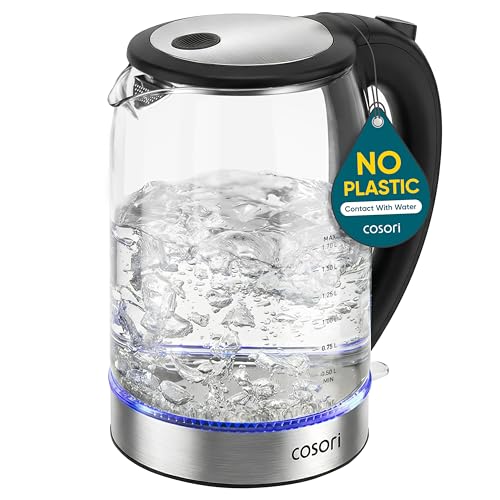
Cosori Electric Kettle
A 1,500 watt electric kettle with a concealed heating element and quick boil design commonly used as a straightforward comparison point against stovetop kettles.

Breville IQ Kettle
A higher wattage electric kettle with precise temperature presets, built to reach a full boil quickly while also allowing lower target temperatures for specific brewing needs.
Common questions
Why does my electric kettle boil water faster than my old stovetop kettle did?
The electric kettle’s heating element sits directly in the water, transferring heat with much less loss than a stovetop burner that has to heat the kettle’s metal base first before that heat reaches the water.
Does a higher wattage electric kettle always boil faster?
Generally yes, since more wattage means more energy delivered per second, though the exact time also depends on the volume of water being heated and the kettle’s specific design.
Is it more energy efficient to boil water in an electric kettle or on the stove?
Electric kettles are typically more energy efficient for boiling water specifically, since they lose less heat to the surrounding air compared to a stovetop pot heating from the outside.
Can a gas stove ever boil water faster than an electric kettle?
It’s possible with a very high output burner and a wide, thin pot holding a small amount of water, but in most typical home kitchen setups, a standard electric kettle still boils faster.
Does the material of an electric kettle affect how fast it boils water?
The housing material, whether glass, stainless steel, or plastic, doesn’t significantly affect boil speed, since that depends mainly on the heating element’s wattage and design rather than the exterior shell.
Why do some electric kettles take longer to boil than others with similar wattage?
Differences in heating element design, how much of the element contacts the water directly, and insulation quality can all affect actual boil time even among kettles with similar rated wattage.
Does altitude affect how fast an electric kettle boils water?
Water boils at a lower temperature at higher altitude, which can make it reach boiling slightly faster in terms of time, though the water itself is boiling at a lower actual temperature than at sea level.
Is boiling a small amount of water in an electric kettle faster than microwaving it?
Generally yes for amounts intended for drinks like tea or coffee, since a kettle’s direct heating element usually reaches a full boil faster and more evenly than a microwave heating the same volume.
Why does my electric kettle sometimes seem slower than advertised?
Starting with cold tap water, filling it past the recommended capacity, or mineral buildup, often called limescale, inside an older kettle can all slow down actual boil time compared to the manufacturer’s tested conditions.
Does limescale buildup inside an electric kettle really slow down boiling?
Yes, mineral scale buildup on the heating element acts as an insulating layer, reducing how efficiently heat transfers into the water and measurably slowing boil time until the kettle is descaled.
Can an electric kettle boil water to different temperatures, not just a full boil?
Many modern electric kettles include temperature presets for specific uses like green tea or pour over coffee, which require water below a full boil, a feature most basic stovetop kettles don’t offer.
Is it true that electric kettles are safer than stovetop kettles for boiling water?
Electric kettles generally have automatic shutoff once water reaches a boil, removing the risk of a stovetop kettle being left on a burner too long, though both are considered safe when used properly.
Does the amount of water in the kettle change how much faster it boils compared to the stovetop?
Yes, the time advantage of an electric kettle tends to be most noticeable with smaller amounts of water, since the stovetop’s extra thermal mass in the pot itself matters less at very small volumes.
Why do commercial kitchens often prefer stovetop or large volume boiling over electric kettles?
For very large volumes of water, a commercial stovetop or dedicated boiling urn with higher sustained heat output can be more practical than a standard electric kettle, which is sized and rated mainly for smaller household quantities.
Does boiling water in an electric kettle taste different than stovetop boiled water?
Not meaningfully from the heating method itself, though mineral buildup or an older kettle’s internal material can sometimes affect taste slightly more noticeably than a well maintained stovetop pot.
Can filling an electric kettle only partially make it boil faster?
Yes, less water means less total mass to heat, so a partially filled kettle reaches boiling faster than a fully filled one, all else being equal.
Why do some countries use electric kettles far more commonly than others?
Voltage standards differ by country, and regions with higher standard household voltage can run electric kettles at higher wattage, making them boil noticeably faster than in lower voltage regions, which has influenced how popular they became.
Final word
For the vast majority of everyday use, filling a mug or a small pot for tea or coffee, an electric kettle wins on speed because it heats the water directly rather than through a pot first. The gap narrows only in less typical setups like very high output burners with large, thin pots.
Dana Whitfield
Dana spent eight years buying and merchandising for a regional kitchenware retailer before moving into editorial work. She has handled thousands of SKUs across cookware, small appliances and kitchen organization, and focuses on the practical differences that matter once a product is actually in daily use.