How Does a Meat Thermometer Know When Food Is Actually Safe to Eat?
A meat thermometer does not actually know anything about safety on its own, it only measures internal temperature at the point where the probe sits. The safety comes from comparing that reading against established minimum safe internal temperatures for each type of food, which food safety agencies set based on the temperature needed to reliably kill the bacteria most commonly associated with that food. The thermometer is the measurement tool, and the safe-temperature chart is what actually defines done and safe.
What the thermometer is actually measuring
Most instant-read thermometers use a thermocouple or thermistor sensor at the tip that converts heat into an electrical signal to report a temperature. The device has no concept of safe or unsafe, it simply reports the temperature at the exact spot the probe tip is touching.
Where safe temperature numbers actually come from
Food safety agencies set minimum internal temperatures based on how hot and for how long it takes to reliably kill the specific pathogens most associated with a given food. Poultry is commonly assigned a higher required temperature than beef, for example, because of the different bacteria risk profiles involved.
Why placement of the probe matters enormously
Inserting the probe into the thickest part of the food, away from bone, which conducts heat differently and can produce a falsely high reading, and away from pockets of fat, which heat differently than muscle, is critical. A technically correct thermometer reading taken from the wrong spot can create a false sense of safety.
Why color and juice clarity are unreliable safety signals
Pink coloring can persist in fully safe, fully cooked poultry due to natural pigment reactions, and clear juice does not reliably confirm a safe internal temperature either. This is why visual cues are considered far less dependable than an actual thermometer reading.
Carryover cooking and why resting changes the final safe reading
Meat continues rising in internal temperature for several minutes after it is pulled from heat, a process called carryover cooking. Pulling meat at the target number and letting it rest means it actually finishes at a slightly higher final internal temperature than the thermometer showed at the moment it was removed.
Why the thermometer itself needs occasional checking
A cheap or aging thermometer can drift a few degrees off true. Calibrating it in ice water, which should read 32 degrees, or boiling water, which should read 212 degrees at sea level, verifies the tool itself is giving an honest number before relying on it for a food safety decision.

ThermoWorks Thermapen ONE
An instant-read thermometer with a fast-responding thermocouple sensor, commonly used for checking internal temperature quickly during cooking.
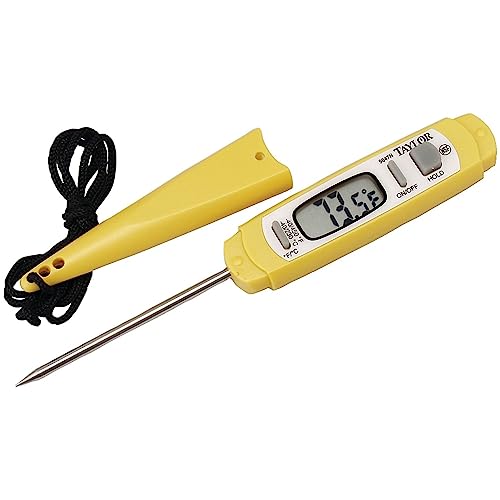
Taylor Precision Digital Instant Read Thermometer
A budget-friendly instant-read thermometer that still provides a direct internal temperature reading for checking food safety.
Frequently asked questions
What internal temperature is considered safe for chicken?
165 degrees Fahrenheit is the commonly cited minimum safe internal temperature for poultry, measured in the thickest part of the meat away from bone.
Why is ground beef’s safe temperature different from a whole steak?
Grinding mixes any surface bacteria throughout the meat, so ground beef needs a higher minimum temperature than a solid cut like a steak, where surface searing already addresses most surface bacteria.
Can a thermometer give a false reading if it touches bone?
Yes, bone conducts and holds heat differently than the surrounding meat, so a probe touching bone can read inaccurately high compared to the meat around it.
Is pink meat always unsafe?
No, some fully safe, fully cooked meats stay pink due to natural pigment reactions, which is exactly why relying on color instead of a thermometer reading is considered unreliable.
Does resting meat after cooking actually matter for safety, not just flavor?
Yes, carryover heat during resting can continue raising internal temperature for several minutes, which is factored into some official guidance that allows pulling meat slightly below target before a rest period.
How often should a meat thermometer be calibrated?
It is good practice to check an instant-read thermometer against ice water or boiling water occasionally, especially after it has been dropped or heavily used, since drift can happen over time.
Why do different meats have different safe temperatures at all?
Different animals and cuts carry different common bacteria risks, and the temperature and time combination needed to reliably kill those specific pathogens varies accordingly.
Is an instant-read thermometer as reliable as a leave-in probe thermometer?
Both can be accurate if well made. The main practical difference is convenience, a leave-in probe monitors continuously during cooking while an instant-read requires manually checking at intervals.
Does the type of thermometer sensor affect accuracy?
Thermocouple sensors tend to respond faster and are often considered more precise than thermistor sensors, though both types can be accurate in a well-made unit.
Can a thermometer be wrong even if inserted correctly?
Yes, if the unit itself is poorly calibrated or has a damaged sensor, it can give a confidently wrong number even with perfect placement technique.
Why does fish have a lower safe cooking temperature than chicken?
Fish carries a different bacterial and parasite risk profile than poultry, so its recommended minimum safe temperature is generally lower.
Is it safe to eat meat that looks done but was not checked with a thermometer?
Visual doneness is not a reliable safety indicator on its own, since appearance can mislead in both directions, undercooked meat can look done and safely cooked meat can look underdone.
Does altitude affect what temperature is considered safe?
The safe internal temperature target for the food itself does not change with altitude, though boiling water’s temperature does, which matters specifically when calibrating a thermometer using the boiling water method.
Can a meat thermometer be used to check if reheated leftovers are hot enough?
Yes, the same internal temperature logic applies to reheating, confirming leftovers reach a safe temperature throughout is a legitimate and common use for the same thermometer.
Does a digital thermometer update in real time as it heats up?
Digital instant-read thermometers typically stabilize within a few seconds, while older dial thermometers can take closer to 15 to 20 seconds to settle on an accurate reading.
Can a thermometer probe be left in food while it is in the oven?
Only a leave-in probe thermometer rated for oven use should stay in during cooking, a typical instant-read thermometer is not designed to withstand continuous oven heat and is meant for quick spot checks instead.
Does checking temperature in multiple spots matter for large cuts of meat?
Yes, a large roast can have uneven internal temperatures, so checking the thickest part and a couple of other spots gives a more reliable picture than a single reading.
Why do some recipes list a pull temperature lower than the official safe temperature?
That is accounting for carryover cooking during resting, the food is expected to rise to the actual safe temperature by the time it is served, not at the moment it is pulled from heat.
Is a meat thermometer necessary for something like a hamburger patty?
Yes, thin cuts can look done on the outside well before the center reaches a safe temperature, so a quick check is still worthwhile even for something that cooks fast.
Does moving food after checking its temperature affect the accuracy of that reading?
No, the reading reflects the temperature at the moment and location it was taken, moving the food afterward does not change that past reading, though temperature can keep changing if it is still near heat.
Our take
The thermometer is only half the equation. A correct safe-temperature reference and correct probe placement are what actually make a reading meaningful, since a perfectly good thermometer inserted into the wrong spot can still mislead someone into thinking undercooked food is safe.
Dana Whitfield
Dana spent eight years buying and merchandising for a regional kitchenware retailer before moving into editorial work. She has handled thousands of SKUs across cookware, small appliances and kitchen organization, and focuses on the practical differences that matter once a product is actually in daily use.


