Do You Need a Specific Oil for a Chainsaw Chain or Will Any Oil Work?
You do need oil specifically formulated for a chainsaw’s bar and chain, not just any oil sitting in the garage. Bar and chain oil is designed with a tacky additive that clings to the moving chain at high speed instead of flinging off, which regular motor oil and most other lubricants are not built to do, so substituting the wrong oil leads to inadequate lubrication and faster bar and chain wear.
What bar and chain oil is actually designed to do
A chainsaw’s automatic oiler feeds oil onto the bar while the chain is moving at high speed around it, and that oil needs to stay on the bar and chain rather than being thrown off by centrifugal force. Bar and chain oil contains tackifier additives specifically to give it this clinging, stringy quality, which is a property regular motor oil was never formulated to have.
Why regular motor oil falls short as a substitute
Motor oil is formulated for a sealed engine environment with consistent temperature and pressure, not for being flung onto a fast-moving open chain exposed to wood debris and air. Used as bar oil, it tends to sling off quickly, leaving the chain running drier than it should and accelerating wear on both the chain and the bar’s groove, even though the saw will technically still run in the short term.
What actually happens if you run a chainsaw dry or with the wrong oil
Insufficient or wrong lubrication causes the chain to heat up faster from friction, dulls the cutting edges more quickly, and wears down the bar’s guide groove and sprocket tip prematurely. None of this causes instant failure, but it meaningfully shortens the working life of both the bar and chain over repeated use, which is a real cost even if it is not an immediate, dramatic one.
Why some people use vegetable-based or biodegradable bar oil instead
Biodegradable bar and chain oils, often made from vegetable or canola oil bases, are formulated to break down more easily in soil and are commonly used by arborists and in environmentally sensitive areas. They still include the tackifying properties needed for proper chain lubrication, so the biodegradable aspect does not mean a sacrifice in actual lubrication performance when the product is a genuine bar oil rather than plain vegetable oil.
Does viscosity change with season or temperature matter
Yes, bar and chain oil is available in different viscosities, with thinner oil recommended for cold weather so it still flows properly through the oiler system, and thicker oil for warm weather so it does not thin out too much and fling off as easily. Using a summer-weight oil in freezing conditions can cause the automatic oiler to struggle to deliver oil at a normal rate.
What about using old or used motor oil as a cheap alternative
Beyond the lubrication shortfall already explained, used motor oil also carries combustion byproducts and metal particles from the engine it came from, which get flung directly onto the wood you are cutting and into the air around the saw. This is both a lubrication downgrade and an environmental and practical downside that purpose-made bar oil avoids.
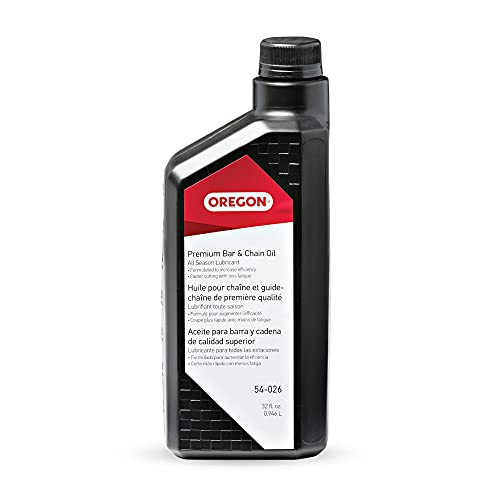
Oregon 54-026 Bar and Chain Oil
A widely used dedicated bar and chain lubricant formulated with tackifiers to stay on a moving chain, sold in sizes suited to regular chainsaw use.
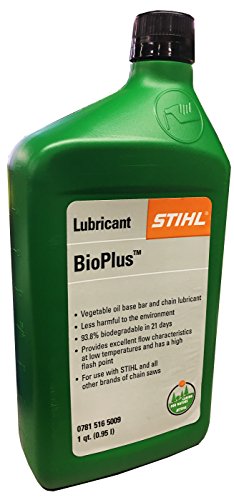
STIHL BiOPlus Biodegradable Bar and Chain Oil
A biodegradable bar and chain oil that still includes proper tackifying additives, commonly used where oil runoff onto soil or vegetation is a concern.
Frequently asked questions
Can I use regular motor oil in a chainsaw in an emergency?
As a very short-term emergency measure it will provide some lubrication, but it flings off faster than proper bar oil and should be replaced with real bar and chain oil as soon as possible to avoid accelerated wear.
Is vegetable oil from the kitchen a safe substitute for bar oil?
Plain kitchen vegetable oil lacks the tackifier additives that keep bar oil on the chain, so while it is better than running completely dry, it is not equivalent to a proper biodegradable bar oil product.
Does using the wrong oil void a chainsaw’s warranty?
Some manufacturers do specify using their recommended bar oil type in warranty terms, so checking the specific saw’s manual is worth doing before assuming any oil is acceptable.
How can I tell if my chainsaw is not getting enough bar oil?
Common signs include a dry-looking or discolored bar groove, visible smoke or burning smell during cutting, and a chain that seems to dull unusually quickly compared to normal use.
Does bar and chain oil need to match the chainsaw brand?
No, bar and chain oil is generally universal across chainsaw brands as long as it is a genuine bar and chain oil product, rather than needing to match the saw’s specific manufacturer.
Why does my automatic oiler seem to use oil faster in cold weather?
Thicker, summer-weight oil can struggle to flow properly through the oiler system in cold temperatures, which is why many manufacturers recommend switching to a thinner winter-weight bar oil seasonally.
Can hydraulic fluid or other shop oils work as bar oil?
No, these lack the specific tackifying properties bar oil needs and are not formulated for this use, so they should not be treated as a reasonable substitute.
Does using biodegradable bar oil wear out the chain faster than regular bar oil?
Not if it is a genuine biodegradable bar oil product with proper tackifiers, since it is designed to provide comparable lubrication performance while breaking down more easily in the environment.
Is it true that running without bar oil at all will destroy the chain immediately?
Not immediately, but running completely dry causes rapid overheating and friction damage to both the chain and bar within a short period of continued use, so it should be avoided even briefly.
Does bar oil consumption rate indicate anything about saw health?
A sudden increase in oil consumption without a change in use pattern can indicate an oiler system issue or a bar groove problem, so it is worth checking if oil use changes noticeably.
Can I mix different brands of bar and chain oil together?
Generally yes, since most bar oils share similar base formulations, though topping off with whatever bar oil is available is less of a concern than using a non-bar-oil substitute entirely.
Does the type of wood being cut affect how much bar oil is needed?
Harder or resinous wood can increase friction and oil consumption somewhat, but the oiler system’s flow rate is the main factor, not the wood type itself changing how much lubrication is required.
Is synthetic bar and chain oil better than conventional bar oil?
Synthetic bar oils often perform well across a wider temperature range and can offer slightly better tackifying consistency, though conventional bar oil remains adequate for typical home and occasional use.
Does an electric chainsaw need bar oil the same way a gas chainsaw does?
Yes, electric chainsaws with a bar and chain still require the same type of dedicated bar and chain oil for lubrication, since the mechanical need for lubrication does not change based on power source.
Can using the wrong bar oil cause the chain to come off the bar?
Indirectly, yes. Poor lubrication accelerates wear in the bar’s guide groove and the chain’s drive links, and that accumulated wear is a common contributor to a chain becoming loose enough to derail during use over time.
Does bar oil need to be topped off every time I refuel a gas chainsaw?
It is good practice to check the oil reservoir at every refuel, since the oil and fuel tanks typically empty at different rates and running out of bar oil mid-cut is easy to miss otherwise.
The bottom line
Bar and chain oil earns its own category for a practical reason, not a marketing one: it has to survive being flung around a fast-moving chain without disappearing, and ordinary oil simply was not built for that job. Spending a little more on the correct oil is cheap insurance against wearing out a bar and chain that cost far more to replace.
Jake Monroe
Jake worked as a residential contractor for over a decade before shifting to full-time writing. He evaluates power tools, hand tools and workshop gear through the lens of someone who has actually used them on job sites, not just read the box.