Do Weighted Vests Actually Improve Walking Workouts?
Yes, in a specific way. Added vest weight increases the metabolic cost and mechanical loading on bones and muscles during walking, meaning you burn more calories and get mild bone density stimulus per mile. It does not turn walking into a substitute for strength training, and poor fit or too much weight too soon can increase joint strain instead of adding benefit.
What actually changes physiologically when you add vest weight
Heart rate and oxygen consumption rise at the same walking speed because the body works harder to move the added mass, which is why calorie burn estimates increase along with added vest weight.
The bone density angle
Weight bearing exercise with added load creates more mechanical stress on bones, which can contribute to maintaining bone density, a point often raised for post menopausal women specifically. Vest walking alone isn’t a proven substitute for resistance training when it comes to bone health, but it adds a meaningful layer of loading beyond unweighted walking.
Why posture and vest fit matter more than people assume
A vest that sits too low or shifts during walking alters natural gait and can strain the lower back or shoulders. A close, high fitting vest that distributes weight evenly across the torso is safer than a loose design that bounces with each stride.
How much weight is a reasonable starting point
General guidance from trainers suggests starting around five to ten percent of bodyweight and increasing gradually, since too much weight too soon changes natural walking mechanics and increases joint stress rather than aerobic benefit.
What a weighted vest does not do
It does not meaningfully build significant muscle mass compared to actual resistance training, and it won’t fix an already poor walking gait, it simply loads whatever gait pattern you already have.
Who should be cautious about adding vest weight
People with existing knee, hip, or back issues should check with a doctor or trainer before adding meaningful vest weight, since the added load compounds whatever joint stress their walking mechanics already produce.

Hyperwear Hyper Vest PRO Weighted Vest
A close fitting weighted vest designed to sit high on the torso and move naturally during walking or running.
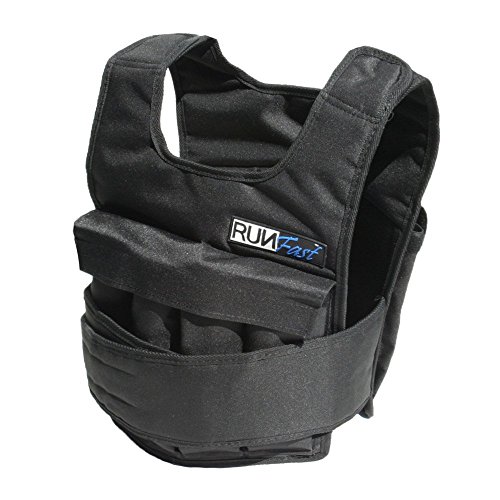
RUNFast/Max Pro Weighted Vest
An adjustable weighted vest using small removable weight packs so the total load can be increased gradually over time.
Good to know
Is a weighted vest better than carrying hand weights while walking?
A vest distributes load across the torso rather than the hands and wrists, which is generally considered safer and avoids grip fatigue or wrist strain compared to carrying hand weights.
Can a weighted vest help with weight loss?
It can modestly increase calories burned per walk, but overall weight loss still depends mainly on total diet and activity level, not the vest on its own.
How much extra weight is safe to add to a walking vest?
There’s no universal number, but staying around five to ten percent of bodyweight as a starting point before working up gradually is a common conservative approach.
Does wearing a weighted vest while walking build muscle?
It adds some extra resistance work for the legs and core stabilizers, but the effect is mild compared to what dedicated strength training produces.
Can you wear a weighted vest every day for walking?
Many people do, but taking occasional rest days, especially when starting out or increasing weight, is a reasonable way to avoid overuse strain on joints.
Why do some weighted vests feel like they bounce while walking?
A loose fit or weight concentrated in low pockets can shift during stride, while a snug, high fitting vest with evenly distributed weight bounces far less.
Is a weighted vest useful for someone who is already overweight?
Added load increases joint stress, so building a walking base with no added weight first, then adding light vest weight gradually, is generally the more cautious approach.
Does a weighted vest increase heart rate more than a weighted backpack?
Both raise heart rate similarly for the same added weight, but a vest generally sits more securely and centrally than a backpack, which can shift and strain the shoulders differently.
Can wearing a weighted vest improve bone density on its own?
It can contribute to the kind of mechanical loading associated with maintaining bone density, but it isn’t considered a replacement for resistance training in bone health guidance.
What’s the difference between a weighted vest and ankle or wrist weights for walking?
Ankle and wrist weights alter natural swing mechanics more and are generally discouraged by trainers for walking, while a torso vest keeps limb movement closer to normal.
Should beginners start with a weighted vest on day one of a walking program?
Most trainers suggest building a few weeks of unweighted walking first so joints and gait adapt before introducing added load.
Can a weighted vest cause back pain?
Yes, if it’s too heavy too soon, fits poorly, or sits too low on the spine, it can strain the lower back. Proper fit and gradual loading reduce that risk considerably.
Do weighted vests help with running too, not just walking?
Yes, the same loading principle applies, though impact forces are higher during running, which makes the added weight consideration more important to approach gradually.
How do you know if your weighted vest is too heavy?
Noticeable changes to your natural stride, a hunched posture, or joint discomfort during or after the walk are all signs to reduce the weight.
Can a weighted vest be used for exercises beyond walking, like squats or pushups?
Yes, many vests are also used to add resistance to bodyweight strength exercises, not just cardio based walking or running.
Does the distribution of weight within a vest matter, not just the total amount?
Yes, vests with evenly distributed small weight packs generally feel more stable and comfortable than ones with weight concentrated just in the front or back.
Can wearing a weighted vest affect your balance on uneven ground?
Added weight can slightly shift your center of gravity, which is part of why starting with lighter loads on uneven or unfamiliar terrain is a sensible precaution.
Is it better to buy an adjustable weight vest or a fixed weight one?
An adjustable vest lets you increase load gradually over time as fitness improves, which most trainers consider a safer and more useful long term option than a single fixed weight vest.
Do weighted vests make a noticeable difference on short walks versus long ones?
The effect scales with total distance and time under load, so longer walks accumulate more total extra work from the added weight than a short walk around the block.
Can children or teenagers safely use a weighted vest for walking?
Added external load during growth years is generally approached more cautiously, and checking with a pediatrician or trainer first is a reasonable step before introducing a weighted vest to a younger person’s routine.
Does wearing a weighted vest change how you should set your walking pace?
Many people naturally slow down slightly when first adding vest weight, which is a reasonable adjustment while the body adapts before building back up to a normal pace.
Does the material a weighted vest is made from affect comfort during longer walks?
Breathable, moisture wicking fabric generally feels more comfortable on longer or warmer walks compared to heavier, non breathable materials that can trap heat and cause chafing.
Can a weighted vest be worn under a jacket in cold weather?
Yes, many close fitting vests are designed to be worn under outer layers, though bulkier vests with external weight pockets may not fit comfortably under a tighter jacket.
Does wearing a weighted vest change the calorie burn estimate on a fitness tracker accurately?
Most fitness trackers don’t automatically account for added vest weight unless manually adjusted, so calorie estimates during vest walks may underestimate the actual extra effort involved.
The bottom line
A weighted vest does add a real, measurable training stimulus to walking, just not a dramatic one. The honest takeaway is that fit and a conservative starting weight matter more to the result than the brand of vest, and anyone treating it as a shortcut to building muscle is asking it to do a job it was never designed for.
Derek Holt
Derek has a background coaching recreational and amateur athletes and has worked the sales floor at specialty fitness retailers. He focuses on equipment durability, ergonomics and realistic use cases rather than marketing claims.


