Do Kids’ Noise Canceling Headphones Limit Volume Safely?
Noise canceling itself does not limit volume, it only reduces the ambient sound reaching the ear, which can indirectly reduce how loud a child feels they need to turn the volume up. The actual volume cap comes from a separate hardware limiter, commonly set near 85 decibels in headphones built specifically for kids, and not every headphone marketed toward children includes one.
Why noise canceling and volume limiting are two different features
Active noise cancellation uses a microphone and an inverse sound wave to cancel out steady background noise like an airplane engine or road hum, which has nothing to do with capping the maximum volume the headphone can output. A pair of noise canceling headphones with no volume limiter can still play audio at full, uncapped volume straight into a child’s ear. The two features are often bundled together in products marketed for children, but one does not guarantee the other.
Why 85 decibels specifically is the common target
Hearing health guidance generally treats continuous exposure around 85 decibels as the threshold where daily listening duration starts to matter for long-term hearing risk, with safe listening time shrinking quickly as volume climbs above that point. Headphones built for children are commonly capped near this level specifically because kids tend to listen for longer uninterrupted stretches and are less likely to notice or respond to discomfort the way an adult might before damage occurs.
How noise cancellation indirectly supports safer listening
A loud environment like a car, a plane, or a classroom pushes most people, children included, to turn volume up to compete with the background noise. By reducing that background noise reaching the ear, active noise cancellation removes much of the reason a child would want to max out the volume in the first place, which is a real but indirect safety benefit rather than a hardware cap.
How to actually verify a headphone limits volume rather than just claiming to
The specification sheet or product description should state a specific decibel limit, such as volume limited to 85 decibels, rather than vague marketing language like kid safe or ear friendly with no number attached. A listed specific number that matches recognized hearing guidance is a far stronger signal than general safety branding with nothing measurable behind it.
Why wired versus Bluetooth changes how the limiter works
A wired kids headphone with a built-in limiter caps output regardless of how loud the source device, like a tablet, is turned up, since the limiting happens in the headphone’s own circuitry. A Bluetooth kids headphone with onboard volume limiting works the same way, capping its own output independent of the connected phone or tablet’s volume setting, which is different from simply turning a regular adult headphone’s volume down manually on the source device, since a child can always turn it back up.
Where marketing claims and independent testing sometimes disagree
Consumer and hearing health organizations have occasionally found that a headphone marketed as volume limited exceeds its stated cap at certain frequencies or with certain source devices, meaning a stated limit is a strong indicator of intent and generally reliable but not an absolute guarantee across every possible audio source and setting.
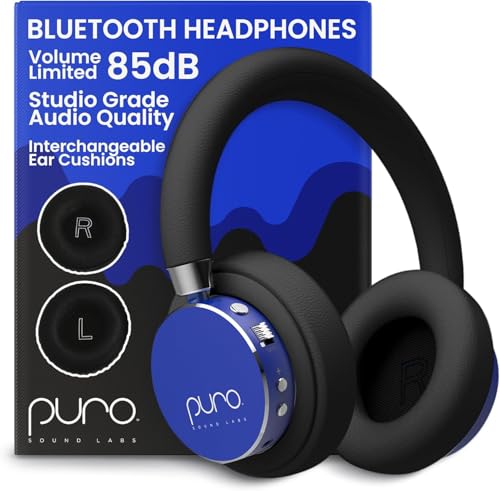
Puro Sound Labs BT2200 Kids Headphones
Bluetooth kids headphones with volume limited to 85 decibels through onboard circuitry that caps output regardless of the connected device’s own volume setting.
JLab JBuddies Studio Wireless Kids Headphones
Wireless kids headphones with a hardware volume limiter set at 85 decibels, built with a folding frame sized for smaller heads.
Common questions
What decibel level is generally considered safe for kids to listen to headphones at for extended periods?
Around 85 decibels or below is the commonly cited threshold where longer listening durations remain reasonably safe, with recommended safe exposure time dropping quickly as volume increases past that point.
Can a child still damage their hearing with volume limited headphones?
It is much less likely at a properly functioning 85 decibel cap, but extremely long daily listening sessions even at a limited volume are not entirely risk free, so duration still matters alongside the volume cap itself.
Do all headphones marketed for kids actually include a hardware volume limiter?
No, some products use kid-friendly colors and sizing without any actual volume limiting circuitry, which is why checking for a specific stated decibel cap in the specifications matters more than the general kid marketed label.
Does turning down the volume on a tablet or phone achieve the same thing as a hardware limiter in the headphone?
It can in the moment, but a child can simply turn the source volume back up, while a hardware limiter in the headphone itself caps output regardless of what the connected device’s volume is set to.
Is noise canceling necessary for a kids headphone to be considered safe?
No, volume limiting is the feature that directly controls safety, noise cancellation is a helpful addition that reduces the temptation to raise volume but is not required for a headphone to have a proper volume cap.
Why do some airlines or parents prefer noise canceling over volume limiting alone for travel?
Airplane cabin noise is loud enough that a non-noise-canceling headphone often gets turned up toward its limited maximum just to be heard over the engine hum, so pairing noise cancellation with a volume limiter addresses both the environment and the output cap at once.
Can a volume limited headphone sound noticeably quieter than a regular adult headphone at the same source volume?
Yes, that is the intended effect, a capped headphone will top out at a lower maximum loudness than an uncapped adult headphone even when the source device is turned all the way up.
Do wireless kids headphones with volume limiting drain battery faster because of the limiting circuitry?
No, the limiter itself uses negligible power compared to the Bluetooth radio and audio amplifier, so it does not meaningfully affect battery life one way or the other.
Is there an independent way to test whether a kids headphone actually caps at its stated decibel limit?
A sound level meter placed near the earcup while playing audio at maximum source volume can give a rough real-world reading, though consumer hearing health organizations occasionally publish their own testing results for popular models as well.
Do volume limited headphones limit all frequencies equally, or can some sounds still come through louder?
Limiting is generally applied across the overall output level rather than frequency by frequency, though some independent testing has found certain models allow specific frequency ranges to exceed the stated cap slightly more than others.
At what age can a child typically switch from volume limited headphones to regular ones?
There is no fixed age, it depends more on whether the child has developed reasonable judgment about volume levels and listening duration, which some families address gradually rather than switching all at once.
Can parental control apps on a phone substitute for a hardware volume limiter in the headphone?
They can restrict the source device’s maximum volume, which helps, but a dedicated hardware limiter in the headphone itself works across any connected device, not just the one phone or tablet the parental control app is installed on.
Do over-ear kids headphones limit volume differently than earbuds marketed for kids?
The limiting approach, a hardware cap in the circuitry, generally works the same regardless of over-ear or earbud design, though earbuds sitting closer to the eardrum make any given volume level feel comparatively louder than the same decibel output from an over-ear cup.
Is 85 decibels loud enough that kids headphones still sound thin or underpowered?
Most users find 85 decibels adequate for normal listening in a quiet to moderately noisy room, though it can feel insufficient in a genuinely loud environment like a car or airplane without a noise canceling feature helping block outside sound.
Can a volume limiter break or stop working over time with heavy use?
It is possible with cheaper circuitry, which is part of why checking reviews specifically for volume limiter reliability, not just general durability, is worth doing before relying on an older or budget model.
Do kids headphones need to meet any official regulation for their volume limiting claims?
Standards exist in some regions for recommended maximum output levels in children’s audio devices, though enforcement and testing rigor vary, which is why specific stated decibel numbers from the manufacturer are more useful than assuming regulatory compliance alone guarantees accuracy.
Should I trust a headphone that advertises noise canceling and kid safe without mentioning a specific decibel limit?
Treat that combination with some skepticism and look for the actual number in the specifications or manual, since kid safe without a stated limit is a marketing phrase rather than a verifiable safety claim.
Final word
Noise cancellation and volume limiting solve related but separate problems, and a kids headphone needs the actual hardware limiter, not just noise cancellation, to meaningfully cap how loud sound reaches a child’s ear. Checking for a specific stated decibel number before buying tells you far more than any kid safe label on the box.
Rachel Simmons
Rachel previously worked in child-product retail and brings a practical, detail-first eye to gear reviews, focusing on safety standards, ease of use and the fine print that matters most for new caregivers.