Which Kids Headphones Actually Limit Volume Safely?
Puro Sound Labs BT2200 leads this comparison with a fixed, non-adjustable 85dB ceiling and a wired backup for dead-battery days. JLab JBuddies Studio Wireless suits tighter budgets with the same safe-listening cap. Frequent flyers get more from the ONANOFF BuddyPhones Cosmos Plus, which adds noise cancelling and an adjustable limit.
Puro Sound Labs BT2200 opens this list because its 85dB cap is fixed, not a setting a curious child can nudge upward. Memory foam pads seal out classroom or cabin noise on their own. A wired 3.5mm cable backs up the Bluetooth connection, so a flat battery never ends the listening session. Pairing menus, though, take more patience from a five-year-old than a plug-in cable does.
Marketing calls plenty of headphones kid safe without stating an actual decibel number anywhere in the listing. We compared the volume-limiting method each brand states, connection type, ear cup fit range and owner reports on durability.
The best picks, ranked
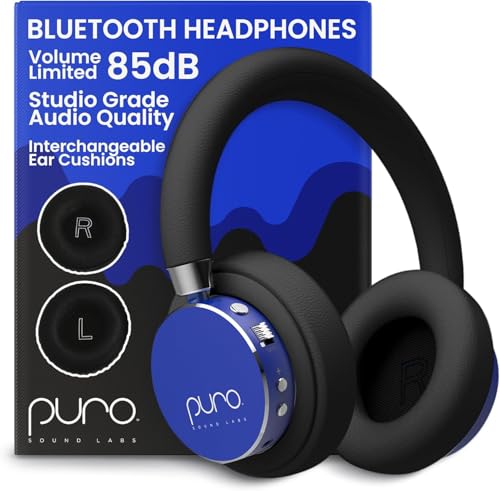
Puro Sound Labs BT2200
A fixed 85dB ceiling on the drivers cannot be overridden from a paired phone or tablet, unlike an adjustable design. Over-ear memory foam cushions block ambient noise passively, so the child never needs extra volume to compensate. Bluetooth handles daily use, and a 3.5mm cable steps in the moment the battery runs flat.
Pros
- A hardware cap fixes output at 85dB regardless of device volume
- Memory foam cushions cut outside noise without raising volume
- A wired cable keeps sound running after the battery dies
Cons
- Young children need help working the Bluetooth pairing menu
- Ear cups warm up during multi-hour wear
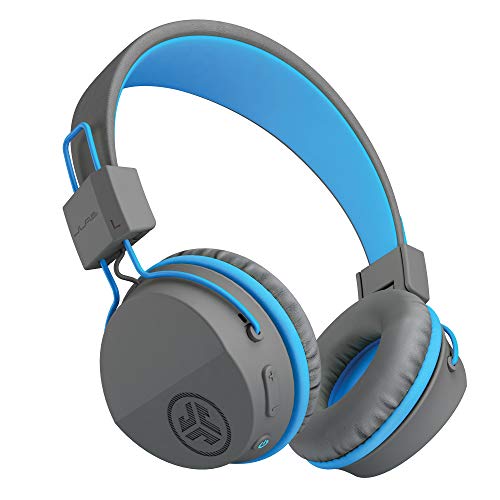
JLab JBuddies Studio Wireless
An 85dB safe-listening cap holds output in the range audiologists recommend for young ears. The padded headband extends across several years of head growth, from early elementary into middle school. Folding hinges shrink the frame down for a backpack pocket or car door pouch.
Pros
- The headband keeps fitting as a child grows for several years
- Folding hinges shrink it down for backpacks and car trips
- An aux cord backup works once the battery runs out
Cons
- Plastic hinges tend to loosen before other parts wear out
- Bluetooth range drops once a wall sits between rooms

ONANOFF BuddyPhones Cosmos Plus
A physical switch locks output at a lower setting for a toddler or a higher kid-safe ceiling for an older child. Active noise cancelling mutes engine drone on a flight, removing the usual reason a child reaches for higher volume. Folding arms and a bundled travel pouch keep the pair tidy inside a carry-on bag.
Pros
- An adjustable limiter suits both toddlers and older kids
- Active noise cancelling reduces plane and car engine noise
- A folding design ships with a matching travel pouch
Cons
- Noise cancelling shortens battery life versus the setting off
- The detachable cable is easy for a child to misplace

LilGadgets Untangled Pro
A SharePort jack accepts a second wired headphone, so siblings share one movie or one tablet on a road trip. Bluetooth connects to phones and tablets without a cord across the back seat. Built-in limiting protects hearing automatically, with no separate switch for a child to manage.
Pros
- SharePort lets two kids listen from a single source
- No loose dial or switch for a child to fiddle with
- A soft headband holds up over long car rides
Cons
- Audio only flows one direction through the SharePort jack
- Micro USB charging lags behind USB-C on newer rivals
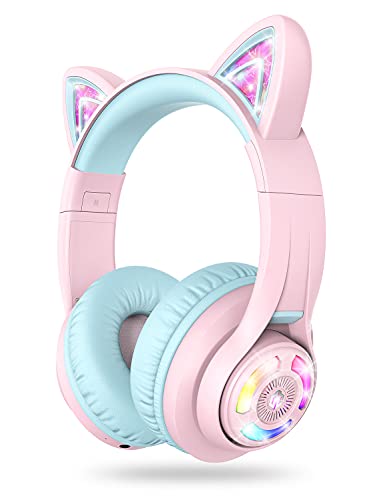
iClever BTH13
LED lights ring each ear cup, a detail that appeals to kids who want gear that looks as fun as it sounds. A folding hinge and compact frame fit a school bag side pocket easily. Bluetooth 5.0 pairs with a shared family tablet faster than older Bluetooth versions.
Pros
- LED lighting adds visual appeal for younger kids
- The folded frame fits a school bag side pocket
- Bluetooth 5.0 pairs faster than older Bluetooth generations
Cons
- Battery runtime drops noticeably with the LEDs switched on
- Build quality feels lighter duty than pricier rivals
Mpow CH6
Skipping Bluetooth entirely means a tablet or airplane seatback screen plugs in and plays without a pairing step. Built-in limiting caps output with no switch that could break or go missing. Soft headband padding holds up across several hours on a long car trip.
Pros
- No pairing step means instant use straight out of the box
- A tangle-resistant cable survives daily time in a backpack
- The adjustable band fits toddlers through older kids
Cons
- No Bluetooth option rules out cordless use entirely
- The cable is a snag risk for an active toddler

Kidz Gear Wired Headphones for Kids
Smaller ear cups and a lightweight band fit toddlers and preschoolers better than headphones sized for older kids. An in-line volume wheel lets a parent set the ceiling before handing the pair over. Fewer moving parts mean less for little hands to break during travel.
Pros
- The smaller fit suits younger heads than most kids models
- An in-line wheel gives a parent direct volume control
- Few parts means less to lose or break while traveling
Cons
- The cable runs short for stretching across a back seat
- No Bluetooth option exists as the child gets older
How to pick the right one
What actually matters when buying kids headphones Pediatric hearing guidance treats 85 decibels as a ceiling for extended listening, roughly the volume of city traffic. Not every headphone marketed for children enforces that number the same way. Some fix the limit permanently, others let a parent switch between settings, and a few skip real limiting behind vague kid-friendly branding. A growing head needs an adjustable band, since a pair bought at five should still fit at eight. Durability outweighs looks here, given drops, chewing and time spent wedged in a car seat.
Wired versus wireless for kids A wired pair needs no pairing step, which suits a toddler using a hand-me-down tablet or a seatback screen. Wireless models free up movement for an older kid climbing around furniture or riding a bike. Bluetooth also drains a battery, so a long flight can end in dead headphones with no warning. Models like the Puro BT2200 and JLab JBuddies Studio Wireless include a wired backup cable, covering both situations in one purchase.
Fit for toddlers versus older kids A light band and shallow ear cups suit a small head, since an adult-sized kids headphone slides and breaks its seal. Kidz Gear and similar toddler-focused designs use smaller cups and shorter arms for exactly that reason. An adjustable, foldable frame serves an older child better, keeping pace with growth through elementary school. A headband with little room to extend will need replacing within a year on a fast-growing child.
Best picks for flights, car rides and shared listening Active noise cancelling earns its keep on a flight, where engine drone otherwise tempts a child to push volume higher. A detachable cable, like the one on the ONANOFF BuddyPhones Cosmos Plus, also plugs into a seatback entertainment jack. A SharePort-style jack suits road trips better, letting two kids listen to one device from the back seat. Classroom use or a short errand rarely needs noise cancelling at all, so a simpler wired pair skips that feature without losing volume protection.
How they compare
| # | Model | Connection | Best for | Score | Price |
|---|---|---|---|---|---|
| 1 | Puro Sound Labs BT2200 | Bluetooth wireless plus 3.5mm wired backup | Best overall | 9.4 | Check price |
| 2 | JLab JBuddies Studio Wireless | Bluetooth with included aux cord | Best value | 9.2 | Check price |
| 3 | ONANOFF BuddyPhones Cosmos Plus | Bluetooth wireless with detachable audio cable | Best for travel and flights | 9.0 | Check price |
| 4 | LilGadgets Untangled Pro | Bluetooth wireless with SharePort input | Best for road trips and sharing | 8.7 | Check price |
| 5 | iClever BTH13 | Bluetooth 5.0 with 3.5mm aux option | Best budget wireless | 8.4 | Check price |
| 6 | Mpow CH6 | Wired 3.5mm cable, no Bluetooth | Best budget wired | 8.2 | Check price |
| 7 | Kidz Gear Wired Headphones for Kids | Wired 3.5mm cable | Best for toddlers and young children | 8.0 | Check price |
Good to know
What decibel limit counts as safe for kids headphones?
Audiologists commonly cite 85dB as a ceiling for extended listening, since prolonged exposure above that level raises the risk of hearing damage over years. Check the listing for a stated decibel cap rather than trusting the word kids on the box alone.
Do all kids headphones actually limit volume?
No. Plenty of headphones marketed for children are simply smaller or decorated for kids without a real limiter inside. Look for a stated decibel cap in the specifications instead of assuming from the label.
Is wired or wireless better for a toddler?
Wired usually suits a toddler best, since there is no pairing step and no small Bluetooth button to fiddle with. Wireless becomes more useful once a child manages a tablet independently and moves around while listening.
Can volume-limited headphones still damage hearing?
Yes, if worn for many hours daily at the maximum allowed level. A limiter caps peak output, but total listening time still matters, so regular breaks help even with a capped pair.
Which kids headphones work best on airplane flights?
Active noise cancelling models such as the ONANOFF BuddyPhones Cosmos Plus reduce engine drone, which otherwise tempts a child to raise the volume. A detachable cable that fits a seatback jack also helps on longer flights.
Are volume-limited headphones safe for a 3-year-old?
A properly fitted pair with a built-in limiter, like the Kidz Gear Wired Headphones, suits that age well. Fit matters as much as the limiter itself, since loose cups let a toddler push the headphones closer to the ear canal.
Kids headphones or adult headphones turned down low, which is safer?
Dedicated kids headphones with a hardware limiter are safer, since the cap holds even if a child adjusts a connected device’s volume slider. A manually turned-down adult headphone can just as easily be turned back up.
How long should a child wear headphones in one sitting?
There is no single fixed number, but pediatric hearing resources generally suggest regular breaks during long sessions, such as a flight or car ride, rather than continuous hours-long use.
How can a parent verify a headphone’s volume limiter actually works?
Check the manufacturer’s specification sheet for a stated decibel number rather than relying on packaging claims of safe listening. Owner reviews mentioning a measured or perceived loudness ceiling offer a secondary signal worth reading before buying.
The bottom line
Puro Sound Labs BT2200 stays the strongest all-around pick, thanks to a fixed 85dB limit and a dual wired-wireless setup for dead-battery days. Parents outfitting a toddler for the first time should start with the Kidz Gear Wired Headphones instead, since its smaller fit suits a child likely to lose or outgrow a pair within a year. Families who fly often get more mileage from the ONANOFF BuddyPhones Cosmos Plus, where the noise cancelling actually reduces the urge to raise volume in the first place.
Marcus Chen
Marcus covered consumer electronics for enthusiast tech publications for six years before joining ChoiceCrest. He specializes in translating manufacturer spec sheets into plain-language buying advice, with a focus on audio, computing accessories and smart-home gear.
You might also need
How Does a Drawing Tablet’s Pressure Sensitivity Actually Register Pen Force?

Which Pet Camera Can Actually Toss a Treat Accurately?

Which Wi-Fi Extender Actually Kills Dead Zones