9 Pretend Play Food Sets Kids Actually Keep Playing With
Melissa & Doug’s Wooden Food Groups set is the strongest starting point, balancing variety with pieces that survive years of play. Learning Resources New Sprouts Munch It! suits toddlers under three best. Hape Healthy Fruits works well once a child wants to slice and reassemble food during play.
For a first play food purchase, Melissa & Doug’s Wooden Food Groups set covers the most ground, while Learning Resources New Sprouts Munch It! is the safer pick under three. Hape Healthy Fruits suits kids who want to slice and reassemble. All three survive being dropped, stacked and carried around the house daily.
Play food buying gets tricky because a huge piece count looks like value, yet often means dozens of identical tiny items that scatter under furniture. What sustains play is variety across categories and pieces sized for small hands. We compared published materials and finishes, piece counts, stated age ranges, and what parents report about durability and cleanup after a year of use.
What we recommend
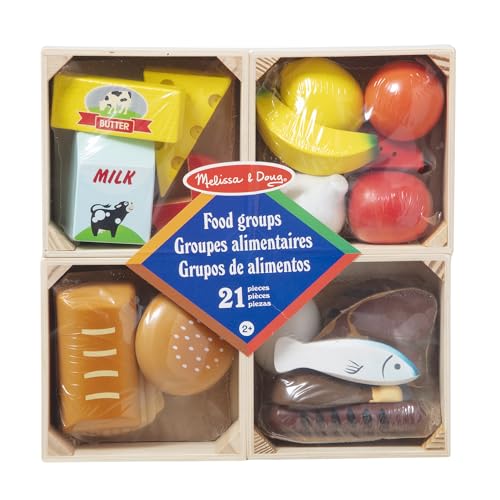
Melissa & Doug Wooden Food Groups Play Food Set
Pieces spread across four food groups instead of one, so pretend meals stay varied past the first week. Painted wood survives drops, stacking and years of handling. Owners say the divided crates make cleanup nearly automatic.
Pros
- Balanced variety across food categories
- Wood construction holds up for years
- Crates simplify tidying after play
Cons
- Painted finish chips if soaked
- Heavier than plastic for toddler hands
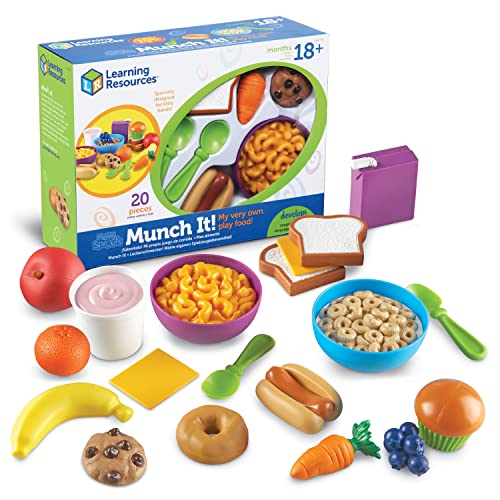
Learning Resources New Sprouts Munch It! Play Food Set
Soft rubberised plastic suits toddler hands and mouths better than wood or hard plastic. Rinsing or wiping cleans pieces fully, and most survive a dishwasher top rack. Children typically graduate to wooden sets by age four, so treat this as a stage purchase.
Pros
- Shaped and sized for toddler hands
- Cleans thoroughly with a rinse or wipe
- No hard edges or small parts
Cons
- Outgrown by around age four
- Smaller piece count than larger sets
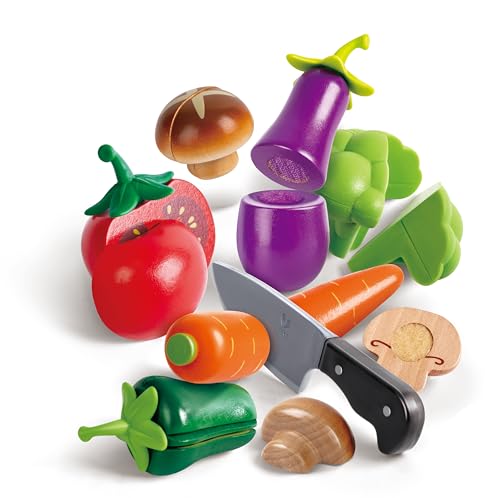
Hape Healthy Fruits Wooden Play Food Set
Fabric hinges and hook fasteners let fruit halves separate with a pull and reattach cleanly. That repeatable cut and rejoin action holds attention longer than static pieces. Fasteners wear fastest on favorite pieces after heavy use.
Pros
- Cutting action keeps play sessions longer
- Solid wood construction throughout
- Water based paint finish
Cons
- Fasteners weaken on frequently used pieces
- Toy knife is easy to misplace

KidKraft Tasty Treats Pretend Play Food Set
KidKraft sizes each piece to sit properly on toy kitchen shelves and pans, avoiding the oversized look of generic sets. Prepared meals and snacks dominate the lineup rather than raw ingredients. It pairs well alongside a wooden food group set instead of duplicating it.
Pros
- Scaled correctly for play kitchen furniture
- Different food types than basic sets
- Bright, appealing finishes
Cons
- Mixed materials wear at different rates
- Less useful without a matching kitchen

Battat Wooden Toy Food Set
Battat delivers a high piece count at a lower cost than premium wooden brands. Finishing looks less refined and edges feel slightly sharper than the top picks. For a second set or a shared playroom, that tradeoff is easy to accept.
Pros
- High piece count for the price
- Wood construction throughout
- Good fit for shared playrooms
Cons
- Finishing is less refined
- Edges are slightly less rounded

Melissa & Doug Cutting Food Set
Hook fasteners join wooden pieces that pull apart with a distinct sound children love repeating. That cut and rejoin motion builds hand control through practice. Small pieces mean closer supervision when a younger sibling is nearby.
Pros
- Builds hand control through repetition
- Satisfying cutting action holds interest
- Includes a board and toy knife
Cons
- Small pieces need supervision near toddlers
- Fasteners loosen with heavy use

Fisher-Price Laugh & Learn Say Please Snack Set
Spoken phrases and sound effects engage children too young to invent their own pretend scenarios. Think of it as a bridge between baby play and true imaginative role play. Older children usually prefer quiet sets they can narrate themselves.
Pros
- Engages children too young for open ended play
- Chunky pieces are easy to grip
- Wipes clean quickly
Cons
- Repeated sounds tire out adults
- Electronics limit how it can be washed
Before you buy
Wood or plastic: which suits your child’s age? Age drives the material choice more than durability alone. Soft rubberised plastic suits under-threes since it is light, chunky, and washes clean after mouthing. Wood holds up through years of harder play and feels sturdier once dropped. Many households own both, retiring the plastic set once a child starts inventing longer stories.
Does piece count actually matter? A sixty piece set that repeats the same small fruit item produces less imaginative play than twenty varied pieces. Look at what’s shown in the listing photo, not the number in the title. Divided storage crates matter more than they seem, because easy cleanup keeps a set complete over time.
What age rating do cutting sets need? Cutting sets and detailed pieces often carry a three-plus age rating for a reason: separated halves and small accessories are choking hazards. A household with a younger sibling should keep those sets on a table, not the floor. Chunky toddler-range sets avoid the issue until everyone is old enough.
How do you clean wooden and plastic play food? Rinse or wipe plastic pieces with a damp cloth or mild disinfectant. Wood needs a barely damp cloth and immediate drying, since soaking swells the grain and lifts paint. Skip the dishwasher entirely for wooden pieces, no matter how tempting it looks.
The lineup, side by side
| # | Model | Material | Best for | Score | Price |
|---|---|---|---|---|---|
| 1 | Melissa & Doug Wooden Food Groups Play Food Set | Painted wood | Best overall | 9.4 | Check price |
| 2 | Learning Resources New Sprouts Munch It! Play Food Set | Soft rubberised plastic | Best for toddlers | 9.2 | Check price |
| 3 | Hape Healthy Fruits Wooden Play Food Set | Wood with hook fasteners | Best for cutting play | 9.0 | Check price |
| 4 | KidKraft Tasty Treats Pretend Play Food Set | Wood and plastic mix | Best for toy kitchens | 8.8 | Check price |
| 5 | Battat Wooden Toy Food Set | Wood | Best value | 8.6 | Check price |
| 6 | Melissa & Doug Cutting Food Set | Wood with hook fasteners | Best for fine motor skills | 8.3 | Check price |
| 7 | Fisher-Price Laugh & Learn Say Please Snack Set | Plastic with electronics | Best for youngest children | 8.0 | Check price |
Common questions
What age is pretend play food appropriate for?
Soft chunky sets suit children from around eighteen months. Wooden sets and cutting sets usually carry a three-plus rating, since separated pieces and small accessories can pose a choking risk.
Is wooden or plastic play food better for toddlers?
Plastic works better under three years old because it’s lighter, safer for mouthing, and easier to wash thoroughly. Wood takes over once a child stops putting toys in their mouth, since it lasts through years of rough play.
How do you clean pretend play food sets?
Wipe plastic pieces with a damp cloth or mild disinfectant, then rinse. Dry wooden pieces immediately after a light wipe, since soaking swells the wood and chips the paint.
How many play food pieces does a child actually need?
Twenty to thirty varied pieces cover most children’s play. Beyond that count, extra items add clutter rather than value, and variety across food types matters more than the total.
Do you need a toy kitchen to use play food?
No. A coffee table or cardboard box works fine as a pretend cafe. A kitchen adds structure and storage later, but the food itself drives the play, so it’s worth buying first.
Are wooden cutting food sets safe for kids?
Yes, since the knives are blunt wood or plastic and only separate pieces joined by fasteners. The main risk is separated halves reaching a younger sibling, which is why most sets carry a three-plus rating.
How long do the hook and loop fasteners last?
Fasteners typically last months to years, depending on how hard a child pulls them apart. Favorite pieces wear out first. Some parents replace worn strips with adhesive hook and loop tape to restore the grip cheaply.
Does pretend play food help child development?
It supports language, sequencing and turn taking through role play, and cutting sets add fine motor practice. Sets grouped by food category also give parents a natural way to talk about food at mealtimes.
Melissa & Doug vs Hape play food: which is better?
Melissa & Doug’s Wooden Food Groups set covers more categories for broader pretend play. Hape’s Healthy Fruits set focuses on cutting and reassembling, which suits kids who enjoy repetitive slicing action more than variety.
Our pick
Melissa & Doug’s Wooden Food Groups set is the strongest first purchase, since its spread across categories keeps pretend meals varied and the wood outlasts nearly everything else in the toy box. Choose the Learning Resources New Sprouts Munch It! set for a toddler under three, then add Hape Healthy Fruits once cutting and slicing become the main draw.
Rachel Simmons
Rachel previously worked in child-product retail and brings a practical, detail-first eye to gear reviews, focusing on safety standards, ease of use and the fine print that matters most for new caregivers.


