Do Cat Water Fountains Need Filter Replacement?
Yes, most cat water fountains use a filter that needs to be replaced regularly, typically every two to four weeks depending on the fountain and how many cats use it. Skipping replacement does not usually break the pump immediately, but it lets the filter clog with hair and minerals, which reduces water flow and can make the fountain a less appealing drinking source for your cat.
What the filter in a cat fountain actually does
A cat water fountain filter has two main jobs: it catches physical debris like cat hair, food particles, and dust before they reach the pump, and it passes water through activated carbon to reduce odors and some dissolved impurities. The carbon is not a sterilizer and does not make water medically safe, but it does improve taste and smell, which matters because cats are often picky about water freshness. The filter also protects the pump from hair and grit that would otherwise shorten its life.
How often filters need replacing
Most manufacturers recommend replacing the carbon filter every two to four weeks, and the foam pre-filter more often if you have a long-haired cat or multiple cats drinking from the same fountain. A single cat on a 60-ounce fountain might stretch a carbon filter to four weeks, while a three-cat household may need a new one every two weeks. The honest rule is to check the filter weekly: if it looks matted with hair or the water flow has slowed noticeably, replace it regardless of the calendar.
What happens if you skip replacement
Skipping a filter change does not immediately harm your cat, but it gradually degrades the fountain’s performance. A clogged filter reduces flow, which can make the fountain quieter or cause water to trickle rather than stream, and some cats lose interest in a fountain that stops moving water well. The pump also works harder against a clogged filter, which can shorten its lifespan. Over time, a saturated carbon filter stops adsorbing odors and can even begin releasing trapped material back into the water.
Foam pre-filters versus carbon filters
Most fountains use two filter types: a coarse foam pre-filter that wraps around the pump intake and catches hair and large particles, and a carbon cartridge that sits in the water path. The foam pre-filter is usually rinseable and can last several weeks with regular rinsing, while the carbon cartridge is not meant to be cleaned and reused. Some fountains also include a cotton or polyester layer for fine particles. Check your fountain’s manual because replacement intervals differ between the foam and carbon components.
Signs your fountain filter needs changing now
Visible matting of hair on the filter surface, reduced water flow, a change in water smell, or a slimy film on the filter are all signs to replace it immediately. Some fountains have a flow indicator or a filter change reminder light, but most do not, so a weekly visual check is the most reliable method. If your cat suddenly stops drinking from the fountain, a dirty filter is one of the first things to rule out.
How to make filters last closer to their rated interval
Rinsing the foam pre-filter every few days under running water removes hair before it reaches the carbon cartridge. Keeping the fountain away from food bowls reduces food particles in the water, and using filtered or bottled water instead of hard tap water slows mineral buildup on the carbon. Even with these habits, carbon filters have a finite capacity and should still be replaced on schedule, not just rinsed.
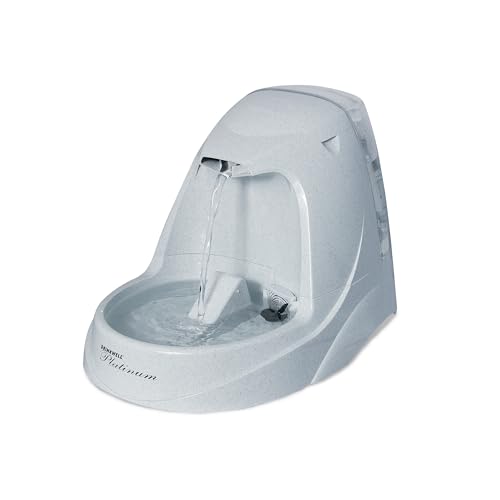
PetSafe Drinkwell Platinum Pet Fountain
A widely sold plastic fountain with a replaceable carbon filter and foam pre-filter, and a large capacity that suits multi-cat homes.

Catit Flower Fountain
A compact fountain that uses a triple-action filter combining carbon, ion exchange resin, and a cotton mesh layer, with filters sold in multi-packs.
Frequently asked questions
How often should I replace the filter in my cat’s water fountain?
Most makers say every two to four weeks. In practice, check weekly and replace when the filter looks matted with hair or the flow slows. Multi-cat homes usually need more frequent changes.
Can I rinse and reuse a carbon filter instead of replacing it?
Rinsing removes loose hair and debris, but it does not restore the carbon’s capacity to adsorb odors. Once the carbon is saturated, it needs replacement, not cleaning.
What happens if I never change the fountain filter?
Flow will gradually drop, the pump will work harder, and water taste and smell may worsen. The fountain will not necessarily break, but it becomes less effective and less appealing to your cat.
Do all cat water fountains use filters?
Most do, but a few simple designs rely only on a pump and a foam pre-filter, or no filter at all. Check the product details if filter-free operation matters to you.
Are fountain filters universal, or do I need the brand-specific ones?
Most filters are model-specific. Generic replacements exist for some popular fountains, but fit and carbon quality vary, so brand-specific filters are the safer choice.
Can a dirty filter make my cat sick?
A dirty filter is unlikely to make a cat sick on its own, but it can harbor bacteria and reduce water freshness. Keeping the fountain and filter clean is part of basic hygiene.
Why does my fountain’s water flow slow down even after I change the filter?
The pump intake or impeller may be clogged with hair or mineral scale. Remove the pump and clean the impeller area according to the manual.
Do I need to replace the foam pre-filter as often as the carbon filter?
The foam pre-filter can often be rinsed and reused for several weeks, but it should be replaced when it becomes permanently matted or torn. Carbon filters are not reusable.
Is it okay to use tap water in a cat fountain?
Yes, but hard tap water leaves mineral deposits that clog filters faster. Filtered or bottled water can extend filter life, though it does not eliminate the need for replacement.
How can I tell if my fountain has a filter change indicator?
Some models have a light or a floating indicator. Most do not, so a weekly visual check of the filter and flow is the most reliable method.
Will my cat stop drinking from the fountain if the filter is dirty?
Some cats are sensitive to changes in water taste or flow and may drink less. If you notice a drop in drinking, change the filter and clean the fountain before assuming a medical issue.
Can I run the fountain without a filter?
Many fountains will run without a filter, but you lose the debris-catching and odor-reducing benefits, and hair may reach the pump more easily. It is not recommended for long-term use.
Do charcoal filters remove bacteria from the water?
No. Carbon filters reduce odors and some chemicals, but they are not designed to remove bacteria. The fountain is not a water purifier.
How do I clean the fountain between filter changes?
Disassemble the fountain, wash removable parts with mild soap and warm water, rinse thoroughly, and wipe the pump exterior. Avoid harsh cleaners that could leave residue.
Are filters for cat fountains expensive to replace regularly?
Costs vary by brand and pack size, but filters are generally inexpensive relative to the fountain itself. Buying multi-packs usually lowers the per-filter cost.
Can I use a filter designed for a different fountain model?
Only if it fits properly and the manufacturer lists it as compatible. A loose or oversized filter can bypass water and reduce effectiveness.
Does the number of cats affect how often I change the filter?
Yes. More cats means more hair and saliva in the water, which clogs the filter faster. Multi-cat homes often need changes every two weeks or even weekly.
What should I do if my fountain’s filter starts to smell?
Replace it immediately. A smelly filter is saturated and may be releasing trapped material. Also clean the fountain thoroughly to remove biofilm.
Is it normal for the carbon filter to turn dark or discolored?
Yes, carbon darkens as it traps material. Discoloration alone is not a problem, but combined with slow flow or odor it signals replacement time.
Can I compost or recycle used fountain filters?
Most are not recyclable because they mix carbon, foam, and plastic. Check local guidelines and the manufacturer’s disposal advice; typically they go in the trash.
Final word
Filter replacement is not a scam or an upsell; it is basic maintenance that keeps the fountain flowing and the water appealing. Buy filters in multi-packs, check the foam pre-filter weekly, and replace the carbon cartridge on the schedule your manual suggests or sooner if flow drops. Your cat will drink more, and your pump will last longer.
Olivia Hartley
Olivia spent several years working at an animal shelter and a pet-supply retailer before joining the editorial team. She researches pet gear with an emphasis on safety, comfort and the fine print that owners often miss.