Will a Heated Cat Bowl Stop Outdoor Water From Freezing?
K&H Pet Products Thermal-Bowl suits most single-cat setups with a low 25-watt heater and durable housing. Farm Innovators Model HB-4 scales up for multi-cat feeding stations. API Heated Cat Bowl fits tight budgets with a weighted, non-tip base. All three block ice down to freezing and below.
Standard bowls freeze solid within hours once temperatures fall below 32 degrees Fahrenheit, cutting outdoor cats off from water entirely.
This comparison weighs heater wattage, cord chew-resistance and bowl capacity, since those specs matter more outdoors than bowl shape or color. Owner reports on cord durability through repeat winters also shaped the ranking.
Before you buy
Why do outdoor cats need a heated water bowl? Plain plastic or ceramic bowls freeze solid within hours once the temperature drops below 32 degrees Fahrenheit. A frozen bowl cuts off water access completely, a bigger risk to outdoor cats than cold air alone. A low-wattage heating element built into the base or liner solves that by keeping the surface just above freezing.
How much wattage does a heated cat bowl need? Mild climates rarely need more than a 25-watt bowl, the draw used by both the K&H Thermal-Bowl and the API model. Regions with sustained sub-zero stretches call for 40 to 60 watt bowls, such as the Farm Innovators HPB-125, rated to minus 40 degrees Fahrenheit. Thermostat-equipped bowls like the HB-4 and Petmate model cut power automatically once temperatures climb past freezing.
Are heated cat bowl cords safe outdoors? Outdoor cords need chew-resistant coating and routing away from claws and teeth. Vinyl-coated or metal-armored cords cover most bowls in this comparison, though placement still matters. A cord run through open grass invites more chewing than one tucked against a wall or post.
Which heated bowl works best for multiple cats or joint issues? Colonies and multi-cat households do better with larger capacity, like the Farm Innovators HB-4’s 96 ounces, or a combination unit like the Thermo-Kitty Cafe that separates food and water. Older cats or those with arthritis benefit from the elevated K&H model, which reduces neck strain during drinking. Splitting food and water into separate compartments also stops kibble from freezing to a shared metal dish.
The top picks, ranked
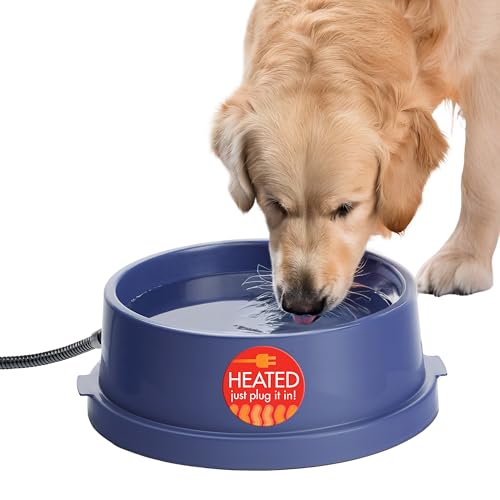
K&H Pet Products Thermal-Bowl Heated Pet Bowl
A 25-watt heating element keeps this bowl’s water liquid down to about minus 20 degrees Fahrenheit. Cold-resistant plastic housing avoids the cracking that thin dish-style bowls develop in freezing weather. Multiple winters of outdoor use rarely wear through the cord, according to owner reports.
Pros
- Low 25-watt draw keeps electricity cost down
- Cold-resistant housing survives repeated freeze-thaw cycles
- Chew-resistant cord holds up through multiple winters
Cons
- Lacks a weighted base, so it can tip on uneven ground
- Sold in a single size only

Farm Innovators Model HB-4 Heated Pet Bowl
Feeding stations with two or more cats benefit from this bowl’s 96-ounce capacity. A thermostat activates the heater only below 40 degrees Fahrenheit, trimming power draw during mild stretches. Stainless steel lining resists the staining that plastic-only liners pick up over time.
Pros
- 96-ounce capacity serves multi-cat households
- Thermostat cuts power draw above freezing
- Stainless liner resists staining and odor buildup
Cons
- 60-watt draw raises energy cost during deep cold
- Bulkier footprint than single-cat bowls

API Heated Cat Bowl
Allied Precision Industries builds this bowl around a compact 25-watt element in a 1-quart size for single-cat setups. Its shallow profile lets a cat reach the bottom without submerging whiskers. A weighted base resists tipping when wind gusts across a porch or yard.
Pros
- Priced for single-cat households on a budget
- Weighted base resists wind-driven tipping
- Shallow profile suits whisker-sensitive cats
Cons
- 1-quart capacity needs more frequent refills
- Not rated for sustained sub-zero temperatures
K&H Pet Products Thermal-Bowl Elevated Heated Cat Bowl
Raising the bowl on a stand cuts neck strain for older cats and those with arthritis. The same 25-watt element used in K&H’s ground model keeps energy draw low. Elevation also keeps snow and debris out of the water better than a ground-level dish.
Pros
- Elevated stand eases strain on aging joints
- Height keeps snow and debris out of the water
- Shares the low-draw 25-watt heater with K&H’s ground model
Cons
- Taller profile is less stable in strong wind
- Priced above the non-elevated version
Farm Innovators HPB-125 Heated Pet Bowl
Northern climates with prolonged deep freezes call for this bowl’s minus 40 degree Fahrenheit rating. A metal bottom plate transfers heat more evenly than plastic-only designs. Cord routing is built to limit chew exposure for cats housed outdoors.
Pros
- Rated to function down to minus 40°F
- Metal plate distributes heat more evenly
- Cord routing reduces outdoor chew exposure
Cons
- Draws more wattage than most single-cat bowls
- Metal base feels cold to the touch when unplugged

K&H Pet Products Thermo-Kitty Cafe Heated Bowl
One base pairs a heated water bowl with an insulated, unheated food bowl, so kibble does not freeze to a metal dish. Feeding stations that need both food and water in one footprint suit this design well. A compact size fits small shelters and porches.
Pros
- Combines heated water and insulated food in one base
- Insulated side stops kibble from freezing to metal
- Compact footprint fits small shelters
Cons
- 13-ounce sides hold less than dedicated single bowls
- Only the water side is heated
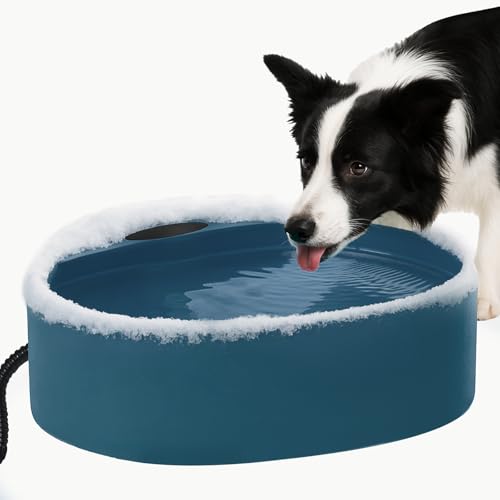
Petmate Heated Outdoor Pet Bowl
A wide, low-profile base resists tipping in open, windy spots like barns and driveways. Its 60-watt element includes a thermostat that reduces power use once temperatures climb above freezing. Rubberized feet grip concrete and decking better than smooth plastic.
Pros
- Wide base resists wind and tipping
- Rubberized feet grip most outdoor surfaces
- Thermostat trims power draw in mild weather
Cons
- Larger footprint needs more clearance
- Draws more wattage than compact single-cat bowls
Side by side
| # | Model | Wattage | Best for | Score | Price |
|---|---|---|---|---|---|
| 1 | K&H Pet Products Thermal-Bowl Heated Pet Bowl | 25 watts | Best overall | 9.4 | Check price |
| 2 | Farm Innovators Model HB-4 Heated Pet Bowl | 60 watts | Best for multiple cats | 9.1 | Check price |
| 3 | API Heated Cat Bowl | 25 watts | Best value | 8.8 | Check price |
| 4 | K&H Pet Products Thermal-Bowl Elevated Heated Cat Bowl | 25 watts | Best for cats with joint issues | 8.6 | Check price |
| 5 | Farm Innovators HPB-125 Heated Pet Bowl | 40 watts | Best for extreme cold | 8.4 | Check price |
| 6 | K&H Pet Products Thermo-Kitty Cafe Heated Bowl | 25 watts (water side only) | Best for combined food and water | 8.1 | Check price |
| 7 | Petmate Heated Outdoor Pet Bowl | 60 watts | Best for wind resistance | 8.0 | Check price |
Common questions
Are heated cat bowls safe to leave outside all winter?
Yes. Bowls with chew-resistant, properly routed cords are built for continuous outdoor winter use, though checking the cord periodically is still worthwhile.
How much electricity does a heated cat bowl use?
Most single-cat bowls draw between 25 and 60 watts, similar to a small night light, and thermostat models cut power above freezing.
Can a heated cat bowl work without a nearby outlet?
No. Every heated bowl needs a standard outlet, so placement depends on cord reach to power.
What is the difference between a heated bowl and a bowl warmer base?
A heated bowl has the element built into the dish itself. A warmer base is a separate heated plate that an existing bowl sits on top of.
Can heated cat bowls be used in an unheated garage?
Yes. Unheated garages, sheds and barns are common placements, since indoor plumbing access is not required.
What size heated bowl works for two or three cats?
Bowls in the 60 to 96 ounce range, like the Farm Innovators HB-4, cut down on how often water needs refilling.
Is a heated bowl or a heated mat better for outdoor cats?
A heated bowl warms the water directly. A heated mat only warms the surface a bowl sits on, which does less in deep cold.
Do heated cat bowls shut off automatically in warm weather?
Models with a built-in thermostat, including the Farm Innovators HB-4 and Petmate Outdoor bowl, switch off once temperatures rise above freezing.
Which heated cat bowl suits cats with arthritis?
The elevated K&H Thermal-Bowl raises the dish on a stand, easing neck strain for older or arthritic cats while using the same low-wattage heater.
The verdict
K&H Pet Products Thermal-Bowl covers most single-cat outdoor setups with low energy draw and a cord built for repeat winters. Multi-cat households should size up to the Farm Innovators HB-4, while climates with sustained deep freezes need the minus 40 rated HPB-125.
Olivia Hartley
Olivia spent several years working at an animal shelter and a pet-supply retailer before joining the editorial team. She researches pet gear with an emphasis on safety, comfort and the fine print that owners often miss.