Which Yoga Mats Work Best Indoors on Hard Floors?
Manduka PRO outlasts everything here, pairing 6 mm of dense PVC with a closed-cell surface that never soaks up sweat. Liforme Original prints alignment markers under a polyurethane top for solo practice. JadeYoga Harmony holds the most traction barefoot, because open-cell rubber grips harder as hands get damp.
Manduka PRO suits anyone practising several times a week on hardwood or tile at home, since 6 mm of dense closed-cell PVC keeps joints off the floor and repels sweat. Break-in is the catch: the surface feels slick for several sessions before grip settles.
Indoor practice reshuffles the priorities. Nobody carries a home mat to a park, so weight stops mattering while floor grip, cushioning over hard surfaces and off-gassing in a closed room move to the front. We compared stated thickness, surface material, dimensions, weight and closed versus open cell construction, then weighed what long-term owners report about slipping, curling corners and rubber smell that lingers.
The best picks, ranked

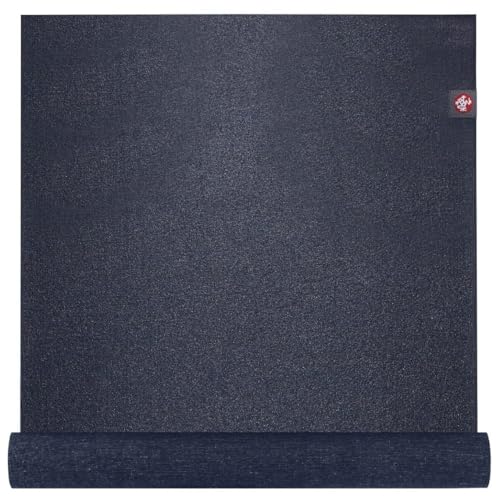
Manduka PRO Yoga Mat
Six millimetres of dense PVC gives a floor feel no thin travel mat reaches on hardwood or tile. Sweat and skin oils sit on the closed-cell surface instead of soaking in, so cleaning means a wipe rather than a wash. Two things to plan for: several weeks of break-in, and roughly seven and a half pounds to move each time.
Pros
- Dense enough that knees never feel the floorboards
- Closed cell surface absorbs no sweat or odour
- Covered by a lifetime guarantee from Manduka
Cons
- Slick until broken in across several sessions
- Heavy to unroll, hang and store daily

Liforme Original Yoga Mat
Etched guide lines run the length and width, giving foot spacing and hip squaring a visual reference when no teacher is watching. Grip arrives on day one, because the eco-polyurethane top holds wet or dry with no break-in. Length runs 72.8 inches, generous for tall practitioners and awkward in a small bedroom.
Pros
- Alignment markers correct placement in self-guided practice
- Polyurethane surface grips from the very first session
- Extra length and width fit taller bodies properly
Cons
- Surface scuffs and marks more readily than PVC
- Long footprint crowds tight apartment floors

JadeYoga Harmony Yoga Mat
Open-cell natural rubber draws moisture in rather than letting it pool, which keeps barefoot traction high deep into a flow. Thickness measures 3/16 of an inch, plenty over a rug and modest padding on bare tile. Latex is present in the rubber, and a strong smell arrives with it for the first couple of weeks.
Pros
- Strongest damp grip of the natural rubber mats here
- Sold in two lengths for taller practitioners
- Jade plants a tree for every mat sold
Cons
- Latex content rules it out for allergy sufferers
- Rubber odour fills a closed room for weeks

Gaiam Premium Print Yoga Mat
Textured PVC at 6 mm delivers most of the joint protection premium mats offer, for a fraction of the outlay. Designs print on the top face only, leaving a plain underside that sits still on floorboards. Lifespan is where it gives ground, with owners reporting surface flaking after a year or two of daily use.
Pros
- Full 6 mm cushioning at entry-level money
- Three pounds hangs happily on a door hook
- Dozens of printed designs to choose between
Cons
- Top surface flakes under heavy daily practice
- Standard 68 inch length is short for tall users

BalanceFrom GoYoga All-Purpose Yoga Mat
Half an inch of NBR foam doubles a standard mat, which makes kneeling and supine work bearable on basement concrete. Texture covers both faces, so it works whichever way it lands. Standing balance is the price: foam this deep compresses under one foot, and tree pose wanders.
Pros
- Deepest cushioning here for knees, hips and spine
- Reversible, with grip texture on both faces
- Wipes clean and dries quickly after floor work
Cons
- Too soft for steady standing balance poses
- Foam takes a permanent dent at pressure points
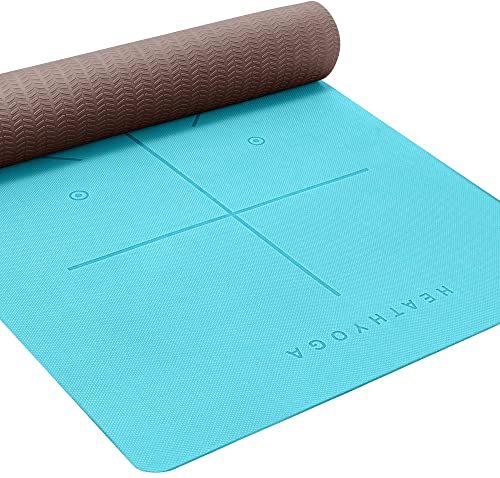
Heathyoga Eco Friendly Non Slip Yoga Mat
TPE construction avoids PVC and latex together, and raised texture gives damp palms something to bite into. Printed lines cross the width as a foot placement reference. Softness cuts both ways, since TPE lets corners lift on smooth flooring more readily than dense PVC does.
Pros
- Raised texture holds damp hands better than smooth PVC
- Latex free, so rubber allergy sufferers can use it
- Wider and longer than a standard 68 inch mat
Cons
- Corners curl on hard smooth floors
- TPE wears out faster than dense PVC
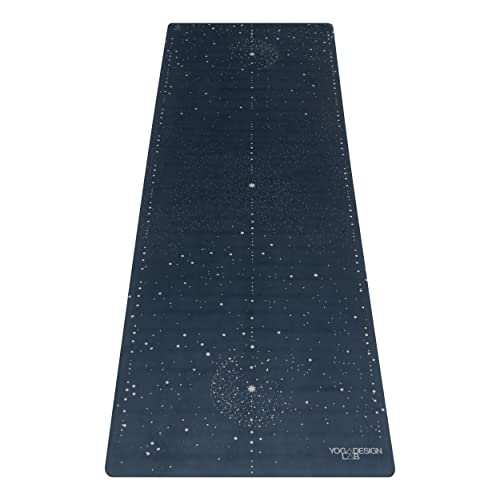
Yoga Design Lab Combo Mat
Microfibre suede bonds to a natural rubber base, so sweat makes this mat grippier instead of slicker. That bonded layer removes the separate towel a heated room normally demands. Dry practice exposes the weakness, where the suede slides until you mist it with water.
Pros
- Traction climbs as the surface gets damp
- Machine washable, unlike PVC and foam mats
- No separate yoga towel needed for heated flows
Cons
- Slides during dry practice unless misted first
- At 3.5 mm, kneeling on tile stings
What to look for
What matters in a mat you only use indoors Portability leaves the checklist once a mat lives in one room, which frees the budget for density and surface quality. Grip ranks first. A mat that slides on hardwood turns every downward dog into a balance exercise. Material ranks second, because it drives traction and smell at the same time. Closed-cell PVC like the Manduka PRO repels sweat and wipes clean, while open-cell rubber like JadeYoga Harmony drinks it in for better damp grip and needs real washing. Size is the quiet third factor, since a 68 inch mat leaves anyone over about five foot eight with heels on bare floor.
Thickness for hardwood, tile and carpet Most mats land between 4 and 6 mm, which is ample over carpet or a rug. Hardwood, tile and basement concrete change the maths for kneeling poses and supine spine work. Treat 6 mm as the sensible minimum on a hard surface. Sore knees justify going further, up to the 12.7 mm BalanceFrom foam mat. Padding costs stability though, because thick foam squashes under a single foot and warrior three gets shaky. A neat middle route: a thin mat plus a folded blanket under the knees only.
Grip when hands and feet get sweaty Dry grip and wet grip are separate properties, and few mats win both. Polyurethane tops such as Liforme hold in either state with no preparation. Open-cell rubber like JadeYoga improves once moisture arrives, which suits vigorous vinyasa. Closed-cell PVC behaves in reverse, staying planted when dry and turning slick as sweat pools, which is why Manduka owners keep a towel within reach. Practising heated yoga in a spare room? Yoga Design Lab’s Combo Mat sidesteps the whole issue with a washable suede layer bonded on top.
Apartments: storage, off-gassing and floor protection Unroll a rubber mat in a closed bedroom and the room smells of it for a week or two. Natural rubber is the strongest offender, TPE sits in the middle, and PVC goes nearly neutral once aired. Give any new mat a few ventilated days before committing it to a small space. Storage needs planning as well, because 6 mm mats roll thick and seven and a half pounds of Manduka PRO wants a wall hook, not a corner lean. Lighter PVC mats such as the Gaiam hang on the back of a door without straining the hinges. Grit trapped underneath is what actually scratches hardwood, so sweep the practice area before unrolling.
How they stack up
| # | Model | Thickness | Best for | Score | Price |
|---|---|---|---|---|---|
| 1 | Manduka PRO Yoga Mat | 6 mm | Best overall | 9.4 | Check price |
| 2 | Liforme Original Yoga Mat | 4.2 mm | Best for alignment | 9.2 | Check price |
| 3 | JadeYoga Harmony Yoga Mat | 3/16 in, about 4.8 mm | Best natural rubber grip | 9.0 | Check price |
| 4 | Gaiam Premium Print Yoga Mat | 6 mm | Best value | 8.8 | Check price |
| 5 | BalanceFrom GoYoga All-Purpose Yoga Mat | 1/2 in, about 12.7 mm | Best for sensitive knees | 8.6 | Check price |
| 6 | Heathyoga Eco Friendly Non Slip Yoga Mat | 6 mm | Best for sweaty sessions | 8.3 | Check price |
| 7 | Yoga Design Lab Combo Mat | 3.5 mm | Best for hot yoga at home | 8.0 | Check price |
Good to know
What thickness yoga mat is best for hardwood floors?
Six millimetres covers most practice on hardwood, protecting knees and wrists without upsetting balance. Half an inch, as on the BalanceFrom mat, only makes sense when kneeling hurts and standing balance is not the priority.
Do yoga mats work on carpet?
Yes, and a thinner 3 to 5 mm mat works better there because the pile already cushions. Deep foam stacked on carpet feels unstable underfoot. Rubber or polyurethane surfaces stop the mat travelling across the fibres.
Why is my new yoga mat slippery?
Closed-cell PVC mats such as the Manduka PRO ship with a manufacturing film that takes several sessions to wear away. A coarse sea salt scrub speeds that along. Polyurethane and suede tops skip the problem entirely and grip from use one.
Which yoga mat is best for sweaty hands?
Open-cell natural rubber like JadeYoga Harmony, or a suede-topped mat like the Yoga Design Lab Combo. Both gain traction as moisture arrives. Closed-cell PVC does the opposite and needs a towel.
Is PVC or natural rubber better for a yoga mat?
PVC lasts longer, weighs more and barely smells, which suits daily indoor practice. Natural rubber biodegrades and holds damp hands better, at the cost of a strong odour for the first weeks. Latex allergy removes rubber from the list completely.
How long is a standard yoga mat?
Sixty eight inches is the common length, comfortable up to roughly five foot eight. Liforme runs 72.8 inches, and Manduka sells the PRO in an 85 inch version for taller practitioners.
Is a 6 mm mat too thick for balance poses?
No. Trouble starts nearer half an inch, where foam compresses under one foot and the standing ankle keeps correcting. Dense 6 mm PVC stays firm enough for tree and warrior three.
How do you clean a yoga mat?
Closed-cell PVC needs a damp cloth and mild soap after each session. Open-cell rubber absorbs sweat, so give it a deeper wash from time to time. Only the Yoga Design Lab Combo Mat here goes in a washing machine.
Can you use an exercise mat instead of a yoga mat?
For stretching and floor work, yes. Exercise mats run thicker in softer foam with less surface grip, so standing poses slide and balance suffers. BalanceFrom GoYoga sits on that boundary and is best treated as a cushioning mat.
Do yoga mats damage hardwood floors?
The mat itself does not. Grit and sand caught underneath do, grinding into the finish as you shift weight. Sweep first, and wipe the underside occasionally on rubber mats, which pick up dust fastest.
The verdict
Manduka PRO is the buy for regular practice on a hard floor at home, where its density protects joints and the closed-cell surface stays hygienic for years. Practising without a teacher shifts the answer to the Liforme Original, whose etched markers fix foot and hip placement while you move. Choose BalanceFrom GoYoga instead when sore knees, rather than balance work, are what limits your session.
Derek Holt
Derek has a background coaching recreational and amateur athletes and has worked the sales floor at specialty fitness retailers. He focuses on equipment durability, ergonomics and realistic use cases rather than marketing claims.