Foldable Yoga Mats That Still Grip When You Sweat
Manduka’s eKO Superlite folds to block size at under two pounds, best for frequent flyers who still want reliable rubber grip. Jade Yoga’s Voyager rolls compact for eco-conscious travelers who prefer a tree-planting program. Gaiam’s Foldable Travel Mat costs less for occasional studio visits.
Manduka’s eKO Superlite folds down to roughly the size of a yoga block at under two pounds, suiting travelers who fly often and still want rubber-level grip; the tradeoff is a short break-in period before that grip peaks.
We compared folded dimensions, weight, and grip material instead of assuming thinner always beats thicker, since portability and cushioning pull in opposite directions on most travel mats.
Our top picks
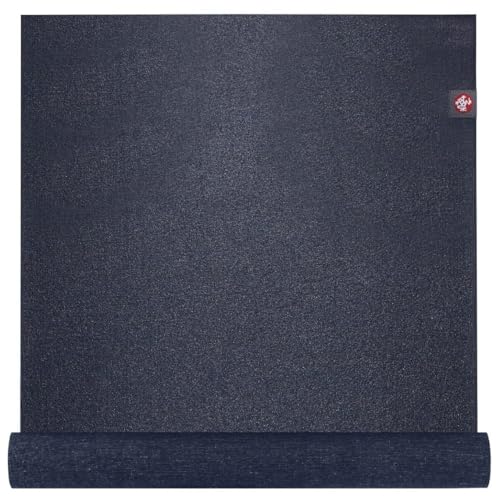
Manduka eKO Superlite
Manduka’s eKO Superlite uses natural tree rubber that grips harder the more you sweat, unlike foam mats that turn slick. At 1.5mm thick, it folds into a compact square instead of rolling into a tube. New mats need a short break-in period before that grip reaches full strength.
Pros
- Folds flat instead of needing a bulky roll
- Grip strengthens with sweat rather than fading
- Open-cell rubber biodegrades unlike PVC foam
Cons
- Needs a short break-in period for full traction
- Natural rubber smell is noticeable when new

Jade Yoga Voyager
Jade Yoga’s Voyager weighs just under 2 pounds and rolls small enough for a carry-on side pocket. Natural rubber grips reliably on studio floors and on grass during outdoor sessions. Jade plants a tree for every mat sold, a detail sustainability-focused buyers often cite.
Pros
- Rolls compact enough for a carry-on pocket
- Grips well on indoor and outdoor surfaces
- Tree-planting program appeals to eco-conscious buyers
Cons
- Traction drops slightly in very humid heat
- Rolled shape uses more space than folding mats
Gaiam Foldable Travel Mat
Gaiam’s Foldable Travel Mat uses a PVC-free foam blend that folds into eighths for flat suitcase packing. At 2mm thick, it cushions slightly more than the ultra-thin rubber mats here. Occasional travelers who skip daily practice tend to prefer this over pricier rubber options.
Pros
- Costs less than every other mat in this group
- Foam blend adds more cushion than thin rubber
- Folds flat for easy suitcase packing
Cons
- Grip weakens compared to natural rubber when sweaty
- Foam shows crease lines after repeated folding

Liforme Travel Mat
Liforme’s Travel Mat keeps the brand’s printed alignment lines even in its lighter travel build, helping position hands and feet in standing poses. A biodegradable natural rubber base grips firmly under weight shifts. At 2mm thick, cushioning lands closer to a studio mat than most travel options.
Pros
- Alignment markers aid pose positioning while traveling
- Rubber base grips firmly during standing poses
- Biodegradable material suits eco-conscious buyers
Cons
- Heavier than the thinnest mats in this group
- Costs more than basic foam travel mats
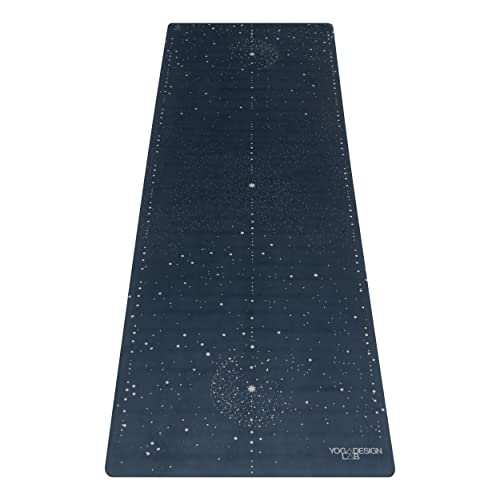
Yoga Design Lab Travel Mat
Yoga Design Lab’s Travel Mat pairs a thin rubber base with a microfiber towel top that soaks up sweat mid session. Packing one mat replaces carrying a separate towel to hot yoga class. At 1mm thick, it ranks among the lightest full-length mats here.
Pros
- Built-in towel replaces packing a separate one
- Microfiber top absorbs sweat during hot yoga
- Among the lightest full-length mats available
Cons
- Cushioning trails thicker travel mats
- Towel top needs regular washing to stay grippy

Manduka GRP Travel Mat
Manduka’s GRP Travel Mat swaps in a textured rubber surface built to resist slipping once it gets wet. Folding works the same as the eKO Superlite, just with a grippier texture underfoot. Travelers heading to hot or humid retreat locations tend to prefer this texture over a smooth surface.
Pros
- Textured surface resists slipping when wet
- Suits hot climates and humid studio conditions
- Folds as compactly as the eKO Superlite
Cons
- Texture feels rougher against bare skin
- Slightly heavier than the standard eKO Superlite

Sea Yogi Compact Travel Mat
Sea Yogi’s Compact Travel Mat drops weight below every other mat here, coming in under 1.5 pounds for backpackers and frequent flyers. A thin natural rubber layer still holds some grip despite minimal thickness. Practitioners who prioritize pack weight over cushioning tend to choose this over thicker options.
Pros
- Lightest mat in this entire comparison
- Compact rolled size fits smaller backpacks
- Rubber grip holds up despite minimal thickness
Cons
- Minimal cushioning struggles on hard floors
- Smaller brand carries less track record than Manduka or Jade
How they compare
| # | Model | Thickness | Best for | Score | Price |
|---|---|---|---|---|---|
| 1 | Manduka eKO Superlite | 1.5mm | Best overall | 9.4 | Check price |
| 2 | Jade Yoga Voyager | 1.6mm | Best for eco-conscious travelers | 9.1 | Check price |
| 3 | Gaiam Foldable Travel Mat | 2mm | Best value | 8.8 | Check price |
| 4 | Liforme Travel Mat | 2mm | Best for alignment-focused practice | 8.5 | Check price |
| 5 | Yoga Design Lab Travel Mat | 1mm | Best for hot yoga travel | 8.3 | Check price |
| 6 | Manduka GRP Travel Mat | 1.5mm | Best for humid or sweaty practice | 8.1 | Check price |
| 7 | Sea Yogi Compact Travel Mat | 1mm | Best ultra-lightweight option | 8.0 | Check price |
What matters most
What makes a yoga mat travel friendly Weight and folded size matter most for portability, usually under 2.5 pounds and small enough for a suitcase side pocket. Thickness typically drops to 1mm or 2mm versus 4mm to 6mm on standard studio mats. Material affects grip and how much the mat compresses after repeated packing. A mat under 2 pounds fits most carry-on bags without adding noticeable weight.
Rubber grip versus foam grip when sweating Natural rubber mats, like Manduka’s and Jade Yoga’s, tend to grip harder as sweat builds up mid session. Foam blends, like Gaiam’s, feel fine dry but turn slippery once damp. Textured rubber surfaces, as on Manduka’s GRP, add extra traction for consistently sweaty practices. Buyers who sweat heavily generally get more consistent grip from rubber than foam.
Matching a mat to hot yoga or standard studio classes Hot yoga practitioners benefit from a built-in towel layer, like Yoga Design Lab’s, or a textured grip mat like Manduka’s GRP. Standard studio classes without heavy sweating work fine on a simpler foldable mat like Gaiam’s. Alignment-focused practices favor Liforme’s printed guide lines over a blank surface. Matching the mat to the class type avoids paying for features that go unused.
Folding versus rolling for packing Folding mats, like the eKO Superlite and Gaiam’s Foldable, pack into flat squares that fit a suitcase more efficiently. Rolling mats, like Jade Yoga’s Voyager, distribute along a backpack’s side pocket but take up a cylindrical shape some bags handle poorly. Repeated folding eventually creases foam mats more than rubber ones. Rollers suit backpack travel; folders suit suitcase travel.
Common questions
What is the best portable yoga mat for daily travel?
Manduka’s eKO Superlite balances low weight, compact folding, and reliable rubber grip, making it a strong daily travel pick for frequent flyers.
How thin can a yoga mat be and still work?
Mats as thin as 1mm, like Yoga Design Lab’s and Sea Yogi’s, still support standing poses, though floor work benefits from at least 1.5mm of cushioning.
Foldable or rollable travel mat, which packs better?
Foldable mats fit flat inside a suitcase more efficiently, while rollable mats suit a backpack’s side pocket or a duffel bag’s cylindrical space better.
Do travel yoga mats provide enough cushioning for knees?
Thinner travel mats cushion less than standard studio mats, so practitioners with sensitive knees may want a folded towel underneath during floor poses.
Can a travel yoga mat handle hot yoga?
Yes. Mats with a towel top layer, like Yoga Design Lab’s, or a textured grip surface, like Manduka’s GRP, manage hot yoga sweat better than standard travel mats.
How do you clean a portable yoga mat after travel?
Natural rubber mats wipe clean with a damp cloth and mild soap, while towel-top mats like Yoga Design Lab’s need periodic machine washing to keep their grip.
Is natural rubber or PVC-free foam better for a travel mat?
Natural rubber generally grips better when sweaty and biodegrades over time, while PVC-free foam runs lighter and cheaper but loses traction faster when damp.
What size does a folded travel yoga mat pack down to?
Most folded mats compress to around 10 by 10 by 2 to 3 inches, small enough for a standard carry-on alongside clothing and other gear.
Which travel yoga mat suits alignment-focused practice?
Liforme’s Travel Mat keeps the brand’s printed alignment lines in a lighter build, helping with hand and foot placement in standing poses.
Our pick
Manduka’s eKO Superlite remains the strongest all-around portable mat for regular travelers who still want dependable grip. Eco-conscious buyers should pick Jade Yoga’s Voyager instead for its tree-planting program. Hot yoga practitioners will get steadier traction from Manduka’s textured GRP Travel Mat.
Derek Holt
Derek has a background coaching recreational and amateur athletes and has worked the sales floor at specialty fitness retailers. He focuses on equipment durability, ergonomics and realistic use cases rather than marketing claims.


