Which Workout Earbuds Stay Put and Survive Sweat?
Jabra Elite 8 Active Gen 2 leads for indoor training, with a rubberised shell and an IP68 rating that allows a rinse under the tap. Beats Powerbeats Pro 2 lock down hardest for sprints and add optical heart rate. Road runners want Shokz OpenRun Pro 2 for traffic awareness.
Jabra Elite 8 Active Gen 2 covers most gym routines, since a silicone coated shell adds friction without any ear hook. IP68 means salt goes down the drain rather than into the drivers. Tuning leans warm, so anyone chasing neutral sound will notice. Runners sharing a road with cars should take the open ear Shokz OpenRun Pro 2 instead.
Sweat and slippage end more workout earbuds than sound quality ever does. We compared published IP ratings, fit hardware, battery claims with and without noise cancelling, and whether controls use buttons or touch panels. Owner reports on sweat related failures and ear fatigue across long sessions broke the ties.
How to pick the right one
How to choose workout earbuds that stay in Fit hardware decides whether a session works, long before tuning matters. Three approaches dominate the category. Hooks, as on Powerbeats Pro 2, wrap the outer ear for maximum hold and maximum bulk. Wingtips sit in the ear ridge and split the difference, which is the Beats Fit Pro route. Coated shells like the Jabra Elite 8 Active stay compact and rely on friction rather than hardware. High impact work rewards hooks, while anything worn under a helmet or hat rewards the other two.
What IP ratings mean for sweat Two digits follow IP, and gyms punish the second one. IPX4 handles sweat and light splashes, which is why both Beats pairs carry a no-rinse caution. IP55 adds dust protection plus low pressure jets. IP68, carried here by Jabra and JBL, means dust tight and submersion rated, so tap water is fine. Salt does the real damage, creeping into charging contacts and grilles over months of use. Rinsing capability is therefore a longevity feature, not a marketing line.
Running outdoors vs training indoors Road runners need to hear a car before they see it. Open ear designs answer that outright, and the Shokz OpenRun Pro 2 leaves the canal completely clear. Transparency modes help, though everything you hear passes through a microphone first. Indoors the priority inverts: treadmill hum and gym playlists are worth blocking, which favours the Jabra and Soundcore noise cancelling. Cyclists should check hook clearance against a helmet strap before committing. In wind, a sealed in ear pair also gives cleaner call audio than an open band.
Controls, battery and who should avoid each type Wet fingers defeat touch panels, and that is the standing complaint about the JBL Endurance Peak 3. Physical buttons on the Jabra stay predictable mid set. Treat quoted runtimes as optimistic, since noise cancelling drops an eight hour claim closer to six. Glasses wearers should skip rigid hooks or pick the rotating design on the Soundcore Sport X10. Swimmers need to look elsewhere entirely, because none of these are rated for laps and Bluetooth barely travels through water.
The top picks, ranked

Jabra Elite 8 Active Gen 2
Liquid silicone rubber wraps the outer shell, adding grip so each bud holds through rows, jumps and burpees with no hook. Jabra rates the pair IP68, covering dust and submersion, which makes a tap rinse safe after a salty session. Adaptive noise cancelling handles treadmill hum, and HearThrough opens things back up on pavement.
Pros
- Coated shell resists slipping during plyometrics
- Salt rinses away under running water
- Buttons respond with wet or gloved fingers
Cons
- Bass tuning is warm rather than neutral
- Case takes more pocket room than rivals

Beats Powerbeats Pro 2
Adjustable over ear hooks clamp harder than any silicone tip, which is what sprint work and heavy lifts demand. Optical heart rate arrived with this generation and reports into supported training apps, so a chest strap becomes optional. Bulk around the ear is the trade, and it shows under a beanie or helmet.
Pros
- Hooks hold through sprints and jump work
- Heart rate reporting without a chest strap
- Around 10 hours before the case is needed
Cons
- Hooks fight hats and helmet straps
- IPX4 allows splashes but not a rinse

Shokz OpenRun Pro 2
Bone conduction pairs with a small air conduction driver, leaving the canal open so cars and cyclists stay audible. A titanium band wraps behind the head and holds position across a long run. Bass improved over earlier Shokz models, yet still trails any sealed in ear design.
Pros
- Traffic stays audible on open roads
- No canal pressure across long runs
- Band needs no mid-run adjustment
Cons
- Leaks audible sound in a quiet gym
- IP55 rules out swimming

JBL Endurance Peak 3
Flexible hooks and a full IP68 rating rarely appear on the same pair, and this one carries both. Buds wake as soon as you lift them out of the case, saving fiddling between sets. Touch panels are the weak link once hands turn wet or chalky.
Pros
- Hook security plus a submersion rating
- Powers on automatically out of the case
- Around 50 hours total with the case
Cons
- Touch controls misfire with wet fingers
- Ambient mode sounds thin and processed

Anker Soundcore Sport X10
Hooks rotate through a wide arc, letting you swing them clear of glasses arms or a helmet strap. IPX7 covers heavy sweat and rain, and active noise cancelling arrives at a mid tier outlay. Wind hits the microphones hard, so outdoor calls suffer.
Pros
- Rotating hooks clear glasses and helmets
- Noise cancelling without a flagship outlay
- IPX7 handles rain and heavy sweat
Cons
- Wind noise spoils outdoor calls
- Case is bulky in a pocket
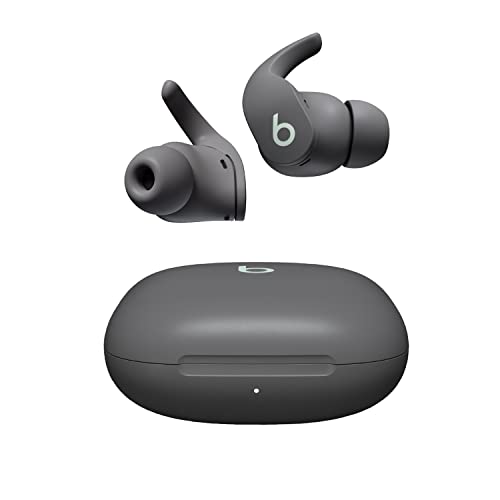
Beats Fit Pro
A flexible wingtip tucks under the ridge of the ear, delivering close to hook security inside a far smaller shell. Apple H1 silicon brings one tap pairing, hands free Siri and switching across iPhone, iPad and Mac. IPX4 protection covers sweat, though rinsing is off the table.
Pros
- Small shell with genuine wing security
- Automatic switching across Apple devices
- Effective noise cancelling for the size
Cons
- Around 6 hours is the shortest here
- Android loses several H1 features

JLab Go Air Sport
Fixed silicone hooks and an IP55 rating cover basic gym duty at the lowest outlay in this group. A charging cable is moulded into the case, so a missing cable never ends a session. Default tuning is bass heavy, though three onboard EQ presets flatten it.
Pros
- Hook fit at an entry level outlay
- Built-in cable cannot go missing
- Three EQ presets switch on the bud
Cons
- IP55 is the lowest rating in this group
- Mic struggles against gym noise
How they stack up
| # | Model | Protection | Best for | Score | Price |
|---|---|---|---|---|---|
| 1 | Jabra Elite 8 Active Gen 2 | IP68 dust and water rating | Best overall | 9.4 | Check price |
| 2 | Beats Powerbeats Pro 2 | Adjustable over ear hooks | Best for secure fit | 9.2 | Check price |
| 3 | Shokz OpenRun Pro 2 | Bone conduction with air conduction bass | Best for road runners | 9.0 | Check price |
| 4 | JBL Endurance Peak 3 | IP68 dust and water rating | Best for heavy sweaters | 8.7 | Check price |
| 5 | Anker Soundcore Sport X10 | Rotating ear hooks, adjustable angle | Best value | 8.5 | Check price |
| 6 | Beats Fit Pro | Flexible wingtip, three tip sizes | Best for iPhone users | 8.2 | Check price |
| 7 | JLab Go Air Sport | Fixed silicone ear hooks | Best budget | 8.0 | Check price |
Questions worth asking
What are the best earbuds for running outdoors?
Shokz OpenRun Pro 2, because open ear conduction keeps traffic audible on a shared road. Treadmill and track sessions favour Jabra Elite 8 Active, which isolates better with an equally secure fit.
Do workout earbuds need to be waterproof?
Sweat resistance is essential and full waterproofing is a bonus. IPX4 survives sweat, but only an IP68 pair such as the Jabra Elite 8 Active or JBL Endurance Peak 3 can be rinsed clean.
Which earbuds stay in during burpees and jump rope?
Hooks win on high impact work. Powerbeats Pro 2 and JBL Endurance Peak 3 both lock around the outer ear, while the Jabra coating is the strongest hook free option.
Powerbeats Pro 2 vs Beats Fit Pro: which is better for the gym?
Powerbeats Pro 2 suits intense sessions, thanks to the hook fit and onboard heart rate. Beats Fit Pro wins on bulk, sliding under a hat and into a pocket far more easily.
Is bone conduction good for lifting in a gym?
Not really, since open ear designs let gym noise in and let your music out to neighbouring racks. Save bone conduction for outdoor training where awareness is the point.
How do you clean sweat out of earbuds?
Wipe the buds after every session and dry the case before it closes. IP68 pairs can go under a tap, then air dry fully before charging, which stops salt building on the contacts.
How many hours of battery do workout earbuds need?
Six hours per charge covers several sessions between top ups. Noise cancelling eats into stated figures, so an eight hour claim lands nearer six in active use.
Can you wear workout earbuds with glasses?
Rigid hooks often collide with glasses arms. Rotating hooks on the Soundcore Sport X10 swing around them, and coated in ear designs like the Jabra sidestep the clash altogether.
Are workout earbuds safe to wear in the rain?
IPX7 and IP68 pairs handle steady rain without trouble. At IPX4, the Beats models tolerate a light shower at most, so dry them off quickly afterwards.
Our take
Pick the Jabra Elite 8 Active Gen 2 for indoor training, since the coated shell holds without hooks and IP68 lets you rinse salt away instead of letting it corrode contacts. Sprinters and heavy lifters should take the Powerbeats Pro 2, then use its heart rate sensor in place of a chest strap. Anyone logging road miles ignores both and buys the Shokz OpenRun Pro 2, where hearing traffic outranks isolation.
Derek Holt
Derek has a background coaching recreational and amateur athletes and has worked the sales floor at specialty fitness retailers. He focuses on equipment durability, ergonomics and realistic use cases rather than marketing claims.