Which workout planner fits how you actually train?
Clever Fox Fitness & Workout Journal covers training, meals and measurements in one undated book. Beginners learn faster with the NewMe Fitness Journal Workout Planner and its illustrated muscle diagrams. For years of set and rep history on the same lifts, Bodyminder gives the most rows per page.
Clever Fox Fitness & Workout Journal fits anyone who wants food, training and body measurements in one place. Undated spreads mean a missed fortnight costs nothing. Long lifting sessions outgrow the exercise rows, though. High volume lifters should take Bodyminder instead and keep nutrition somewhere else.
Listing photos hide the thing that decides the purchase, which is how many rows each session gets. Six exercises at four sets needs twenty-four lines, and plenty of planners print twelve. We compared page templates, programme duration, binding style and paper across seven books. Owner reports about pages loosening and ink bleeding through settled the close calls.
How to choose
What to look for in a workout planner Row count per session decides the fit before anything else. Five exercises at four sets needs twenty lines, and plenty of books print twelve. Undated pages survive holidays and illness; dated ones waste a printed fortnight. Binding sets how the book behaves at the rack, since coil and spiral lie flat while perfect bound covers snap shut. Thin paper lets gel ink show through, so pencil or ballpoint keeps both sides usable.
Lifting logs vs cardio and class trackers Strength work needs columns for sets, reps and load, plus margin for rest times or RPE notes. Runners want distance, pace and route fields instead. Class training often needs only a date, a class name and a line on effort. Buying a lifting focused book such as Bodyminder for a running habit leaves most of every page empty.
Best workout planner for beginners Prompts beat blank space in the first few months. Illustrated diagrams in the NewMe Fitness Journal Workout Planner answer which muscle a movement trains, which is the question that stalls new lifters. Write down load on every set from week one, because early strength climbs fast and the numbers keep you going back. Pair the book with a full body routine three days a week. Leave goal frameworks until the habit holds.
Is a paper log better than a fitness app? Apps total weekly volume automatically and search history in seconds. Paper keeps the phone in the bag, which stops a ninety second rest stretching to five minutes. No battery dies, no subscription lapses, no update moves a button. Plenty of lifters run both, writing on paper mid session and transferring weekly totals on a Sunday.
The best picks, ranked
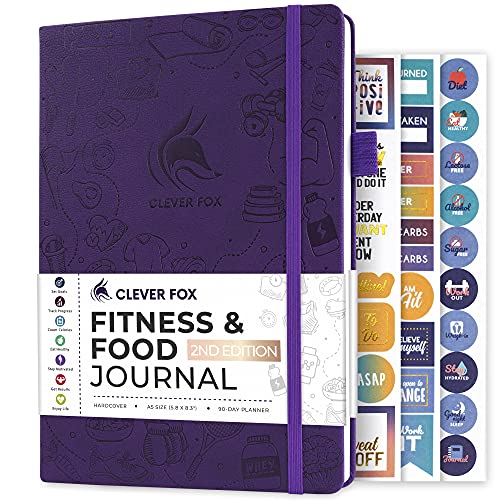
Clever Fox Fitness & Workout Journal
Daily spreads pair exercise, set, rep and weight columns with meal, water and sleep fields. Monthly pages hold waist, chest and arm numbers, so progress still shows when the scale stalls. Hardcover, elastic closure and a ribbon marker handle being thrown into a gym bag five times a week.
Pros
- Training and nutrition share one book
- Undated pages tolerate missed weeks
- Hardcover and elastic closure resist bag wear
Cons
- Exercise rows run short on long sessions
- Wider than pocket format planners

NewMe Fitness Journal Workout Planner
Illustrated muscle group diagrams turn this into a reference as much as a log. Prompted fields tell a first timer what to write down, which removes the blank page problem. Spiral binding lets the book lie flat on a bench while you rest between sets.
Pros
- Exercise illustrations teach the movements
- Lies flat on a bench or rack
- Prompted fields remove the guesswork
Cons
- Covers about three months per book
- Spiral wire snags on bag fabric

Bodyminder Workout and Exercise Journal
Row count is the entire point here, with space for multi exercise days and no lifestyle sections stealing pages. Annual summary sheets let you line up the same lift across seasons. Plain, dense paper takes pencil well, which suits notes scribbled between heavy sets.
Pros
- Room for high volume training days
- Yearly summaries reveal long term trends
- No pages lost to lifestyle sections
Cons
- Plain layout with no exercise illustrations
- Softcover corners curl within a year

Legend Planner PRO Fitness Journal
Goal framework comes first, with quarterly targets broken down into weekly actions. Training pages sit behind that structure, so every session points back at a stated outcome. Habit tracker and reflection pages cover sleep, steps and the behaviours that decide whether the gym work sticks.
Pros
- Links daily sessions to a named goal
- Habit tracker covers non gym behaviour
- Pen loop keeps a pen with the book
Cons
- Planning sections take time to fill in
- Less raw logging space per workout

Fitlosophy fitbook Fitness Journal
Twelve week structure matches the way most strength and fat loss programmes are written. Each block opens with weekly goal pages and closes with a review. Compact covers slide into a bag side pocket without bending, which is rare for a spiral bound book.
Pros
- Block length matches real training programmes
- Small enough to carry every day
- Weekly review prompts real adjustments
Cons
- One book covers twelve weeks only
- Small pages limit notes per exercise

Cossac Fitness Journal & Planner
Format stops at workout logging and basic nutrition, leaving more pages for the part most people actually use. Progress photo and measurement sections still appear near the back. Softcover build keeps weight down for anyone already carrying shoes, a shaker and a towel.
Pros
- Most pages go to workout logging
- Light enough to carry daily
- Layout needs no learning curve
Cons
- Softcover wears fast in a gym bag
- No exercise reference material inside

Erin Condren PetitePlanner Fitness Book
Petite format, near 7 by 9 inches, slots beside an existing planner or into a jacket pocket. Condensed grids cover workouts, water intake and body measurements without much writing room per entry. Classes, running and circuit sessions fit that space better than a five exercise lifting day.
Pros
- Fits alongside a regular daily planner
- Coil binding folds back on itself
- Clean grids fill in quickly
Cons
- Too few rows for long lifting days
- Fewer total pages than full size journals
Side by side
| # | Model | Format | Best for | Score | Price |
|---|---|---|---|---|---|
| 1 | Clever Fox Fitness & Workout Journal | Undated daily spreads | Best overall | 9.4 | Check price |
| 2 | NewMe Fitness Journal Workout Planner | Undated workout log pages | Best for gym beginners | 9.2 | Check price |
| 3 | Bodyminder Workout and Exercise Journal | Undated, roughly one year of entries | Best for long term tracking | 9.0 | Check price |
| 4 | Legend Planner PRO Fitness Journal | Undated with goal planning sections | Best for goal setting | 8.8 | Check price |
| 5 | Fitlosophy fitbook Fitness Journal | 12 week programme structure | Best for 12 week programmes | 8.6 | Check price |
| 6 | Cossac Fitness Journal & Planner | Undated workout and meal logs | Best value | 8.3 | Check price |
| 7 | Erin Condren PetitePlanner Fitness Book | Petite format, roughly 7 by 9 inches | Best compact planner | 8.0 | Check price |
Questions worth asking
What is the best workout planner for tracking progress?
Clever Fox Fitness & Workout Journal covers the widest ground, combining exercise logs with measurements and nutrition in about six months of pages. For pure set and rep history across years, Bodyminder gives more logging rows per spread.
Should a workout planner be dated or undated?
Undated is the safer default. Two weeks lost to illness or travel burns printed pages in a dated book, while undated pages simply wait for you. Dated layouts only earn their place if calendar accountability is the thing keeping you consistent.
How many pages does a workout journal need?
Multiply training days per week by the weeks you want covered. Four sessions a week for six months works out near 100 workout pages, which matches what the larger hardcover journals hold.
Is a paper workout log better than an app?
Paper keeps your phone out of reach, which protects rest timing and focus. Apps win on volume maths and searching old sessions. Pick based on whether distraction or data analysis is your bigger problem.
Which workout planner is best for beginners?
NewMe Fitness Journal Workout Planner leads here, thanks to illustrated exercise references and prompted fields. Those two features answer the early questions: what to do, and what is worth recording.
Can I use a workout planner for running and cycling?
Yes, provided the pages are open format rather than pre-labelled set and rep grids. Erin Condren PetitePlanner Fitness Book handles distance and time entries well because its rows carry no lifting labels.
Do fitness journals include meal tracking?
Some build it in. Clever Fox and Cossac both carry meal and water sections alongside the training log. Lifting focused books such as Bodyminder leave nutrition out on purpose to protect row space.
What is the best workout planner for a 12 week programme?
Fitlosophy fitbook Fitness Journal is structured around exactly that block, opening with weekly goals and closing with a review. Anyone running back to back blocks will need a fresh book each quarter.
Are spiral bound fitness journals better than hardcover?
Spiral and coil bindings lie flat on a bench, which matters when you write between sets. Hardcovers survive a gym bag longer and keep pages tidy. Wire can catch on bag fabric, so check where the book will live.
How do I actually stick to using a training log?
Keep it in the gym bag, never on a shelf at home, and fill it during rest periods instead of afterwards. Recording load every session builds its own reason to open the book, since you need last week’s number before the first working set.
The verdict
Clever Fox Fitness & Workout Journal is the one to buy when a single book should hold training, food and measurements, and the hardcover takes daily gym handling. Anyone running high volume programmes will hit the row limit by the third exercise, and Bodyminder is the better home for that data. Start with NewMe if you are still learning the movements, since the illustrations answer what a blank grid never will.
Derek Holt
Derek has a background coaching recreational and amateur athletes and has worked the sales floor at specialty fitness retailers. He focuses on equipment durability, ergonomics and realistic use cases rather than marketing claims.