How to pick a compression shirt that actually fits
Under Armour HeatGear Armour suits most lifters, with a 4 way stretch knit near 16 percent elastane and flatlock seams. Nike Pro Dri-FIT vents better through its mesh back panel. Cold mornings favour the ColdGear Armour mock, which adds a brushed inner face for warmth.
Under Armour HeatGear Armour is the shirt to buy first, built for lifters who want firm support under a bar. Its roughly 84 to 16 polyester and elastane knit keeps compressing long after cheap multipacks go slack, and flatlock seams sit flush under strap pressure. Sizing runs tight, so anyone between two sizes should order up.
Compression is sold on vague claims, yet the differences that matter are physical. Elastane percentage sets the squeeze, seam type sets whether fabric rubs, and panel placement sets where heat escapes. We compared published fabric blends, sleeve lengths, seam construction and UPF ratings. Owner feedback then settled the questions specs cannot answer: shape retention after washing, odour build up and how each brand sizes.
What we recommend
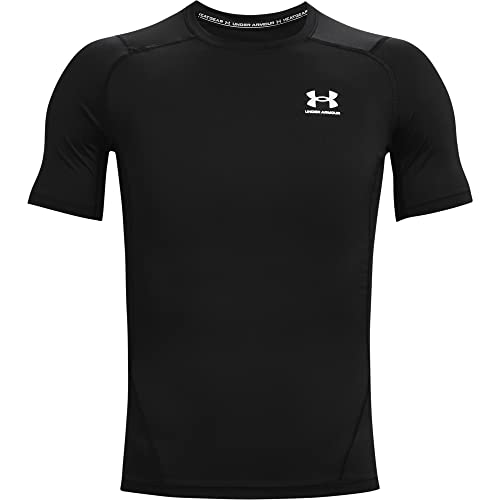
Under Armour Men’s HeatGear Armour Short Sleeve Compression Shirt
Polyester and elastane sit near 84 to 16, firm enough to compress without pinching the delts. Flatlock seams lie flush under a barbell or a pack strap, where raised stitching creates hot spots. An anti odour finish stretches one shirt across back to back sessions, though it never replaces a wash.
Pros
- Keeps its squeeze after dozens of wash cycles
- Flatlock seams stop strap chafe across the traps
- Stocked in tall lengths for longer torsos
Cons
- Runs small, so size up if between sizes
- Sweat patches show clearly on light colours

Nike Pro Dri-FIT Men’s Tight Fit Short-Sleeve Top
A mesh panel crosses the upper back, exactly where heat stacks up during pressing and rowing. Dri-FIT polyester pulls sweat to the surface, so the shirt never turns heavy mid session. Compression reads lighter than the HeatGear, which helps anyone who finds firm knits restrictive.
Pros
- Mesh back vents heat during bench and row work
- Lighter squeeze stays comfortable past an hour
- Curved seams track shoulder rotation
Cons
- Offers less support than firm compression knits
- Thin mesh catches on velcro straps

2XU Men’s Core Compression Short Sleeve Top
Graduated compression grips hardest at the cuffs and eases toward the chest, a layout aimed at endurance work. PWX fabric carries a UPF 50 plus rating, which counts on a three hour run in open sun. Nylon gives the knit a smoother hand than polyester rivals, and it sheds sweat quickly.
Pros
- Graduated fit targets endurance training
- UPF 50 plus covers arms and shoulders outdoors
- Dries fast after a soaked long run
Cons
- Tight entry takes effort to pull on
- Colour range is narrower than mainstream brands

Under Armour Men’s ColdGear Armour Compression Mock Long Sleeve
Two layers split the work here. Brushed fleece faces the skin for warmth, while a slick outer face lets a shell slide over without dragging. Mock collar seals the throat gap a crew neck leaves open on a frosty run, and indoors that same warmth becomes a problem fast.
Pros
- Brushed interior holds warmth on freezing mornings
- Mock neck covers the throat without a buff
- Slick face layers cleanly under a running shell
Cons
- Overheats during indoor training
- Thicker knit is slow to dry

McDavid HEX Padded Compression Shirt
HEX foam pads cover the shoulders, sternum and upper back for basketball, football and skating. Padding is sewn into a nylon and spandex shell, so it travels with the body instead of sliding on impact. Added bulk and heat make this a game day layer rather than a daily training shirt.
Pros
- Sewn in pads stay put through contact
- Compression fit keeps the padding aligned
- Goes in the machine with the pads in place
Cons
- Runs hotter than any unpadded shirt here
- Pad outlines show under a fitted jersey

Baleaf Men’s Long Sleeve Compression Shirt UPF 50+
Full length sleeves plus a UPF 50 plus rating cover the forearms sunscreen usually misses. Thumbholes anchor each cuff during paddling or a long ride. Blend sits near 87 percent polyester to 13 percent spandex, so the squeeze lands moderate rather than firm.
Pros
- UPF 50 plus coverage over the whole arm
- Thumbholes stop sleeve creep on the bike
- Raglan seams keep pressure off the shoulder
Cons
- Compression is moderate, closer to a base layer
- Thin knit snags on rock and rough bark
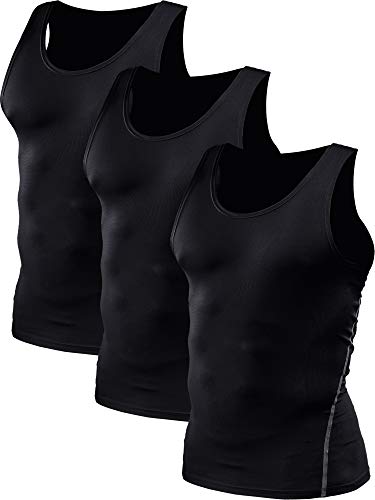
NELEUS Men’s 3 Pack Compression Shirt
Three shirts arrive in one box, enough to cover a training week between washes. Fabric measures about 87 percent polyester and 13 percent spandex, with flatlock stitching at the shoulders. Squeeze is gentler than the HeatGear, and owners report the stretch fading after a heavy season.
Pros
- Three shirts cover a full week of sessions
- Light knit dries overnight on a rail
- Softer squeeze suits first time wearers
Cons
- Elastane slackens sooner than premium knits
- Fit varies between colours in the same pack
How to pick the right one
What to look for in a compression shirt Start at the fabric label. Elastane or spandex between 12 and 20 percent delivers genuine compression. Below 10 percent you are buying a fitted shirt with a marketing name on it. Seam type comes next, since flatlock stitching lies flush and avoids the rubbing that ends long sessions. Panel placement is the third variable. Mesh across the upper back, as on the Nike Pro, vents the area that heats first during pressing and rowing.
How tight should a compression shirt be Snug everywhere, loose nowhere, is the working rule. Pinch the fabric at your waist; grabbing a fold means the size is too big to do anything useful. Under Armour cuts tight, so buyers between sizes usually move up one. Nike sits nearer true size. Hem ride during overhead pressing draws the most owner complaints, and a tall length fixes it for longer torsos.
Best compression shirts for running and outdoor training Sun and temperature replace ventilation as the deciding factors once you step outside. UPF 50 plus fabrics such as the 2XU Core and the Baleaf long sleeve shield skin that sunscreen never reaches on a three hour ride. Runners tend to prefer graduated compression, firmest at the cuffs and easing toward the chest. Below freezing, a brushed interior earns its place, which is the whole argument for the ColdGear Armour mock. Indoor lifters can ignore all of this and buy on venting alone.
Padded shirts, recovery wear and who should skip compression Padded shirts answer a different question. McDavid HEX places foam over the shoulders and ribs for basketball, hockey and football, and its tight fit exists mainly to keep those pads located. Recovery wear after a marathon leans on graduated designs like the 2XU Core. One caution outweighs every spec here: anyone with circulation problems, diabetes or recent surgery should ask a clinician before wearing firm compression for hours.
Side by side
| # | Model | Fabric | Best for | Score | Price |
|---|---|---|---|---|---|
| 1 | Under Armour Men’s HeatGear Armour Short Sleeve Compression Shirt | About 84% polyester, 16% elastane | Best overall | 9.4 | Check price |
| 2 | Nike Pro Dri-FIT Men’s Tight Fit Short-Sleeve Top | Dri-FIT polyester and spandex blend | Best for gym training | 9.2 | Check price |
| 3 | 2XU Men’s Core Compression Short Sleeve Top | Nylon and elastane PWX knit | Best for runners | 9.0 | Check price |
| 4 | Under Armour Men’s ColdGear Armour Compression Mock Long Sleeve | Dual layer with brushed interior | Best for cold weather | 8.8 | Check price |
| 5 | McDavid HEX Padded Compression Shirt | Nylon and spandex compression shell | Best for contact sports | 8.6 | Check price |
| 6 | Baleaf Men’s Long Sleeve Compression Shirt UPF 50+ | About 87% polyester, 13% spandex | Best for sun protection | 8.3 | Check price |
| 7 | NELEUS Men’s 3 Pack Compression Shirt | Three shirts per set | Best value multipack | 8.0 | Check price |
Common questions
Which compression shirt is best for weightlifting?
Under Armour HeatGear Armour is the safest pick for barbell work. Firm 4 way stretch supports the torso, flatlock seams avoid bar chafe, and the knit holds its shape far longer than budget multipacks.
How tight should a compression shirt fit?
Tight enough that no fabric folds anywhere, loose enough for a full deep breath. Red marks lingering after ten minutes mean you sized down too far. Pinchable fabric at the waist means the opposite.
Do compression shirts actually improve performance?
Research on speed and strength gains remains thin. What owners consistently report is less chafing, faster sweat movement and a sense of muscle support, which explains why the shirts stay popular under kit and pads.
Can you wear a compression shirt all day?
Moderate compression such as the Baleaf long sleeve is comfortable for several hours. Firm graduated garments are built for training and recovery windows instead. Check with a clinician first if you have circulation issues.
Under Armour HeatGear vs Nike Pro: which should you buy?
HeatGear squeezes harder and runs small, which lifters tend to want. Nike Pro sits closer to true size, compresses lighter and vents through a mesh back panel, so it wins for longer mixed sessions.
How do you wash compression shirts without losing the stretch?
Wash cold and skip fabric softener, since it coats fibres and blocks wicking. Air dry or tumble on low. Heat is what degrades elastane, and a slack fit after a few months usually traces back to a hot dryer.
Are long sleeve compression shirts better for outdoor sports?
Usually yes. A UPF 50 plus sleeve like the Baleaf covers arms that sunscreen misses over hours outside. In cold weather a brushed version such as the ColdGear Armour mock adds warmth without jacket bulk.
What is the best compression shirt for running?
2XU Core suits distance runners, with graduated compression through the arms and torso plus UPF 50 plus PWX fabric. Its nylon knit also dries faster than the heavier polyester options here.
Is a padded compression shirt worth it for basketball?
For anyone taking floor contact, yes. McDavid HEX keeps foam over the shoulders and ribs without a separate pad harness. Skip it for training, because the padding traps heat you do not need.
Do compression shirts help with posture?
A firm shirt gives a proprioceptive cue that reminds you to set the shoulders back. Structural support is not part of the deal, so no shirt corrects a posture problem on its own.
The verdict
Buy the Under Armour HeatGear Armour if you lift. Its firm 4 way stretch and flatlock seams survive heavy training and repeated washing, which is where cheaper knits quit. Distance runners get more from the 2XU Core, thanks to graduated compression and UPF 50 plus fabric. Anyone taking contact on a court or field should skip both and go straight to the McDavid HEX.
Derek Holt
Derek has a background coaching recreational and amateur athletes and has worked the sales floor at specialty fitness retailers. He focuses on equipment durability, ergonomics and realistic use cases rather than marketing claims.