Does a Weighted Vest Actually Improve a Workout?
5.11 Tactical TacTec suits tactical-style training needing a plate carrier with adjustable load. Hyperwear Hyper Vest PRO fits runners wanting ventilated, evenly distributed weight. CAP Barbell Adjustable works for anyone wanting budget-friendly, incremental weight changes.
5.11 Tactical’s TacTec Plate Carrier is built around removable weight plates rather than a fixed sewn-in load, giving tactical and rucking-focused trainees direct control over how much weight they carry on a given day. Hyperwear’s Hyper Vest PRO spreads its weight across small, evenly distributed pockets and adds ventilation panels, which matters more for runners generating body heat than for someone lifting weights. CAP Barbell’s Adjustable Weighted Vest solves a budget problem, letting users change weight in small increments without paying for a premium tactical carrier.
Weighted vests differ mainly in load type, weight distribution and ventilation, and a vest built for rucking behaves very differently on a run than one built specifically for running cadence. We compared load adjustability, weight distribution pattern, ventilation and intended training use before ranking these seven.
How to pick the right one
What to look for in a weighted vest Load type decides how precisely weight can be adjusted, with plate carriers and removable weight packs offering more control than a fixed, sewn-in load. Weight distribution affects comfort and bounce, with evenly spread pockets generally riding better during running than large concentrated plates. Ventilation matters more for cardio-focused use than for strength training, where heat buildup is less of a concern.
Plate carriers versus fixed-weight vests A plate carrier, like the 5.11 Tactical TacTec, allows precise weight changes and supports additional tactical pouches. A fixed-weight vest, like the Rogue Fitness Weight Vest 2.0, trades that adjustability for a simpler, more durable construction suited to consistent strength training loads.
Choosing a vest for running versus strength training A running-focused vest, like the Hyperwear Hyper Vest PRO, distributes weight evenly and includes ventilation to manage body heat during cardio. A strength-focused vest, like the Rogue Fitness Weight Vest 2.0 or Titan Fitness vest, prioritizes load capacity and durability over cardio comfort.
Matching maximum weight to training goals Casual walking or light cardio needs only a lower maximum weight, like the Omorc vest offers. Advanced strength training, including weighted pull-ups and carries, benefits from a higher capacity vest like the Titan Fitness option, which most lighter consumer vests cannot match.
The best picks, ranked
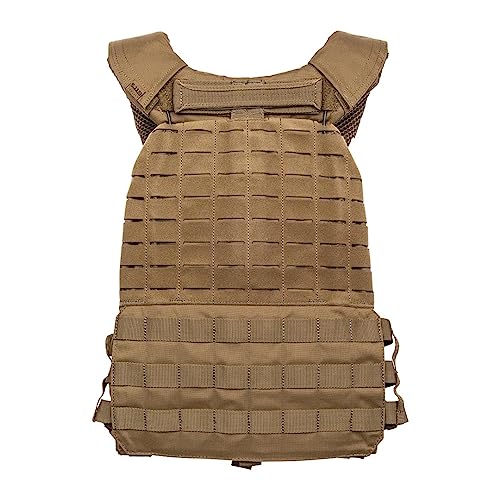
5.11 Tactical TacTec Plate Carrier
5.11 Tactical designs the TacTec around a plate carrier format, using removable weight plates rather than a fixed, sewn-in load like many fitness vests. That lets trainees adjust total weight precisely for a given rucking or tactical training session. The carrier style also allows attaching additional pouches, which pure fitness-focused vests do not support.
Pros
- Removable plates allow precise weight adjustment
- Compatible with additional tactical pouches
- Durable construction built for rucking and tactical use
Cons
- Less ventilation than a running-focused vest
- Heavier base carrier weight than a simple fitness vest

Hyperwear Hyper Vest PRO
Hyperwear spreads the Hyper Vest PRO’s weight across many small pockets rather than a few large plates, which keeps the load more evenly distributed across the torso during running strides. Ventilation panels help manage body heat generated during cardio sessions, something a tactical plate carrier does not prioritize. Runners and cardio-focused trainees get a noticeably more comfortable fit here than from a rucking-style vest.
Pros
- Evenly distributed weight reduces bounce during running
- Ventilation panels manage heat during cardio sessions
- Comfortable fit for sustained running or cardio work
Cons
- Less adjustable in large weight increments than a plate carrier
- Costs more than basic fixed-weight vests

CAP Barbell Adjustable Weighted Vest
CAP Barbell keeps cost down on the Adjustable Weighted Vest while still allowing small incremental weight changes, unlike a single fixed-weight vest. The adjustment mechanism is simpler than a plate carrier’s quick-release plates, taking a bit more time to modify. Buyers testing out weighted training for the first time without a tactical or premium running vest budget get reasonable value here.
Pros
- Lower cost than tactical or premium running vests
- Allows incremental weight adjustment
- Reasonable fit for general strength and walking use
Cons
- Adjustment mechanism slower than quick-release plates
- Less ventilation than a dedicated running vest

Rogue Fitness Weight Vest 2.0
Rogue Fitness builds the Weight Vest 2.0 with a fixed weight load rather than an adjustable system, trading flexibility for a simpler, more durable construction under heavy repeated use. The design suits strength and CrossFit-style training where a consistent, known weight matters more than daily adjustment. Gyms and serious home trainees get a vest built to withstand frequent, demanding use here.
Pros
- Durable construction withstands frequent heavy use
- Fixed weight gives a known, consistent training load
- Popular choice for gym and CrossFit-style training
Cons
- No weight adjustability without buying a different vest
- Less ventilation than a cardio-focused vest
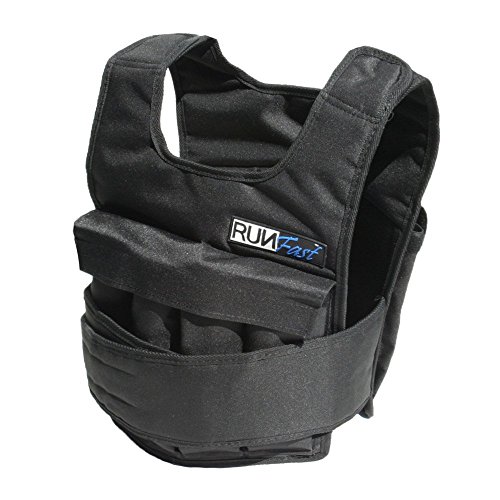
RUNFast Pro Weighted Vest
RUNFast shapes the Pro vest closer to the body than a bulkier tactical carrier, reducing the bounce that can disrupt running stride. Small removable weight packs allow adjustment similar to the CAP Barbell vest but with a fit more tailored to running motion. Runners who want some adjustability without the premium cost of the Hyperwear Hyper Vest PRO land here.
Pros
- Close-fitting shape reduces bounce during running
- Removable weight packs allow some load adjustment
- More affordable than premium running-specific vests
Cons
- Less ventilated than the Hyperwear Hyper Vest PRO
- Weight pack adjustment is less precise than plate carriers

Omorc Weighted Vest
Omorc keeps this vest’s maximum weight lower than most competitors on this list, targeting walking and light cardio rather than heavy strength training or rucking. The lighter overall design and lower cost make it approachable for someone easing into weighted training. Serious lifters or rucking trainees will outgrow its weight ceiling quickly, but casual users get a comfortable starting point.
Pros
- Lightweight design suits walking and light cardio
- Lower cost entry point for weighted vest training
- Comfortable for casual, lower-intensity use
Cons
- Lower maximum weight limits serious strength training
- Build quality trails more durable tactical or gym vests
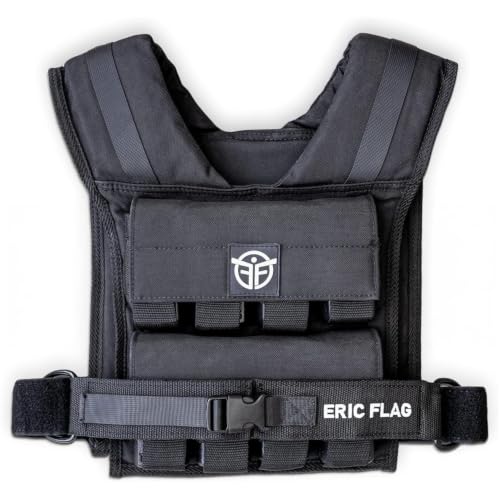
Titan Fitness Weighted Vest
Titan Fitness extends the available weight range beyond most consumer vests, suiting advanced trainees who have outgrown the maximum load a lighter vest like the Omorc provides. The construction uses a fixed or semi-adjustable weight system depending on the specific model, prioritizing load capacity over fine-tuned adjustment. Serious strength trainees doing weighted pull-ups, dips or carries benefit most from this higher ceiling.
Pros
- Higher maximum weight than most consumer vests
- Suits advanced exercises like weighted pull-ups and dips
- Durable construction for frequent heavy loading
Cons
- Overkill weight range for walking or light cardio use
- Less ventilated than a dedicated running vest
The lineup, side by side
| # | Model | Load type | Best for | Score | Price |
|---|---|---|---|---|---|
| 1 | 5.11 Tactical TacTec Plate Carrier | Removable plate carrier | Best for tactical-style and rucking training | 8.9 | Check price |
| 2 | Hyperwear Hyper Vest PRO | Small distributed weight pockets | Best for running and cardio-focused training | 9.0 | Check price |
| 3 | CAP Barbell Adjustable Weighted Vest | Small removable weight increments | Best budget adjustable weight vest | 8.2 | Check price |
| 4 | Rogue Fitness Weight Vest 2.0 | Fixed weight, non-adjustable | Best for heavier strength and CrossFit-style training | 8.7 | Check price |
| 5 | RUNFast Pro Weighted Vest | Small removable weight packs | Best for runners wanting adjustable short-stride comfort | 8.6 | Check price |
| 6 | Omorc Weighted Vest | Small removable weight increments | Best lightweight option for walking and light training | 7.8 | Check price |
| 7 | Titan Fitness Weighted Vest | Higher capacity weight plates or pockets | Best for heavy-load strength training | 8.5 | Check price |
Frequently asked questions
What is the difference between a plate carrier and a fixed-weight vest?
A plate carrier, like the 5.11 Tactical TacTec, uses removable weight plates for precise adjustment, while a fixed-weight vest, like the Rogue Fitness Weight Vest 2.0, carries a set, non-adjustable load.
Does a weighted vest help with running performance?
A weighted vest can add training resistance for running, but a running-specific design like the Hyperwear Hyper Vest PRO distributes weight more evenly and ventilates better than a tactical-style carrier.
How much weight should a beginner start with in a vest?
Beginners generally start with a lower weight, often under 10 percent of body weight, and increase gradually as the body adapts to the added load.
Is a weighted vest good for walking workouts?
Yes, a lighter vest like the Omorc suits walking workouts well, since it adds resistance without the higher weight capacity built for advanced strength training.
Can a weighted vest be used for weighted pull-ups?
A higher capacity vest like the Titan Fitness option suits weighted pull-ups and dips better than a lighter vest designed mainly for walking or light cardio.
Why do some weighted vests have small distributed pockets instead of large plates?
Small distributed pockets, like on the Hyperwear Hyper Vest PRO, spread weight more evenly across the torso, reducing bounce and discomfort during running compared to a few large, concentrated plates.
Do weighted vests need to be ventilated?
Ventilation matters most for cardio-focused use where body heat builds up quickly, which is why running-focused vests include ventilation panels that strength-focused vests often skip.
Is a tactical plate carrier the same as a fitness weighted vest?
A tactical plate carrier, like the 5.11 Tactical TacTec, can function as a weighted vest but is originally designed for rucking and tactical training, with different pocket and pouch compatibility than a pure fitness vest.
Final word
The Hyperwear Hyper Vest PRO remains the strongest choice for runners and cardio-focused trainees, thanks to its evenly distributed weight and ventilated construction. Anyone focused on tactical-style training or rucking should choose the 5.11 Tactical TacTec instead, since its plate carrier format offers more precise load control. Advanced strength trainees chasing weighted pull-ups and carries should skip both and move up to the higher-capacity Titan Fitness vest.
Derek Holt
Derek has a background coaching recreational and amateur athletes and has worked the sales floor at specialty fitness retailers. He focuses on equipment durability, ergonomics and realistic use cases rather than marketing claims.


