Wire Strippers Compared for Gauge Range and Grip
Klein Tools 11055 Klein-Kurve Wire Stripper and Cutter leads for solid and stranded copper work. Irwin Vise-Grip 2078309 Self-Adjusting Wire Stripper offers the best value across mixed gauges. Knipex 12 62 180 Automatic Insulation Stripper is the premium pick, with adjustable jaw pressure for fine stranded wire.
Klein Tools 11055 is the wire stripper most electricians reach for, since its cut-outs match common solid and stranded copper sizes and the jaws hold alignment over years of use. Irwin Vise-Grip 2078309 is the value pick when gauges vary job to job, and Knipex 12 62 180 upgrades to daily professional use.
Wire strippers look nearly identical online, yet a mismatch between the labeled hole and the actual wire gauge nicks conductors and weakens joints. We compared published gauge ranges, jaw designs and owner reports on spring tension, handle fatigue and long-term jaw alignment before ranking these seven.
What we recommend

Klein Tools 11055 Klein-Kurve Wire Stripper and Cutter
Stamped holes cover 10 to 18 AWG solid and 12 to 20 AWG stranded copper, plus a shearing section for cutting in the same tool. Owners report the jaws stay true for years, a common reason it dominates electrician tool bags. It also grips and loops wire for terminal screws.
Pros
- Clean strips without nicking copper
- Comfortable curved handles
- Jaws reported to stay aligned for years
Cons
- Fixed holes mean picking the right one
- Not suited to very fine electronics wire

Irwin Vise-Grip 2078309 Self-Adjusting Wire Stripper
A single squeeze clamps and pulls insulation without selecting a gauge hole, speeding up jobs with mixed wire sizes. Roughly 10 to 24 AWG falls within range, and an adjustable stop repeats strip lengths automatically. DIY panels and automotive work suit this stripper well.
Pros
- No gauge selection needed
- Repeatable strip length with the stop
- Fast on mixed gauge jobs
Cons
- Bulky for tight enclosures
- Very fine wire can slip in the jaws

Knipex 12 62 180 Automatic Insulation Stripper
German manufacturing pairs adjustable jaw pressure with a length stop, built for users who strip hundreds of conductors. Owners report unusually clean results on fine stranded wire once the pressure dial is set. Build quality is the reason it costs more than mainstream options.
Pros
- Excellent on fine stranded conductors
- Adjustable clamping pressure
- Very durable construction
Cons
- Highest cost in this roundup
- Needs setup before first use

Klein Tools 11061 Katapult Wire Stripper and Cutter
A spring-loaded, self-adjusting action strips 8 to 20 AWG solid and stranded wire in a single squeeze. Speed noticeably beats fixed-hole strippers when working overhead or on a ladder. A compact head fits into boxes that bulkier strippers cannot reach.
Pros
- Very fast repeat stripping
- Compact head reaches into boxes
- Works one handed
Cons
- Spring mechanism collects debris
- Less control on delicate insulation

Ideal 45-092 Stripmaster Wire Stripper
Precision-ground die blades target a specific gauge range, designed for benches where the same wire gets stripped all day. Because the dies match gauge exactly, insulation comes off without touching the conductor. It functions as a specialist tool rather than an all-rounder.
Pros
- Extremely consistent strip quality
- Very low effort per strip
- Built for high-volume use
Cons
- Only covers its die range
- Too specialized for general repairs
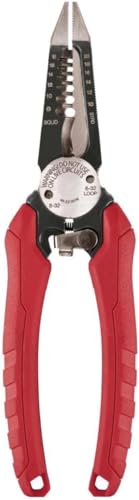
Milwaukee 48-22-3079 6-in-1 Wire Stripper and Cutter
One combination tool strips, cuts, crimps, loops and shears small screws, reducing what an electrician carries up a ladder. Stripping holes cover common building wire gauges. Owners report the crimping section is genuinely usable rather than an afterthought.
Pros
- Replaces several tools on a belt
- Usable crimping jaws
- Solid job site build
Cons
- Heavier than a plain stripper
- Compromises on pure stripping precision
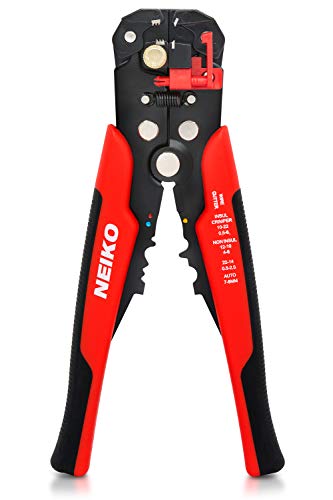
NEIKO 02037A Automatic Wire Stripper
An affordable self-adjusting stripper covers roughly 10 to 24 AWG with a built-in cutter and crimper. It falls short of professional standards, but occasional home wiring and car audio work suit it fine. A sensible first stripper for a general toolbox.
Pros
- Lowest cost automatic option
- Covers a wide gauge span
- Includes crimping jaws
Cons
- Spring tension weakens with heavy use
- Grip comfort trails the premium tools
How to choose
Fixed holes or self-adjusting jaws Fixed-hole strippers give the cleanest result when the gauge is known, since the cutout matches the conductor exactly. Self-adjusting jaws work faster when wire sizes change constantly, which is why automotive and DIY users favor them. Many electricians end up owning one of each instead of choosing.
Match the tool to solid or stranded wire Solid copper and stranded copper of the same gauge have different overall diameters, so quality strippers list two separate ranges. Using the solid hole on stranded wire shaves strands and weakens the connection. Read both figures in the specifications before ordering.
Look for a strip length stop A screw stop or gauge plate repeats the same exposed length every time, which matters for terminal blocks and device screws. Without one, strip lengths drift, burying insulation under the screw or leaving bare copper exposed outside the terminal.
Handle comfort decides fatigue, not power Stripping a few wires feels easy with any tool. A hundred exposes cheap handles fast. Cushioned, contoured grips and a spring return reduce hand fatigue noticeably, and owners doing full rewires consistently point to grip design as the feature they would not compromise on again.
How they compare
| # | Model | Solid wire range | Best for | Score | Price |
|---|---|---|---|---|---|
| 1 | Klein Tools 11055 Klein-Kurve Wire Stripper and Cutter | 10 to 18 AWG | Best overall | 9.4 | Check price |
| 2 | Irwin Vise-Grip 2078309 Self-Adjusting Wire Stripper | About 10 to 24 AWG | Best value | 9.2 | Check price |
| 3 | Knipex 12 62 180 Automatic Insulation Stripper | About 10 to 24 AWG | Best premium | 9.0 | Check price |
| 4 | Klein Tools 11061 Katapult Wire Stripper and Cutter | 8 to 20 AWG solid and stranded | Best for one handed speed | 8.8 | Check price |
| 5 | Ideal 45-092 Stripmaster Wire Stripper | Plier style production stripper | Best for repetitive work | 8.6 | Check price |
| 6 | Milwaukee 48-22-3079 6-in-1 Wire Stripper and Cutter | Strip, cut, crimp, loop, shear | Best for job site use | 8.3 | Check price |
| 7 | NEIKO 02037A Automatic Wire Stripper | About 10 to 24 AWG | Best budget | 8.0 | Check price |
Good to know
What gauge range covers most household wiring?
Typical residential circuits use 14 and 12 AWG solid copper most often, with 10 AWG for larger appliance runs. A stripper covering roughly 10 to 20 AWG handles nearly all of it. Low voltage and automotive work pushes toward tools that reach 22 or 24 AWG.
Are self-adjusting strippers accurate enough for fine wire?
Good ones are, especially models with adjustable clamping pressure. Budget automatic strippers tend to slip or crush very fine stranded conductors. A precision automatic or gauge-specific tool gives better results under 22 AWG.
Can wire strippers cut wire too?
Nearly all models here include a shearing section for copper wire, and several also loop wire for terminal screws. None are designed for steel, screws or hardened wire, which chips the cutting edges.
What does nicking the conductor actually do?
A nick removes copper from the conductor, creating a thinner point that heats up under load and can break when flexed. On stranded wire the damage usually cuts strands. Both reduce current capacity and cause failed connections.
Do I need a crimper as well?
If insulated spade or ring terminals are involved, yes. Some strippers include a crimping section that works acceptably for light-duty terminals. A dedicated ratcheting crimper gives noticeably better results across many terminals.
How do I strip wire without a stripper?
It can be done with a knife or side cutters, but the failure rate is high and conductor damage is common. Since strippers cost little, using the correct tool is the practical answer for anything carrying current.
Are automatic strippers worth it for a home toolbox?
For occasional use, an inexpensive automatic model handles a wide range without thinking about gauge, which suits a general kit. Regular work on the same wire sizes favors a fixed-hole stripper for more precision and longevity.
How should I maintain a wire stripper?
Keep the jaws free of insulation debris, wipe them dry after damp work and add a drop of light oil to the pivot occasionally. Spring-loaded automatic tools benefit most from cleaning, since trapped scraps usually cause the sticky feel.
The verdict
Klein Tools 11055 remains the most reliable everyday wire stripper for solid and stranded copper, the model most electricians keep replacing like for like. Choose the Irwin Vise-Grip 2078309 when gauges vary job to job, or step up to the Knipex 12 62 180 for frequent fine stranded work and the cleanest possible result.
Jake Monroe
Jake worked as a residential contractor for over a decade before shifting to full-time writing. He evaluates power tools, hand tools and workshop gear through the lens of someone who has actually used them on job sites, not just read the box.