Tile Cutters Compared for Porcelain and Large Format
QEP 10630Q manual cutter is our overall pick for its rigid rails and clean snap on ceramic and porcelain. RUBI TX-700-N handles large format tiles better than anything else here. For mosaics and awkward angles, DeWalt D24000S wet saw is the tool to reach for.
QEP 10630Q leads this roundup because twin chrome rails and a titanium coated wheel deliver consistent scores on porcelain. RUBI TX-700-N extends that capability to large format panels, and DeWalt D24000S wet saw takes over where snapping cannot go.
Tile hardness varies enormously, and a cutter that snaps ceramic cleanly can crumble the edge of dense porcelain, which makes choosing a tile cutter tricky. We compared published cut lengths, scoring wheel specifications, rail construction and breaking mechanisms across current models, then weighed what tilers report about rail flex, wheel life and how each machine handles a full day of work.
The top picks, ranked

QEP 10630Q 24 Inch Manual Tile Cutter
Hardened chrome rails pair with a titanium coated tungsten carbide wheel, producing a score line that snaps cleanly on both ceramic and porcelain. A wide breaker foot spreads pressure evenly, reducing chipped edges. Owners report it holds accuracy well across a full bathroom or kitchen floor.
Pros
- Clean snaps on dense porcelain
- Rails resist flex under breaking pressure
- Replacement wheels are easy to source
Cons
- Too short for very large format tiles
- No curved or notched cutting

RUBI TX-700-N Manual Tile Cutter
An extruded aluminium structure and a separated breaking system apply force directly over the score, letting the TX-700-N handle long modern formats that defeat shorter cutters. Lateral stop and squaring guides make repeat cuts straightforward. RUBI reinforces the frame with steel where flex would otherwise creep in.
Pros
- Handles long format tiles other cutters cannot
- Very rigid frame keeps scores straight
- Accurate angle and repeat cut guides
Cons
- Bulky to transport between jobs
- Professional pricing

Sigma 3B4M Metric Series Tile Cutter
Sigma uses a pushing scoring action rather than pulling, which many tilers find gives better control on hard porcelain. A swivelling side arm handles repeat angle cuts without remeasuring. Build quality is aimed squarely at daily professional use rather than occasional jobs.
Pros
- Excellent control on hard porcelain
- Repeat angle cuts are quick to set
- Built for continuous professional use
Cons
- Push action takes adjustment if you learned on pull cutters
- Costs well above DIY models

Montolit Masterpiuma P3 Evolution 3 Tile Cutter
A hardened scoring wheel and low friction rail system target the dense, glazed porcelain that dulls ordinary wheels quickly. Shock absorbing breaking reduces the chipping that ruins visible edges. This is the specialist choice when the tile fights back against a standard cutter.
Pros
- Handles the hardest porcelain confidently
- Wheel life is excellent under heavy use
- Smooth, low effort scoring stroke
Cons
- Premium price for occasional users
- Replacement parts are specialist items

QEP 10900Q 35 Inch Manual Tile Cutter
A longer bed stretches the QEP formula to cover plank format floor tiles that shorter cutters cannot reach. Twin rails and a heavy duty breaker keep the score straight over the full length. It sits as a sensible middle ground between DIY and professional cutters.
Pros
- Long capacity for plank format tiles
- Padded base protects delicate glazes
- Solid value for the cutting length
Cons
- Long frame needs storage space
- Heavier to carry up stairs
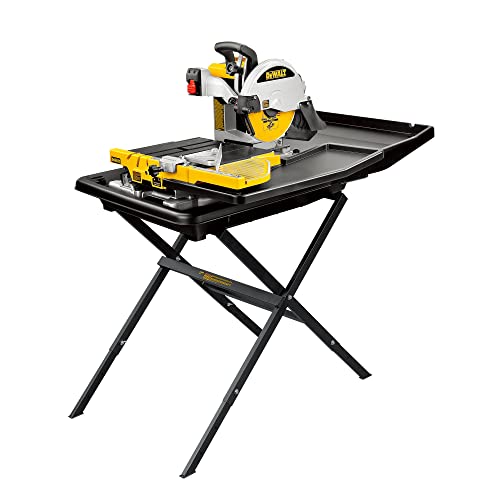
DeWalt D24000S Wet Tile Saw
L shapes, notches, mosaics and very hard stone need cuts a snap cutter cannot make, which is where a wet saw takes over. A rail cart system gives accurate straight cuts, and a stand option supports site work. Water cooling keeps the blade and tile edges clean.
Pros
- Cuts notches, curves and stone
- Accurate rail cart for straight cuts
- Water cooling reduces chipping and dust
Cons
- Messy to set up and clean down
- Heavy and needs a power supply

SKIL 3550-02 7 Inch Wet Tile Saw
Bathroom sized projects suit this compact wet saw well, where a full professional machine would be overkill. A sliding side extension supports larger tiles, and the water reservoir contains most of the spray. Carrying and storing it between projects stays easy thanks to its light build.
Pros
- Light enough to carry one handed
- Handles notches and curves affordably
- Sliding extension supports bigger tiles
Cons
- Small motor struggles with thick stone
- Slower cutting than professional saws
How they stack up
| # | Model | Cut length | Best for | Score | Price |
|---|---|---|---|---|---|
| 1 | QEP 10630Q 24 Inch Manual Tile Cutter | 24 inch straight, 16 inch diagonal | Best overall | 9.4 | Check price |
| 2 | RUBI TX-700-N Manual Tile Cutter | About 27 inch straight | Best for large format | 9.2 | Check price |
| 3 | Sigma 3B4M Metric Series Tile Cutter | About 21 inch straight | Best precision | 9.0 | Check price |
| 4 | Montolit Masterpiuma P3 Evolution 3 Tile Cutter | Model dependent, long format capable | Best for hard porcelain | 8.8 | Check price |
| 5 | QEP 10900Q 35 Inch Manual Tile Cutter | 35 inch straight, 24 inch diagonal | Best for long floor tiles | 8.6 | Check price |
| 6 | DeWalt D24000S Wet Tile Saw | 10 inch diamond blade | Best wet saw | 8.3 | Check price |
| 7 | SKIL 3550-02 7 Inch Wet Tile Saw | 7 inch diamond blade | Best budget wet saw | 8.0 | Check price |
How to choose
Manual cutter or wet saw, which fits the job A manual snap cutter runs faster, quieter and dust free for straight cuts, covering most of a typical floor or wall. A wet saw becomes essential for L shaped cuts around door frames, pipe notches, mosaics and natural stone. Many tilers own both, using the snap cutter for volume work and reserving the saw for awkward pieces.
Measure your largest tile before choosing a cutter Cut length is the specification that will stop a job dead. A twenty four inch cutter cannot handle a thirty two inch plank tile, and diagonal capacity always runs shorter than straight capacity. Check both figures against the biggest tile in the order, including any diagonal cuts the layout requires.
How rail rigidity and wheel quality affect cut quality on porcelain Flex in the rails lets the scoring wheel wander, producing a shallow or wavy line that breaks badly. Twin hardened rails or a reinforced extrusion work best, paired with a tungsten carbide wheel coated for porcelain. Owners report that replacing a worn scoring wheel restores cut quality more often than any other single fix.
Working safely and practising on offcuts Sharp edges and flying shards make eye protection and gloves basic requirements on any tile job. Wet saws add water near electricity, which makes a residual current device essential. Score and snap a couple of offcuts before cutting visible pieces to check wheel pressure, since one confident pass generally beats several light ones.
Frequently asked questions
Can a manual tile cutter handle porcelain?
Good ones can. Porcelain is denser than ceramic, so it needs a sharp titanium or tungsten carbide wheel, rigid rails and firm even breaking pressure. Very hard rectified porcelain cuts more easily on a wet saw.
Why is my tile breaking off the score line?
Usually the score is too shallow, the wheel is worn, or the breaking pressure sits off centre. One firm continuous scoring pass works better than repeated light passes, which can create parallel lines that confuse the break.
Do I need a wet saw for a small bathroom?
Not necessarily, but pipe notches and outlet cutouts benefit from one. A compact saw such as SKIL 3550-02 covers those without the bulk of a professional machine.
How often should I change the scoring wheel?
Wheels wear gradually, and the first sign is needing more pressure for the same score. Keeping a spare on hand is worthwhile, since a fresh wheel transforms cut quality instantly.
What is the difference between a snap cutter and a rail cutter?
The terms overlap. Both score the glaze and then break the tile along that line. Better rail cutters use hardened twin rails and a separated breaking system that applies force directly over the score for cleaner results.
Can I cut natural stone with a manual cutter?
Generally no. Marble, granite and slate lack the uniform structure that lets a score line propagate cleanly, so they need a diamond blade wet saw instead.
How do I cut a hole for a pipe in tile?
Use a diamond hole saw for round holes, or nibble the shape with tile nippers after scoring the outline. A wet saw can also make relief cuts that let you snap out a notch.
Does wet cutting reduce dust compared to dry cutting?
Substantially. Water suppresses the silica dust that dry cutting produces, a genuine health consideration. Good ventilation and a properly fitted mask remain sensible even so.
Manual tile cutter vs wet saw, which should a beginner buy first?
A manual cutter like QEP 10630Q covers most straight cuts and costs far less to start with. Add a compact wet saw such as SKIL 3550-02 once a project needs notches, curves or stone.
What tile cutter is best for large format porcelain tiles?
RUBI TX-700-N handles long modern formats up to about 27 inches thanks to its rigid extruded aluminium bed and separated breaking system, which shorter cutters cannot match.
The bottom line
QEP 10630Q is the cutter most home projects should start with because it snaps porcelain cleanly without professional pricing. Step up to RUBI TX-700-N when large format tiles are involved, and add a wet saw such as DeWalt D24000S once notches, curves and stone enter the job.
Jake Monroe
Jake worked as a residential contractor for over a decade before shifting to full-time writing. He evaluates power tools, hand tools and workshop gear through the lens of someone who has actually used them on job sites, not just read the box.


