Winter Tires Compared: Ice Grip vs Deep Snow Bite
Michelin’s X-Ice Snow balances ice grip with composed dry handling, making it the most well rounded winter tire here. Bridgestone’s Blizzak WS90 remains the ice braking benchmark, and the Continental VikingContact 7 rides the quietest of the three.
Michelin’s X-Ice Snow is the winter tire to buy for one answer that covers most conditions. Bridgestone’s Blizzak WS90 pulls ahead specifically on ice, and Continental’s VikingContact 7 rides as the more comfortable daily driver. All three are studless designs rather than all season compromises.
Winter tire choice gets genuinely difficult because the traits that make a tire brilliant on ice tend to make it vaguer on cold dry tarmac. Deep snow tread patterns also run noisier than most drivers expect. No single tire wins everywhere, only the best fit for the winter you actually drive in. We compared published compound and siping descriptions, tread pattern design, tread depth, three peak mountain snowflake certification and sizing availability across common fitments.
The best picks, ranked

Michelin X-Ice Snow
Michelin tunes this studless tire for the balance most drivers actually need, holding onto ice and snow grip without turning vague on a cold dry motorway. Tread life ranks as a recognised strength of the range. Choose it when your winter mixes plenty of clear cold days between storms.
Pros
- Holds composure on cold dry roads better than most winter tires
- Notably strong tread life for a soft winter compound
- Wide sizing availability across common fitments
Cons
- Beaten on pure ice braking by dedicated ice tires
- Priced at a premium relative to the field

Bridgestone Blizzak WS90
Bridgestone built its Blizzak reputation on ice performance, and the WS90 continues it with a compound and siping arrangement aimed at gripping polished, packed surfaces. Owners in freeze thaw regions consistently rate it highly. The tradeoff shows up as softer dry road feel and quicker wear.
Pros
- Among the strongest ice braking performers available
- Reassuring grip on packed and polished winter surfaces
- Long established reputation with wide availability
Cons
- Softer dry road feel than the Michelin
- Wears faster if run into warm spring weather

Continental VikingContact 7
Continental tunes this for a quieter, more refined winter ride than most aggressive snow patterns manage, without giving up much traction. Long winter motorway miles suit it well. Wet cold performance stands out as a particular strength alongside its snow ability.
Pros
- Noticeably quieter than aggressive snow patterns
- Strong performance on cold wet roads, not just snow
- Comfortable for long winter motorway journeys
Cons
- Deep unploughed snow is not its strongest area
- Directional pattern limits rotation options

Goodyear Ultra Grip Ice WRT
Goodyear built this for the messy reality of winter driving, where roads swing between ice, slush and wet tarmac within a single trip. The tread evacuates slush well, an area where many winter tires feel unstable. Suburban and commuter driving suit it best.
Pros
- Handles slush without the wandering some winter tires show
- Good balance for commuter driving on treated roads
- Competitive pricing against premium rivals
Cons
- Not as strong as the Blizzak on pure ice
- Road noise increases as the tread wears

General AltiMAX Arctic 12
A studdable winter tire that performs respectably unstudded, this one can also take studs where they are legal and conditions demand. That flexibility is unusual at this price point. Refinement and dry handling trail the premium options, an expected tradeoff for the lower outlay.
Pros
- Stud option adds ice capability where regulations allow
- Strong value against premium winter tires
- Aggressive tread handles unploughed snow well
Cons
- Noisier and less refined than premium tires
- Dry road handling feels noticeably vaguer
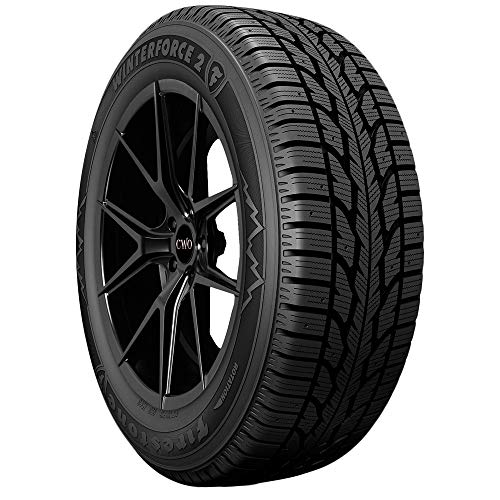
Firestone Winterforce 2
Snow traction takes priority over refinement in this straightforward deep tread winter tire. Studdable and widely available, it stays popular in regions with heavy snowfall and lightly treated roads. Quiet running and crisp steering on clear tarmac are not what it offers.
Pros
- Strong traction in unploughed and deep snow
- Studdable for regions where studs are permitted
- One of the most affordable proper winter tires available
Cons
- Loud and unrefined on clear roads
- Steering response is vague compared with premium tires

Nokian Tyres Nordman 7
Nokian essentially defined this category, and this factory studded tire targets the harshest ice conditions rather than mixed urban winters. Nothing here matches it on ice where studs stay legal and roads stay frozen. Studs turn noisy and wear quickly once the tarmac runs dry.
Pros
- Unmatched grip on genuinely icy roads
- Factory studding placed better than aftermarket fitting
- Built for the harshest northern winters
Cons
- Studs are illegal in many regions and seasons
- Very noisy and wear rapidly on clear tarmac
How they stack up
| # | Model | Type | Best for | Score | Price |
|---|---|---|---|---|---|
| 1 | Michelin X-Ice Snow | Studless winter | Best overall | 9.4 | Check price |
| 2 | Bridgestone Blizzak WS90 | Studless winter | Best for ice | 9.2 | Check price |
| 3 | Continental VikingContact 7 | Studless winter | Best for comfort | 9.0 | Check price |
| 4 | Goodyear Ultra Grip Ice WRT | Studless winter | Best for mixed conditions | 8.8 | Check price |
| 5 | General AltiMAX Arctic 12 | Studdable winter | Best value | 8.6 | Check price |
| 6 | Firestone Winterforce 2 | Studdable winter | Best budget | 8.3 | Check price |
| 7 | Nokian Tyres Nordman 7 | Studded winter | Best for severe ice | 8.0 | Check price |
What matters most
Why do winter tires matter even without snow? The defining difference is compound behaviour below roughly seven degrees Celsius, where all season and summer rubber stiffens and loses grip on any surface. A winter tire stays pliable and grips cold dry tarmac better than an all season, regardless of snowfall. That is why tire engineers recommend swapping by temperature, not by the first snowfall.
Studless, studdable or studded: what’s the real difference? Studless tires rely entirely on compound and siping, work everywhere, and stay legal in every region. Studdable tires add the option where regulations permit. Studded tires grip hardest on pure ice and perform worst everywhere else, running noisy, wearing fast on clear roads and facing bans or seasonal limits in many places. Check local rules before assuming studs are available.
Do you need to fit winter tires on all four wheels? Fitting winter tires only to the driven axle creates a handling imbalance more dangerous than fitting none at all, since one end of the car carries far more grip than the other. On a front wheel drive car this produces sudden oversteer under braking. Every tire manufacturer states this clearly, and it deserves treatment as non negotiable rather than a cost saving.
How should you store winter tires once spring arrives? Winter compounds wear rapidly in warm weather, so leaving them on through spring can cost a large fraction of their life. Swap back once temperatures consistently clear the cold threshold. Store the removed set clean, dry and out of direct sunlight, stacked flat or on a rack. Marking each tire’s position also simplifies rotation at the next fitting.
Questions worth asking
When should you fit winter tires?
Fit them once average temperatures drop consistently below around seven degrees Celsius, rather than waiting for snow. The compound advantage applies on cold dry and wet roads too, not only snow and ice, so temperature is the useful trigger.
Do you need winter tires on all four wheels?
Yes. Fitting only two creates a large grip imbalance between axles, which can trigger sudden loss of control under braking or cornering. Every manufacturer states this, and it applies to front, rear and all wheel drive vehicles alike.
Are all season tires good enough for winter?
For mild winters with occasional light frost, often yes. For regions with sustained sub zero temperatures, packed snow or ice, they compromise significantly. All season compounds stiffen in real cold, exactly when the difference matters most.
What does the three peak mountain snowflake symbol mean?
It certifies that a tire met a defined snow traction performance standard during testing. That makes it a meaningful indicator of a genuine winter tire, unlike the weaker mud and snow designation.
Are studded tires actually better than studless?
On genuinely icy roads, yes, noticeably. Everywhere else they perform worse: louder, harsher, quicker wearing and damaging to road surfaces. Many regions restrict or ban them seasonally, and modern studless tires have closed much of the gap for most drivers.
How long do winter tires typically last?
Several winter seasons, depending on mileage and how carefully you swap them out each spring. Running winter tires through warm weather wears them out fastest, since the soft compound degrades quickly above its designed temperature range.
Can winter tires stay on the car all year?
They can, but doing so costs money and safety. Warm weather wears the compound rapidly, and wet braking distances on hot roads run longer than with summer or all season tires. The savings from skipping a swap rarely outweigh the shortened tire life.
How should winter tires be stored during summer?
Clean, dry, and away from direct sunlight, ozone sources such as electric motors, and extreme heat. Stack them flat or use a rack, bagging them if possible. Marking each tire’s original position simplifies correct rotation once they go back on.
Ice or deep snow, which matters more for your drive?
Commuters on plowed, icy roads benefit most from a dedicated ice tire like the Blizzak WS90. Rural drivers facing unploughed snow gain more from an aggressive tread like the Firestone Winterforce 2 or General AltiMAX Arctic 12.
Is a pricier winter tire worth it over a budget option?
Premium tires like the Michelin X-Ice Snow add refinement, tread life and balanced grip across conditions. Budget tires like the Firestone Winterforce 2 still deliver real winter traction, just with more road noise and less composure on dry pavement.
The bottom line
Michelin’s X-Ice Snow suits the widest range of drivers, staying capable on ice without feeling loose on cold dry roads. Choose Bridgestone’s Blizzak WS90 if ice is your dominant hazard, and the Continental VikingContact 7 if you cover long winter motorway miles and value a quiet ride.
Tony Russo
Tony trained as an automotive technician and spent years in service and parts retail before moving into writing. He focuses on garage tools, car care products and accessories from a hands-on maintenance perspective.


