Mud Terrain Tires Built to Handle Real Off-Road Trails
BFGoodrich Mud-Terrain T/A KM3 tops the list for sidewall toughness and grip across rock and mud. Nitto Trail Grappler M/T stays quietest on pavement among true mud tires. Falken Wildpeak M/T delivers most of that capability for meaningfully less money.
BFGoodrich’s KM3 is the mud terrain tire most trail rigs should wear first. Anyone who also commutes daily gets more comfort from the Nitto Trail Grappler. Budget conscious buyers land well with the Falken Wildpeak M/T instead.
Mud terrain tires force a real trade off rather than a clean ranking, since the tread voids that clear mud also generate road noise and wear faster on pavement. We compared current models on tread design, sidewall construction, self cleaning behavior and load ratings. Owner reports on noise levels and mileage after a full set wore in rounded out the picture.
What matters most
Do you actually need mud terrain tires? Mud terrain tires earn their keep when a meaningful share of your driving happens on soft or broken ground. An all terrain or hybrid terrain tire runs quieter, grips better in the wet, lasts longer and costs less to operate if the truck mostly sees pavement. Picking an aggressive tire for looks alone gets expensive fast.
What sidewall construction should I look for? Most off road tire failures come from sidewall punctures and pinch cuts, not tread wear. Three ply sidewalls and reinforced shoulder compounds are what let a tire air down over rock without damage. Check the ply rating and load range against your vehicle weight, especially if you tow or carry a heavy build.
How does tread void ratio affect mud performance? Tread voids fling mud out as the wheel spins, which keeps a mud terrain gripping in soft ground. Bigger voids clean better but leave less rubber on the road, which is exactly where noise and wet braking distance come from. Stone ejectors between the blocks pay off if gravel roads are part of your routine.
What will mud terrain tires cost you in running expenses? Aggressive tires weigh more, which affects acceleration, braking and fuel consumption, and they wear faster than highway tires. Rotating every few thousand miles and keeping pressures correct extends how long a set lasts. Based on specifications, expect meaningfully shorter tread life than an all terrain tire in the same size.
The best picks, ranked

BFGoodrich Mud-Terrain T/A KM3
KM3 is the tire most other mud terrains get measured against, built around a linear flex zone and reinforced sidewalls. That construction lets it grip rock at low pressure without cutting. Tread clears mud well, and the compound holds up better than its predecessor on pavement. Road noise stays high, as with any serious mud terrain.
Pros
- Exceptional sidewall resistance to cuts and pinches
- Grips rock and mud equally well
- Available in a huge range of sizes
Cons
- Noticeable road noise at highway speed
- Wears faster than a hybrid terrain tire
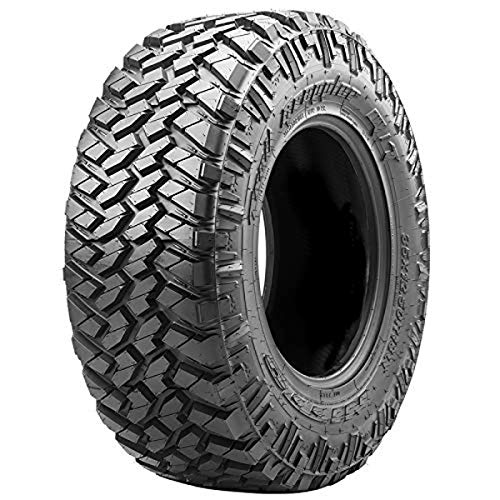
Nitto Trail Grappler M/T
Nitto tuned the tread pitch specifically to cut noise, producing the mud terrain most people can live with daily. Off road capability stays strong thanks to deep voids and aggressive shoulder lugs. Weight runs high though, which shows up in fuel economy and braking distance.
Pros
- Quietest tire in this category by a clear margin
- Strong sidewall construction throughout
- Aggressive look without the usual noise penalty
Cons
- Heavy build affects fuel economy
- Clears deep sticky mud less readily than open designs

Toyo Open Country M/T
Heavy truck owners have relied on this tire for years, thanks to high load ratings and a stable carcass that resists squirm under a loaded trailer. Scalloped shoulder blocks bite in ruts while the center tread keeps highway manners predictable. Wear rate stays respectable even carrying weight.
Pros
- Stable under trailer loads
- Available in heavy duty load ranges
- Wears well for a mud terrain
Cons
- Loud, particularly as tread wears
- Firm ride on lighter vehicles

Falken Wildpeak M/T
Falken delivers most of the capability of premium names for meaningfully less money. A three ply sidewall and stone ejecting tread clear mud effectively. Owners report solid tread life with no unpleasant surprises in wet weather, though it rides less refined than the Nitto on pavement.
Pros
- Strong capability for the price
- Three ply sidewalls at a mid range cost
- Stone ejectors keep the tread clear
Cons
- Louder than premium noise optimized designs
- Fewer size options than the bigger brands

Mickey Thompson Baja Boss M/T
An asymmetric tread gives this tire a character somewhere between mud terrain and hybrid, with better wet road behavior than the pattern suggests. Off road it handles mud, rock and sand competently rather than specializing in one. Trucks that spend most of their life on pavement but need weekend capability fit this tire well.
Pros
- Better wet road grip than most mud terrains
- Balanced performance across surfaces
- Distinctive tread resists chunking
Cons
- Not the strongest choice in deep mud specifically
- Asymmetric look divides opinion

General Grabber X3
General’s aggressive shoulder design and durable compound suit rocky trails, where sidewall damage is the main risk. It airs down well and conforms to uneven surfaces. Pavement manners stay firm and vocal, so a dedicated trail vehicle fits it better than a commuter.
Pros
- Excellent grip on rock at reduced pressure
- Tough compound resists chunking
- Aggressive shoulders bite hard in ruts
Cons
- Firm and noisy on pavement
- Average wet road grip

Cooper Discoverer STT Pro
Cooper built this tire for genuinely soft ground, with huge voids and armored shoulder lugs that keep pulling when other tires pack solid. That specialism costs refinement everywhere else, with plenty of noise and a firm ride. Drivers who face mud as actual terrain, not an occasional novelty, get the most value here.
Pros
- Clears soft mud better than anything else here
- Armored shoulders resist damage
- Strong bite in sand and loose soil
Cons
- Among the loudest options on road
- Faster highway wear than balanced designs
Side by side
| # | Model | Sidewall | Best for | Score | Price |
|---|---|---|---|---|---|
| 1 | BFGoodrich Mud-Terrain T/A KM3 | Reinforced with linear flex zone | Best overall | 9.4 | Check price |
| 2 | Nitto Trail Grappler M/T | Noise optimised tread pitch | Best for on road comfort | 9.2 | Check price |
| 3 | Toyo Open Country M/T | High, including heavy duty sizes | Best for towing | 9.0 | Check price |
| 4 | Falken Wildpeak M/T | Three ply construction | Best value | 8.8 | Check price |
| 5 | Mickey Thompson Baja Boss M/T | Asymmetric pattern | Best all rounder | 8.6 | Check price |
| 6 | General Grabber X3 | Alternating aggressive lugs | Best for rock crawling | 8.3 | Check price |
| 7 | Cooper Discoverer STT Pro | Very high void ratio | Best in deep mud | 8.0 | Check price |
Frequently asked questions
How much louder are mud terrain tires than regular tires?
Noticeably. Gaps between tread blocks create a hum that rises with speed and gets louder as the tire wears unevenly. Noise optimized designs like the Nitto Trail Grappler cut it substantially, though no mud terrain matches an all terrain tire for quiet.
Are mud terrain tires safe in rain and snow?
They handle deep snow and slush reasonably well thanks to large voids. Wet pavement braking runs weaker than an all terrain tire because less rubber contacts the road and fewer sipes are cut into the tread. Most mud terrains perform poorly on ice, so look for a three peak mountain snowflake rating if winter driving matters.
How long do mud terrain tires typically last?
Considerably less than highway tires, depending heavily on vehicle weight, alignment and rotation discipline. Owners commonly report shorter mileage than an equivalent all terrain tire, which is the trade off for softer compounds and deeper tread.
What tire pressure should I run off road?
Airing down increases the contact patch and improves grip and ride on rough terrain, but running too low risks unseating the bead. Follow tire and vehicle manufacturer guidance, carry a way to reinflate, and return to normal pressures before driving on the road.
Do mud terrain tires need more frequent rebalancing?
Yes, generally. Their weight and uneven wear pattern make periodic rebalancing and frequent rotation worthwhile. Many shops recommend rotating every few thousand miles, more often than a typical highway tire needs.
Will mud terrain tires hurt my fuel economy?
Usually, yes. Extra weight and rolling resistance both cost efficiency, and larger diameters compound the effect. The exact drop depends on the vehicle, but most owners notice a measurable difference after switching from all terrains.
Mud terrain vs hybrid terrain: what is the difference?
Hybrid terrain tires use a partially closed tread with an aggressive shoulder, aiming for most of the off road ability with less noise and better wet grip. They suit a truck that mostly drives on road but needs occasional real capability.
Do new tire sizes affect my speedometer reading?
If the new tires change the overall rolling diameter, yes, the speedometer and odometer will read incorrectly. Many vehicles can be recalibrated, and it is worth doing since the error grows with speed.
The bottom line
Most people building a capable trail rig should default to the BFGoodrich KM3, thanks to its sidewall strength and the sheer breadth of sizes available. Choose the Nitto Trail Grappler if the truck doubles as a commuter, the Toyo Open Country M/T for towing, and the Falken Wildpeak M/T for most of the capability at less cost. Drivers whose routes stay mostly on pavement should consider a hybrid terrain tire instead.
Tony Russo
Tony trained as an automotive technician and spent years in service and parts retail before moving into writing. He focuses on garage tools, car care products and accessories from a hands-on maintenance perspective.


