Do All Season Tires Really Work in Snow and Rain?
Michelin CrossClimate2 leads on a three peak mountain snowflake rating paired with strong wet braking. Continental TrueContact Tour carries roughly an 80,000 mile warranty and low rolling resistance. General AltiMAX RT45 covers the fundamentals near 75,000 miles for a noticeably smaller outlay.
Michelin CrossClimate2 heads this list because it carries snow certification most all season tires lack while still driving like a touring tire in July. Continental TrueContact Tour wins on longevity and rolling efficiency. General AltiMAX RT45 delivers competent all round performance for less.
All season is a loose label. It stretches from grand touring rubber that struggles in slush to genuine all weather designs certified for snow traction. Those two ends behave nothing alike in February. We compared published treadwear warranties, snow ratings, compound descriptions and size availability, alongside recurring owner feedback about noise growth and wet performance as tread depth falls.
Our top picks

Michelin CrossClimate2
Michelin puts the three peak mountain snowflake symbol on this one, which certifies tested snow traction rather than the token mud and snow marking. Its V shaped directional tread channels slush, and a thermal adaptive compound stays pliable in cold without going greasy in summer heat. Drivers in regions with occasional snow report skipping the seasonal changeover entirely.
Pros
- Certified snow traction, rare in this class
- Short wet stopping distances
- Removes the winter tire swap in mild climates
Cons
- Highest outlay in this roundup
- 60,000 mile warranty trails the touring tires

Continental TrueContact Tour
Around 80,000 miles of warranty makes this the high mileage commuter’s pick, backed by a compound tuned to cut rolling resistance. Water evacuation grooves keep wet braking strong as the tread wears. Snow is outside its remit, since it carries only the mud and snow marking rather than a tested winter rating.
Pros
- One of the longest warranties in the class
- Low rolling resistance helps fuel economy
- Quiet at motorway speed
Cons
- No severe snow certification
- Loses ground to the CrossClimate2 in slush

General AltiMAX RT45
General sits under the Continental umbrella, and the RT45 shows that lineage with roughly 75,000 miles of warranty and competent wet behaviour. A symmetric tread carries visual wear indicators, so checking remaining life takes a glance rather than a gauge. Refinement trails the premium options, especially on coarse chip seal.
Pros
- Long warranty for a value brand
- Wear indicators show tread life at a glance
- Dependable in the wet
Cons
- Noisier than premium touring tires
- Winter capability stops at light slush

Goodyear Assurance WeatherReady
Goodyear answers the CrossClimate2 with a snowflake rated asymmetric tread whose biting edges keep forming as rubber wears away. That matters in year three, when many winter capable tires have lost their edge. Warranty stops near 60,000 miles, the usual price of a softer compound, and SUV sizes are well covered.
Pros
- Certified for severe snow service
- Grip holds up as the tread wears down
- Good SUV and crossover size availability
Cons
- Shorter warranty than the touring rivals
- Firmer ride than the Turanza QuietTrack
Bridgestone Turanza QuietTrack
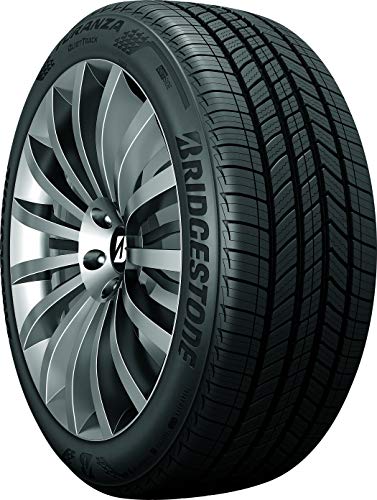
Noise reduction chambers inside the tread blocks target the frequencies that carry into a cabin, and the compound is tuned for comfort over sharpness. On a long motorway run it is audibly calmer than anything else here. Warranty reaches about 80,000 miles. Steering response softens as a result, which suits saloons more than sports models.
Pros
- Quietest tire in this roundup
- 80,000 mile warranty matches the Continental
- Absorbs broken surfaces well
Cons
- Steering feels less immediate
- Carries no severe snow certification
Firestone WeatherGrip
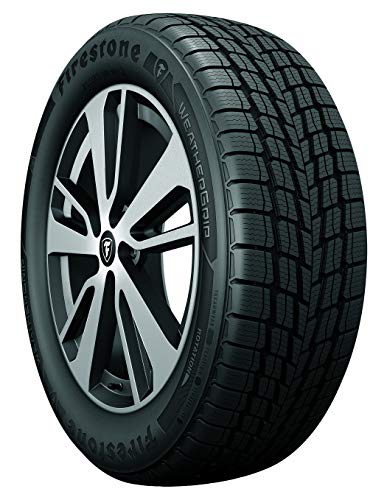
Cheapest route to a snowflake rated tire, which matters in regions that get real winter without justifying a second set of wheels. Full depth sipes keep working as tread disappears, and warranty runs near 65,000 miles. Dry handling and refinement sit below the premium all weather options, so treat it as a commuter choice.
Pros
- Severe snow certification at a low outlay
- Full depth sipes keep biting as it wears
- 65,000 mile warranty is fair for the class
Cons
- Less refined than premium all weather tires
- Dry handling is merely adequate
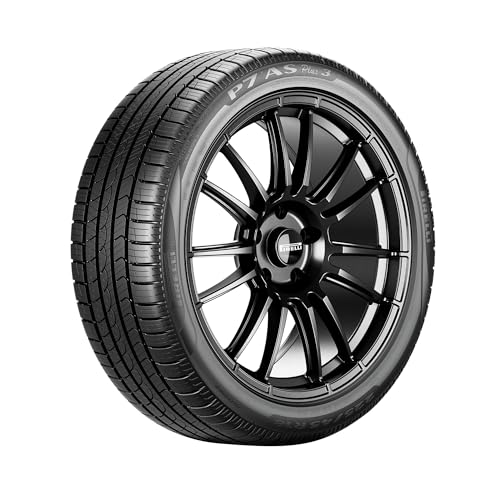
Pirelli Cinturato P7 All Season Plus 3
Pirelli builds this as a grand touring all season, prioritising steering response and dry grip over maximum tread life. Sports saloons and anyone irritated by vague steering on comfort rubber will notice the difference immediately. Warranty sits around 70,000 miles, and the firmer casing sends more surface texture into the cabin.
Pros
- Sharpest steering feel in this group
- Strong dry grip for an all season
- Good availability in performance sizes
Cons
- Firmer ride than the touring rivals
- Winter use limited to light conditions
How to pick the right one
What to compare when buying all season tires Five numbers do most of the work. Snow rating separates all weather designs from ordinary touring rubber. Treadwear warranty indicates compound hardness. Wet braking decides real world safety far more often than dry grip. Noise ratings matter on long commutes. Size availability quietly rules out half a shortlist, since a common saloon fitment may have twenty options while a crossover size has five.
What does the three peak mountain snowflake mean? Most all season tires carry a mud and snow marking, which describes a tread pattern rather than any tested performance. Three peak mountain snowflake certification is different: the tire passed a defined snow traction test against a reference tire. Seeing snow more than a couple of times a winter? Restrict the shortlist to snowflake rated models, which here means the CrossClimate2, Assurance WeatherReady and WeatherGrip.
How long do all season tires really last? Warranties in this group run from about 60,000 to 80,000 miles, and they compare compounds fairly. What they cannot account for is your alignment, inflation habits and driving style, all of which move real life substantially. Treat an 80,000 mile figure as evidence of a hard wearing compound, not a promise. Rotating every 5,000 to 8,000 miles is the cheapest way to approach the quoted number.
Which all season tire suits your climate and car? Mild winters with occasional frost favour a long wearing touring tire such as the TrueContact Tour or Turanza QuietTrack. Regular snowfall calls for an all weather design, accepting shorter tread life in exchange for certified traction. Performance saloons want the firmer Cinturato P7 All Season Plus 3. No single tire wins on every front, so decide which season the car has to be good in.
Side by side
| # | Model | Snow rating | Best for | Score | Price |
|---|---|---|---|---|---|
| 1 | Michelin CrossClimate2 | Three peak mountain snowflake | Best overall | 9.4 | Check price |
| 2 | Continental TrueContact Tour | Mud and snow only | Best treadwear | 9.2 | Check price |
| 3 | General AltiMAX RT45 | Mud and snow | Best value | 9.0 | Check price |
| 4 | Goodyear Assurance WeatherReady | Three peak mountain snowflake | Best for mixed weather | 8.8 | Check price |
| 5 | Bridgestone Turanza QuietTrack | Mud and snow | Best for quiet ride | 8.6 | Check price |
| 6 | Firestone WeatherGrip | Three peak mountain snowflake | Best budget winter capability | 8.3 | Check price |
| 7 | Pirelli Cinturato P7 All Season Plus 3 | Mud and snow | Best for performance cars | 8.0 | Check price |
Common questions
Are all season tires good enough for winter?
It depends on the tire and the winter. Standard all season rubber copes with cold and light slush, then loses grip in real snow. Snowflake rated models handle snow far better, though dedicated winter tires still win on ice.
What is the difference between all season and all weather tires?
All weather describes all season tires carrying the three peak mountain snowflake rating. Softer compounds stay flexible in cold at some cost to tread life. CrossClimate2, Assurance WeatherReady and WeatherGrip fall into that group.
How long do all season tires last?
Warranties here span roughly 60,000 to 80,000 miles, with the touring models at the top. Real life depends on alignment, inflation and driving style, so regular rotation is the cheapest way to reach the higher figure.
Do I need to replace all four tires at once?
On all wheel drive cars, generally yes, since mismatched rolling circumferences load the drivetrain. Two wheel drive cars can take a pair, and the new pair belongs on the rear axle regardless of which wheels drive.
When should all season tires be replaced?
Legal minimums sit well below the depth where wet performance falls away. Many tire engineers suggest replacing near three millimetres for rain safety, and sooner on snow rated tires used in winter, because sipe depth provides the snow grip.
Does tire pressure matter more in winter?
Yes. Pressure drops roughly one psi for every ten degree Fahrenheit fall, so a tire set correctly in autumn runs under inflated by midwinter. Monthly checks through the cold months protect wear and wet grip.
Are quieter tires worth paying for?
In a well insulated modern car the difference is modest. In an older or lighter vehicle, tire noise dominates at motorway speed, and a design like the Turanza QuietTrack changes the character of long journeys.
Can I mix all season and winter tires?
Avoid it. Different tire types front to rear give the axles different grip levels, which makes the car behave unpredictably in exactly the conditions where predictability matters. Fit a matched set.
CrossClimate2 vs TrueContact Tour: which should I buy?
Take the CrossClimate2 if snow appears more than once or twice each winter, since it is certified for it. Choose the TrueContact Tour for mild climates and high annual mileage, where its longer warranty and lower rolling resistance pay off.
Do all season tires affect fuel economy?
Rolling resistance varies meaningfully between models. Compounds tuned for efficiency, such as the TrueContact Tour, use less fuel than winter capable rubber, which trades some efficiency for a softer, grippier compound.
Our take
Drivers who see occasional snow should take the Michelin CrossClimate2, which removes the seasonal changeover without giving up wet performance in July. High mileage commuters in mild climates gain more from the Continental TrueContact Tour and its longer warranty. On a tighter budget, General AltiMAX RT45 covers the fundamentals, while the Firestone WeatherGrip is the cheapest path to genuine snow certification.
Tony Russo
Tony trained as an automotive technician and spent years in service and parts retail before moving into writing. He focuses on garage tools, car care products and accessories from a hands-on maintenance perspective.