Winter sports gear that fixes cold hands and foggy lenses
OutdoorMaster PRO Ski Goggles lead here, pairing a dual layer anti fog lens with swappable tints for sun and flat light. Giro Ledge MIPS covers head protection under ASTM F2040 and CE EN 1077. Smartwool Ski Targeted Cushion socks remove the shin pressure that ends afternoons early.
OutdoorMaster PRO Ski Goggles change a cold day more than anything else on this list. Dual layer lenses with UV400 protection stay clear while a single pane clouds on the first chairlift, and spare tints cover bluebird mornings and grey afternoons. Frame plastic is the compromise, so treat them gently in a packed gear bag.
Winter kit fails in predictable ways. Lenses fog, glove insulation wets out, socks bunch under a boot buckle, and nothing dries before the next morning. We compared lens construction, frame venting, insulation type, membrane placement, certification marks and fibre content. Owner reports across full seasons then settled the durability questions, covering resort laps, backcountry tours and freezing hours on a sideline.
Our top picks

OutdoorMaster PRO Ski Goggles
Two lens layers trap an air gap, and frame vents pull humid air out before it condenses between the panes. Lenses detach, so one frame handles bright glare and featureless overcast. Prescription glasses fit underneath, which is rare outside bulkier over the glasses designs.
Pros
- Swappable tints cover sun and flat light
- Frameless shape widens peripheral vision
- Sits over prescription eyewear
Cons
- Frame plastic feels lighter duty than premium goggles
- Swapping lenses is fiddly with cold fingers

Giro Ledge MIPS Snow Helmet
Hard shell ABS resists the knocks a helmet takes in transit, and the MIPS liner lets the shell rotate slightly during an angled impact. Certification runs to ASTM F2040 and CE EN 1077, covering resort and park riding. Vents are fixed, so warm spring laps mean unzipping instead of adjusting airflow.
Pros
- MIPS addresses rotational impact forces
- Hard shell survives life inside a gear bag
- Goggle frames seal cleanly against the brim
Cons
- Vents cannot be opened or closed
- Heavier than in mould touring helmets
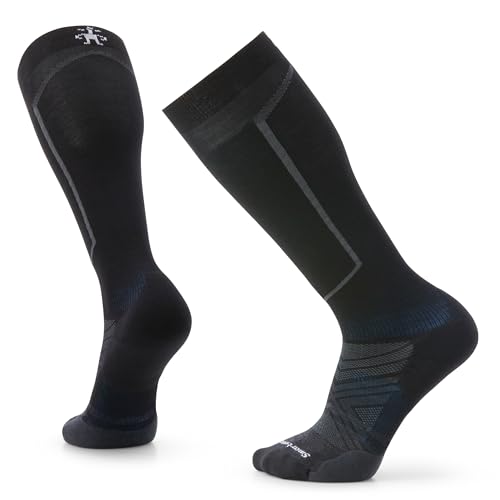
Smartwool Ski Targeted Cushion OTC Socks
Cushioning lands only across the shin and under the foot, exactly where a ski boot presses hardest. Everywhere else stays thin, which keeps the liner fit precise and blood moving to the toes. Merino manages odour through a long weekend but wants a cold wash and low heat drying.
Pros
- Padding sits only under boot pressure points
- Merino resists odour across multi day trips
- Stays up without a constricting elastic band
Cons
- Needs cold wash and low heat drying
- Thicker than a liner sock in very tight boots

Carhartt Waterproof Insulated Glove
A waterproof insert sits behind synthetic fill, so slush and wet snow stay outside rather than soaking the insulation. Reinforced palms handle shovel handles, sled ropes and rope tows. Touchscreen panels on thumb and index mean the phone comes out without the glove coming off.
Pros
- Built for wet snow, not just dry cold
- Reinforced palm resists rope and shovel abrasion
- Touchscreen panels work through the glove
Cons
- Too bulky for buckles and small zips
- Runs hot during high output touring

HotHands Hand Warmers
Iron powder, carbon and salt react with air the moment the wrapper opens. Warmth runs up to ten hours, enough for a resort day or a frozen touchline. Nothing charges and nothing switches off, so each packet is used once and then discarded.
Pros
- No batteries, cables or preparation
- Slips inside gloves, boot cuffs and pockets
- Easy to stash spares in every jacket
Cons
- Disposable packets create waste
- Heat output cannot be turned down

Turtle Fur Comfort Shell Balaclava
Polyester and spandex shell fabric blocks chairlift wind across the face and neck without fleece bulk. Thin enough to sit under a helmet, so fit stays as certified rather than loosened by a beanie. Deep cold calls for a warmer layer underneath, since this is a wind shell first.
Pros
- Lies flat under a helmet and goggle strap
- Cuts wind chill on exposed chairlifts
- Dries between runs indoors
Cons
- Light insulation used on its own
- Fabric dampens near the mouth in hard cold

DryGuy Force Boot Dryer
Four ports mean a pair of boots and a pair of gloves dry together overnight. Air arrives around 105 degrees Fahrenheit, warm enough to pull moisture from liner foam and cool enough to leave it intact. Mains power and real counter space are the requirements, so it stays in the mudroom rather than the ski bag.
Pros
- Dries liners and gloves before the next morning
- Low heat avoids deforming boot foam
- Timer stops it running all night
Cons
- Needs mains power, so it does not travel well
- Bulky on a shared mudroom counter
The lineup, side by side
| # | Model | Lens | Best for | Score | Price |
|---|---|---|---|---|---|
| 1 | OutdoorMaster PRO Ski Goggles | Dual layer with anti fog coating | Best overall | 9.4 | Check price |
| 2 | Giro Ledge MIPS Snow Helmet | Hard shell ABS | Best helmet | 9.2 | Check price |
| 3 | Smartwool Ski Targeted Cushion OTC Socks | Merino wool blend | Best socks | 9.0 | Check price |
| 4 | Carhartt Waterproof Insulated Glove | Waterproof insert | Best for wet snow work | 8.7 | Check price |
| 5 | HotHands Hand Warmers | Air activated, no charging | Best budget warmth | 8.5 | Check price |
| 6 | Turtle Fur Comfort Shell Balaclava | Polyester and spandex stretch shell | Best face coverage | 8.3 | Check price |
| 7 | DryGuy Force Boot Dryer | Four, for boots and gloves | Best for overnight drying | 8.0 | Check price |
How to choose
What to look for in winter sports accessories Moisture management beats raw insulation in nearly every case. Fabrics that wick and dry outperform thick layers that hold sweat against skin. Check for dual layer goggle lenses, a waterproof insert rather than only a coating, wool or wool blend socks, and certification printed inside a helmet instead of implied by marketing. Fit ranks alongside materials. A loose helmet, a bunched sock or a glove cuff that gapes at the wrist causes problems no specification sheet predicts.
How to stop ski goggles fogging up Fog appears when warm moist air meets a cold inner lens. Dual pane construction puts an insulating air gap between surfaces, holding the inner face above dew point, while frame vents move humid air out. Habits matter as much as hardware. Leave goggles on your face rather than parked on the helmet, where rising body heat pumps straight into them. Never wipe the inner anti fog coating, even when it looks smeared. Let a soaked pair air dry overnight instead of sealing them inside a pack.
Keeping hands and feet warm in deep cold Extremities lose circulation first as the core cools. In wet snow, a waterproof insert matters more than fill weight, because damp insulation gives up most of its value. Feet follow the opposite of common sense: thin merino socks beat thick ones inside a ski boot, since compressed padding restricts blood flow and traps sweat. Disposable warmers tucked on the back of the hand or at the boot cuff fill the gap on the coldest mornings without altering the fit. Mittens outperform gloves once temperatures drop far enough, at the cost of dexterity on buckles.
Drying and storing gear between ski days Wet liners explain why day two feels colder than day one. Forced air dryers push warm air through shells and glove fingers overnight at roughly 105 degrees Fahrenheit, which dries foam without cooking it. Radiators and heater vents are the classic mistake, since direct heat deforms liners and cracks shell plastic. At home, pull the liners out, release the buckles a notch and let everything breathe. Store goggles in their bag with the lens dry, and wash merino socks cold so the fibres keep their loft.
Questions worth asking
How do you stop ski goggles from fogging up?
Pick a dual layer lens with frame vents, keep the goggles on your face rather than on your helmet, and leave the inner coating unwiped. Drying them fully overnight prevents most fogging the following day.
What lens tint is best for flat light?
Rose, amber and yellow tints lift contrast when cloud flattens the snow surface. Dark grey and mirrored lenses belong on bright days. Interchangeable goggles cover both conditions without buying two pairs.
Do you really need a MIPS helmet for skiing?
Any helmet meeting ASTM F2040 protects against direct impact. MIPS adds a low friction layer that reduces rotational force in angled falls, which is the common crash pattern on snow.
Are thick ski socks warmer than thin ones?
Usually the opposite. Thick socks compress inside a rigid boot, squeezing circulation and holding sweat, so toes end up colder. Thin merino with targeted cushioning keeps blood moving and moisture travelling outward.
Gloves vs mittens: which keeps hands warmer?
Mittens share heat between fingers and win in deep cold. Gloves give you the dexterity for buckles, zips and pole straps. Many skiers pack both and switch by temperature.
How long do disposable hand warmers last?
Air activated packets such as HotHands run up to ten hours after opening. Keeping them enclosed inside a glove or pocket, rather than exposed to moving air, helps them reach the full duration.
Can you dry ski boots on a radiator?
Skip it. Direct heat warps liner foam and can crack the shell. Forced air at about 105 degrees Fahrenheit works safely, and simply removing the liners to air them does the job more slowly.
What should you wear under a ski helmet?
A thin balaclava or skull cap. Bulky beanies change the shell position on your head and loosen the fit that certification assumes. Stretch shell fabric blocks wind while staying flat.
Which winter accessory should you buy first?
Head protection if you have none, then goggles. Vision and impact protection affect safety directly, while warmth accessories affect comfort and can be added one season at a time.
Do ski goggles fit over prescription glasses?
Some do. OutdoorMaster PRO goggles are built with the frame depth and temple channels for it. Check frame width against your glasses, since wide arms still press against the foam seal.
Final word
Buy the OutdoorMaster PRO goggles first if your head protection is already sorted, because clear vision in flat light affects control more than any comfort upgrade here. Riders skiing without a current helmet should reverse that and start with the Giro Ledge MIPS, since certification and rotational protection outrank everything else. Anyone stringing several days together gains most from the DryGuy Force dryer, which decides whether day two starts in warm liners or damp ones.
Derek Holt
Derek has a background coaching recreational and amateur athletes and has worked the sales floor at specialty fitness retailers. He focuses on equipment durability, ergonomics and realistic use cases rather than marketing claims.


