Indoor gear that keeps ski and hockey skills sharp
Indo Board Original leads for off season balance work, pairing a maple deck with a 6.5 inch free roller that punishes sloppy posture. Sniper’s Edge slide board rebuilds skating specific lateral power in a garage. DryGuy Force Dry DX handles the unglamorous job of drying boots and gloves overnight.
Indo Board Original is the single most useful indoor buy for a skier or snowboarder. Standing on a maple deck over a free roller trains the ankle and hip corrections that carving actually uses. Floor space is the catch. Plan on a clear 6 by 6 foot area with a wall to bail toward while you learn.
Indoor winter sports gear does two jobs: keeping skills sharp and keeping equipment serviceable. We compared deck and roller dimensions, surface materials, space requirements and stated capacities. Owner reports about noise, floor marking and wear settled the rankings. Anything that only works outdoors on snow was left out.
The best picks, ranked

Indo Board Original Balance Board Package
A 30 by 18 inch laminated maple deck rides on a free rolling cylinder, so nothing stops you drifting except your own corrections. That free roller is what separates it from a fixed rocker board, and the movement maps closely to edge to edge work on snow. Included in the package is a cushion for static balance drills when the roller feels like too much.
Pros
- Free roller trains real edge to edge control
- Wide deck suits snowboard stance work
- Cushion gives a lower intensity progression
Cons
- Roller can mark soft flooring
- Needs a wall or spotter while learning
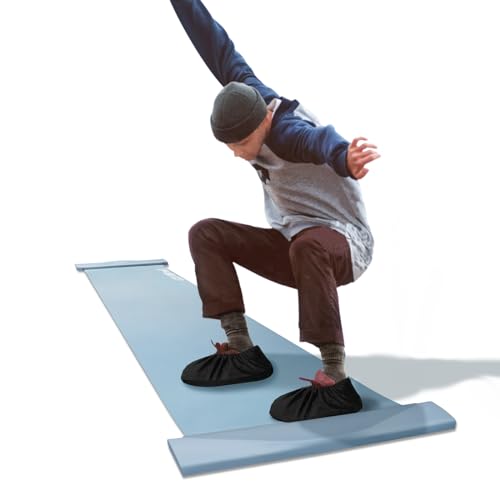
Sniper’s Edge Hockey Slide Board
Sliding side to side in booties loads the hips and glutes the way a skating stride does, which running never replicates. Slick HDPE rolls up for storage, so a garage gets its floor back between sessions. End stops adjust to stride length, letting a junior and an adult share one board.
Pros
- Trains the lateral plane skating actually uses
- End stops adjust for different stride lengths
- Rolls away in seconds after a session
Cons
- Needs a long clear run of flat floor
- Booties wear out with heavy use

DryGuy Force Dry DX Boot and Glove Dryer
Forced warm air moves through two pairs at once, typically boots on the lower ports and gloves on the upper arms. Gentle heat near 105F pulls moisture from liners without cooking the adhesive in a ski boot shell. A three hour timer lets you start a cycle after a session and forget it.
Pros
- Handles boots and gloves in one cycle
- Low heat protects liners and adhesives
- Timer prevents overnight over drying
Cons
- Fan noise carries in a small room
- Tall boot shells need careful port alignment

HockeyShot Extreme Shooting Pad
A 30 by 60 inch slick sheet lets a real puck glide off a wooden or composite blade indoors, so wrist shot mechanics stay honest. Unlike plywood, this surface will not shred blade tape within a week. Lay it on a flat basement floor, because any ripple in the subfloor shows up in puck travel.
Pros
- Real puck glide without ice
- Far gentler on blade tape than plywood
- Big enough for full stickhandling patterns
Cons
- Shows scuffs and scratches quickly
- Needs a genuinely level floor underneath

Revolution 101 v2 Balance Board
Revolution builds a narrower deck than the Indo Board, closer to a ski or surf stance than a wide snowboard one. Its smaller footprint fits a dorm room or an apartment corner, and about 5 by 5 feet of clear floor is enough. Beginners often find the narrow platform harder at first, so allow a week of wall assisted practice.
Pros
- Compact enough for a small apartment
- Narrow deck suits ski width stances
- Deck and roller store upright against a wall
Cons
- Steeper learning curve than a wide deck
- Less suited to snowboard stance training

Green Biscuit Original Training Puck
Two plastic discs sandwich a central ring, and that gap kills the bouncing that makes an ordinary puck useless off ice. Weight sits close to a real puck, so hand feel transfers back to the rink. Use it on a shooting pad or smooth concrete, never carpet, where it simply stops dead.
Pros
- Stays flat instead of rolling on its edge
- Realistic weight for passing drills
- Cheapest entry point to off ice practice
Cons
- Wears down on rough asphalt
- Not built for full power slap shots

Swix T73 Digital Waxing Iron
Digital temperature control holds the base plate steady, which is what stops a sintered base scorching under a household iron. A thick alloy plate spreads heat across the ski so wax absorbs rather than smoking off. Set up on a bench with ventilation, because wax fumes build fast in a closed room.
Pros
- Holds a set temperature instead of cycling
- Thick plate avoids hot spots on the base
- Digital readout removes guesswork on wax type
Cons
- Needs a proper tuning bench and vises
- Single purpose tool that sits idle in summer
How to choose
What indoor training does for winter sports Two things degrade fastest in the off season: balance reflexes and sport specific conditioning. Neither returns quickly in your first week back on snow or ice. Balance boards target the ankle and hip corrections, while slide boards load the lateral chain that skating depends on. Gear care counts as a third category, since wet liners and dry bases ruin early season days just as surely as weak legs.
Balance boards vs slide boards Balance boards train reaction and postural control while you stand more or less still. Slide boards train power and endurance through movement. Skiers and riders get more from a deck like the Indo Board Original, because carving is a balance problem first. Hockey players and speed skaters get more from the Sniper’s Edge board, since stride mechanics limit them. Athletes with room for one should pick by sport rather than by price.
Off ice hockey practice at home A shooting pad and a training puck cover most off ice work in a basement or garage. HockeyShot’s Extreme pad delivers real puck glide, and the Green Biscuit stays flat on rougher concrete. Keep the pad on level flooring, because a dip in a slab sends every pass offline. Shooting into a net calls for a backstop tarp, which saves the drywall behind it.
Drying and waxing gear indoors Damp liners breed odour and break down faster, so a forced air dryer such as the DryGuy Force Dry DX pays back across a season. Keep the heat low, since high temperatures shrink liners and soften boot shell adhesive. Base tuning is the other indoor job. A dedicated iron with a digital thermostat protects a sintered base from scorching, which no household iron can promise at any setting.
The lineup, side by side
| # | Model | Deck | Best for | Score | Price |
|---|---|---|---|---|---|
| 1 | Indo Board Original Balance Board Package | About 30 x 18 in laminated maple | Best overall | 9.4 | Check price |
| 2 | Sniper’s Edge Hockey Slide Board | Slick HDPE sheet | Best for skating conditioning | 9.2 | Check price |
| 3 | DryGuy Force Dry DX Boot and Glove Dryer | Two pairs at once | Best for drying gear indoors | 9.0 | Check price |
| 4 | HockeyShot Extreme Shooting Pad | 30 x 60 in | Best for stickhandling and shooting | 8.8 | Check price |
| 5 | Revolution 101 v2 Balance Board | About 30 x 10 in | Best value balance trainer | 8.5 | Check price |
| 6 | Green Biscuit Original Training Puck | Three piece plastic assembly | Best budget | 8.3 | Check price |
| 7 | Swix T73 Digital Waxing Iron | Digital thermostat readout | Best for indoor ski and board tuning | 8.0 | Check price |
Questions worth asking
What indoor gear helps most for skiing off season?
A balance board with a free roller, backed by lower body strength work. Indo Board Original trains the ankle and hip corrections that carving relies on. Static gym work builds the muscle but misses that correction pattern.
Does a slide board actually improve skating?
Yes, because it loads the hips and glutes laterally, matching the direction of a stride. Running and cycling build endurance in the forward plane only. That is why hockey programmes keep slide boards in summer training.
Can you use a real puck indoors?
On a slick shooting pad, yes. On bare flooring a real puck bounces and digs in, which is exactly why the Green Biscuit exists. Its three piece design stays flat on concrete and smooth asphalt.
Is a boot dryer worth buying?
For anyone skiing or riding more than a handful of days a year, yes. Forced air clears moisture from liners overnight, cutting odour and slowing liner breakdown. Keep the temperature low to protect shell adhesives.
How much floor space do you need for a balance board?
Plan on roughly 6 by 6 feet for a wide deck like the Indo Board, or about 5 by 5 feet for the narrower Revolution 101 v2. Keep a wall within reach while learning to fall off safely.
Will a balance board damage hardwood floors?
A roller can mark soft wood and vinyl over time. Put a mat or dedicated rug underneath. Carpet is a poor surface for roller boards, since pile slows the roller unevenly and kills the drift.
Can you wax skis with a household iron?
It is not advisable. Household irons swing across a wide temperature band and can scorch a sintered base. A waxing iron such as the Swix T73 holds a set temperature through a thicker plate.
Which indoor accessory suits a small apartment?
Revolution 101 v2 for balance work, since it needs about 5 by 5 feet and stores upright against a wall. A Green Biscuit and a small shooting pad also fit where a full slide board never would.
Indo Board vs Revolution 101: which balance board should you buy?
Indo Board Original suits snowboard stances and anyone with room for a 6 by 6 foot area. Revolution 101 v2 fits ski, surf and skate stances in a tighter space. Deck width, not brand, is the real decision.
How often should you train on indoor winter sports gear?
Two or three short sessions a week hold balance and lateral conditioning through summer. Ten minutes on a board beats an hour once a month, because these are reflex skills. Ramp up about six weeks before the season opens.
Our take
Buy the Indo Board Original if you ski or snowboard, since the free roller trains the exact corrections that decide how your first day back on snow feels. Hockey and speed skating athletes should put the Sniper’s Edge slide board first, because lateral stride power fades faster than balance does. Whichever you train on, a DryGuy Force Dry DX protects the equipment you already own.
Derek Holt
Derek has a background coaching recreational and amateur athletes and has worked the sales floor at specialty fitness retailers. He focuses on equipment durability, ergonomics and realistic use cases rather than marketing claims.


