Which cycling gear to buy first, and what to skip
Giro Fixture MIPS is the buy that matters most, with a rotational liner and a 54 to 61 cm fit range. Garmin Edge 540 turns rides into training data using multi band GNSS. For winter mileage, Wahoo KICKR CORE holds power within 2 percent indoors.
Giro Fixture MIPS deserves the first slot in a new rider’s kit bag. One shell spans 54 to 61 cm, and the MIPS liner handles the angled impacts that happen in real crashes. Ventilation is the tradeoff, since long summer climbs get hot under it.
Cycling shopping lists bloat fast, and half the items get used twice. Picks here stick to gear that changes how often, how far or how safely you ride. We compared published specifications, protection standards and battery figures, then weighed long term owner feedback on durability.
How to pick the right one
What to buy first when you start riding Protection, then pressure, then visibility. A helmet with a rotational liner comes before any component upgrade. Next is a floor pump, since correct tyre pressure fixes more ride quality complaints than a new saddle or tyre. Lights follow the moment you ride after dusk. Computers and trainers are upgrades, useful once you ride often enough for the data to mean something.
How to check helmet fit and safety standards Every helmet sold in the US meets the CPSC bicycle standard, so certification alone separates nothing. Fit does the work. Measure head circumference just above the eyebrows, then match it to a stated range such as the 54 to 61 cm span on the Giro Fixture. Rotational liners like MIPS target angled impacts, which is how most riders actually meet the road. Two fingers should slide between strap and chin, no more.
Best cycling gear for commuting in traffic and darkness Commuters need to be seen from both ends and to lock up quickly. Around 1200 lumens covers unlit sections, while a daytime flash cuts through low winter sun. Cable locks have no place in a city, where a 13 mm hardened shackle is the realistic minimum. Mudguards and a rear light matter as much as the headlight once roads stay wet. Padded shorts earn their slot once the trip passes half an hour each way.
Is a smart trainer worth it through winter? Fitness fades quickly across dark months, which is why direct drive units replaced wheel on trainers. Controlled resistance is the real reason to buy one: the trainer sets the load, so an interval session runs exactly to plan. Accuracy within 2 percent and gradients to 16 percent keep indoor numbers comparable with outdoor ones. Riders who pedal purely for fun can skip this entirely and spend on lights. Pair a trainer with a head unit so both halves of the year land in one training history.
The top picks, ranked

Giro Fixture MIPS Bike Helmet
One shell size spans 54 to 61 cm heads, tightened by a Roc Loc Sport dial at the rear. Under the in mold polycarbonate, a MIPS layer lets the helmet rotate slightly against the EPS foam during an angled hit. Airflow suits commuting speeds, though steep summer climbs get warm.
Pros
- Rotational protection in an entry level lid
- Dial adjusts one handed while riding
- Deep enough to clear a thin winter cap
Cons
- Ventilation lags road specific helmets
- Carries extra weight over race models

Garmin Edge 540 Bike Computer
Multi band GNSS keeps the position lock steady under tree cover and between tall buildings. Garmin rates this 2.6 inch colour unit at up to 26 hours in demanding use, enough for an all day route. ClimbPro counts down remaining gradient on each climb, which changes how you pace hilly rides.
Pros
- Physical buttons work in winter gloves
- Holds a fix in dense city streets
- Pairs with power meters and heart rate straps
Cons
- Menu structure takes weeks to learn
- This model skips the touchscreen

Wahoo KICKR CORE Smart Trainer
Your rear wheel comes off, so tyre wear and slip under hard efforts disappear. Wahoo rates resistance to 1800 W and simulated gradients to 16 percent. Power reads within plus or minus 2 percent, tight enough for interval work in Zwift or TrainerRoad.
Pros
- Quiet enough for a shared flat
- Frame stays planted during sprints
- Broadcasts to every major training app
Cons
- Cassette ships separately on some versions
- Awkward weight to move between rooms
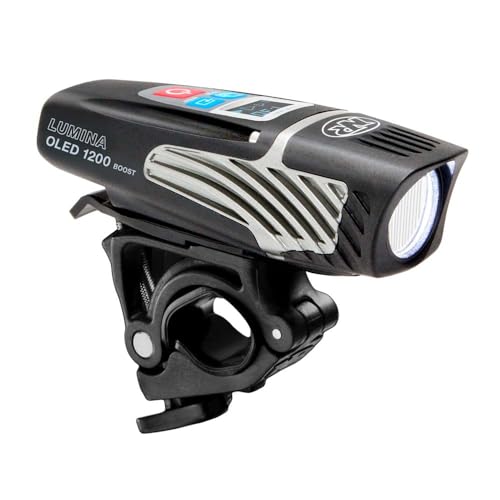
NiteRider Lumina 1200 Boost Headlight
Boost mode throws 1200 lumens down an unlit lane instead of just marking your position in traffic. Dropping to a lower setting stretches runtime across a long commute. A strap mount grips bars from 22.2 to 35 mm, so it swaps between a road bike and a hybrid in seconds.
Pros
- Lights genuinely dark rural lanes
- Tool free strap moves between bikes
- Daytime flash helps in heavy traffic
Cons
- Boost drains the battery quickly
- Beam needs tilting down for oncoming riders

Topeak JoeBlow Sport III Floor Pump
A 3 inch analogue gauge sits at eye level while you stand, so pressure stops being guesswork. TwinHead DX3 seats on Presta, Schrader and Dunlop valves with no parts to swap. Rated to 160 psi, one pump covers road tyres, gravel setups and kids’ bikes.
Pros
- Head seals on Presta without leaking
- Gauge readable from standing height
- Steel barrel shrugs off garage knocks
Cons
- Too bulky to carry on a ride
- Needle gets vague below 20 psi

Kryptonite Evolution Mini-7 U-Lock
Thirteen millimetres of hardened steel puts this beyond the hand tools that slice cable locks. Internal space of roughly 3.25 by 7 inch forces a snug lock around frame and rack, leaving no room for a jack. Between stops, a FlexFrame bracket carries it on the frame rather than your back.
Pros
- Tight shackle denies leverage attacks
- Frame bracket keeps weight off your shoulder
- Three keys supplied, one with a light
Cons
- Small opening limits anchor choices
- Heavier than a folding lock of similar rating

Pearl Izumi Quest Cycling Shorts
Saddle soreness ends more new riders’ rides than fitness does, and a chamois fixes it. Pearl Izumi pairs its Quest 1:1 pad with flat lock seams to cut chafing over two hour outings. Select Transfer fabric carries UPF 50 and moves sweat off the skin in summer.
Pros
- Pad removes pressure on longer rides
- UPF 50 built into the fabric
- Holds shape through frequent washing
Cons
- Thinner pad than race shorts
- Leg grippers slacken after a season
The lineup, side by side
| # | Model | Fit range | Best for | Score | Price |
|---|---|---|---|---|---|
| 1 | Giro Fixture MIPS Bike Helmet | 54 to 61 cm | Best overall | 9.4 | Check price |
| 2 | Garmin Edge 540 Bike Computer | 2.6 inch colour, button control | Best for training and navigation | 9.2 | Check price |
| 3 | Wahoo KICKR CORE Smart Trainer | 1800 W | Best for indoor riding | 9.0 | Check price |
| 4 | NiteRider Lumina 1200 Boost Headlight | Up to 1200 lumens | Best for night commuting | 8.8 | Check price |
| 5 | Topeak JoeBlow Sport III Floor Pump | 160 psi | Best value garage upgrade | 8.6 | Check price |
| 6 | Kryptonite Evolution Mini-7 U-Lock | 13 mm hardened steel | Best for city parking | 8.3 | Check price |
| 7 | Pearl Izumi Quest Cycling Shorts | Quest 1:1 pad | Best budget comfort upgrade | 8.0 | Check price |
Questions worth asking
What cycling gear do beginners actually need?
A helmet that fits, a floor pump, front and rear lights, and a solid lock. Padded shorts come next once rides pass an hour.
Is a MIPS helmet worth it?
For angled impacts, yes. MIPS lets the shell shift a few millimetres, cutting rotational force on the brain. On models like the Giro Fixture it adds almost no weight.
How many lumens do you need for night cycling?
Lit streets need roughly 400 lumens. Unlit lanes want 800 to 1200, which is exactly what boost modes on lights like the Lumina deliver.
Which bike computer is best for training?
Garmin Edge 540 suits most riders, with multi band GNSS, ClimbPro pacing and up to 26 hours of battery for long days in the saddle.
U-lock vs cable lock: which is safer?
A U-lock, by a wide margin. Hardened 13 mm steel resists bolt cutters, while cable locks fall to hand tools in seconds.
Can rollers replace a smart trainer?
Rollers build balance and pedalling smoothness but cannot control resistance. Structured intervals need a trainer that sets the load for you.
How often should you pump bike tyres?
Weekly is a sensible habit. Road tyres shed noticeable pressure within days, and a gauge turns the check into a short routine.
Are padded cycling shorts necessary for short rides?
Under half an hour, usually not. Past that, a chamois prevents the saddle soreness that stops many new riders from going out again.
What is the best cycling gear for commuting to work?
A 1200 lumen headlight, a rear light, a 13 mm U-lock, and padded shorts if the trip runs long. Mudguards help through winter.
Do you need a bike computer if you already use a phone?
Phones handle basic mapping. Dedicated units add glove friendly buttons, all day battery and sensor pairing that phones manage badly in rain.
The verdict
Buy the Giro Fixture MIPS first. Head protection with a rotational liner outranks every accessory here, and a 54 to 61 cm fit range means no shop visit to size it. Add the Topeak JoeBlow Sport III second, because tyre pressure changes how a bike rolls on every single ride. Riders chasing structured fitness should put their money into the Wahoo KICKR CORE and leave the Edge 540 until that training data has somewhere useful to go.
Derek Holt
Derek has a background coaching recreational and amateur athletes and has worked the sales floor at specialty fitness retailers. He focuses on equipment durability, ergonomics and realistic use cases rather than marketing claims.

