Endurance vs Race Geometry: Road Bikes Compared
The Tommaso Imola tops this roundup because it pairs an aluminium endurance frame with a full Shimano Claris groupset. The Diamondback Century 1 is the more comfortable choice for long rides, while the Vilano Shadow 3.0 keeps first time drop bar riding affordable.
A road bike that will not need upgrading in a season is the goal, and the Tommaso Imola gets there first, with the Diamondback Century 1 for endurance comfort and the Vilano Shadow 3.0 as a low cost entry to drop bar riding. Groupset quality is what separates these bikes far more than frame branding.
Two bikes with the same frame material can shift and brake completely differently depending on drivetrain tier, and geometry decides whether fifty miles feels good or punishing. That is what makes buying tricky. We compared frame materials, groupset levels, gear ranges, brake types and riding positions, and weighed what owners report about assembly quality and the first upgrades people make.
How to choose
Does groupset tier matter more than frame material? The drivetrain determines whether shifting is crisp under load or vague and noisy, and a bike with a complete entry level Shimano groupset generally rides better than one with a single branded derailleur bolted to unbranded parts. Look for a consistent group across shifters, derailleurs, crank and cassette. Moving up one tier usually buys smoother shifting and better durability rather than dramatic weight savings, which is where the value sits at this end of the market.
Endurance vs race geometry: which fits your riding? Endurance frames raise the handlebars and lengthen the wheelbase, which makes for a comfortable position you can hold for hours and stable handling on descents. Race geometry drops the front end for aerodynamics and quickens the steering, which suits fast group riding but punishes tight hamstrings and stiff backs. Most riders buying their first road bike are better served by endurance geometry, because a bike you can sit on comfortably is a bike you actually ride.
Do disc brakes and wider tyres matter more than frame material? Rim brakes remain adequate in dry conditions and are cheap to service, while disc brakes give consistent power in rain and allow wider tyres. Tyre width and pressure do more for comfort than any frame material claim, and moving from a narrow high pressure tyre to a wider one at lower pressure transforms rough road feel. Check the frame’s tyre clearance before buying if you plan to ride poorly surfaced roads or gravel paths.
What should you check before your first ride? Frame size is the single biggest factor in comfort, and no amount of stem swapping fixes a frame that is genuinely too large. Use the manufacturer’s height chart, then have a shop check saddle height and reach once the bike arrives. Owners report that the most worthwhile early upgrades are the saddle, the tyres and the bar tape, all of which affect contact points directly and cost far less than a new wheelset.
Our top picks
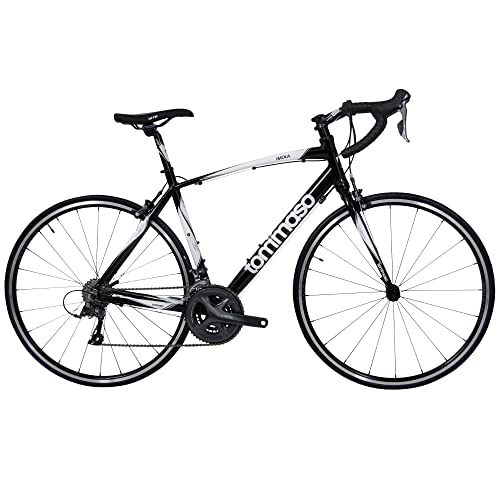
Tommaso Imola Endurance Aluminium Road Bike
A complete Shimano Claris groupset, rather than a mix of budget parts behind one branded derailleur, sets this bike apart. Endurance geometry puts you in a position you can hold for hours, and compact gearing handles hills without heroics. It arrives well packed and largely set up already.
Pros
- Consistent groupset rather than mixed parts
- Comfortable endurance riding position
- Carbon fork takes the edge off rough roads
Cons
- Rim brakes rather than discs
- Stock wheels are the obvious first upgrade

Diamondback Bicycles Century 1 Road Bike
All day comfort drives this frame’s design, with a taller front end, longer wheelbase and clearance for wider tyres that soak up rough surfaces. Riders after distance rather than racing suit it best. Handling stays stable and predictable, which also builds confidence for newer cyclists.
Pros
- Comfortable geometry for long distances
- Stable handling inspires confidence
- Room for wider, more forgiving tyres
Cons
- Less responsive than a race focused frame
- Heavier than lighter aluminium racers
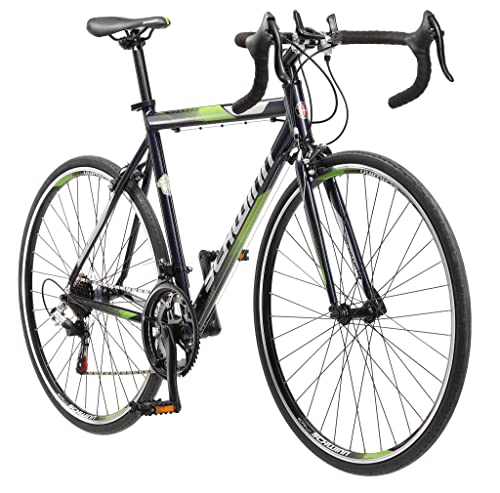
Schwinn Volare 1300 Road Bike
Fitness riding and commuting are the target here, backed by a light aluminium frame, a fourteen speed drivetrain and a position less aggressive than a race bike. Paved paths and city streets suit it well. Component quality stays basic, so expect to service the shifting more often.
Pros
- Light frame for the price
- Comfortable, less aggressive position
- Good choice for fitness and commuting
Cons
- Limited gear range on hills
- Basic components need regular adjustment

Vilano Shadow 3.0 Road Bike
Integrated brake and shift levers, rather than the awkward bar end shifters found on some budget bikes, make this one of the cheapest ways into proper drop bar riding. Its aluminium frame is light enough to carry upstairs. Wheels and finishing kit are where the savings show most.
Pros
- Integrated shifters at a very low price
- Light enough to carry easily
- Wide gear range for beginners
Cons
- Steel fork transmits road buzz
- Wheels need frequent truing

Giordano Libero 1.6 Road Bike
Returning riders and shorter distance cyclists suit this bike’s relaxed position, paired with a lightweight aluminium frame. Sixteen speeds cover most terrain that is not seriously hilly. Maintenance stays straightforward because the parts are common and inexpensive.
Pros
- Relaxed position suits returning riders
- Common parts are cheap to replace
- Light for a budget road bike
Cons
- Gear range struggles on steep climbs
- Saddle and bar tape are worth replacing

Hiland Road Bike 700C Racing Bicycle
Commuting duty is covered here with an aluminium frame, a fourteen speed drivetrain and mounting points that make adding a rack or mudguards straightforward. It rides briskly on city streets without demanding a racing position. Assembly quality varies, so check the brakes and gear indexing before the first ride.
Pros
- Practical mounting points for commuting
- Light aluminium frame
- Approachable price for a complete bike
Cons
- Needs a careful check after shipping
- Component quality is entry level

Eurobike EURXC550 Road Bike
Disc brakes and a twenty one speed drivetrain, unusual at this price, make this the cheapest complete drop bar bike here. It suits someone testing whether road cycling fits before spending more. Expect a heavier frame and parts that will need attention early.
Pros
- Disc brakes unusual at this price
- Complete bike for a low outlay
- Wide gear range for beginners
Cons
- Heavier than better built rivals
- Components wear quickly under regular use
Side by side
| # | Model | Frame | Best for | Score | Price |
|---|---|---|---|---|---|
| 1 | Tommaso Imola Endurance Aluminium Road Bike | 6061 aluminium with carbon fork | Best overall | 9.4 | Check price |
| 2 | Diamondback Bicycles Century 1 Road Bike | Aluminium with carbon fork | Best for long rides | 9.2 | Check price |
| 3 | Schwinn Volare 1300 Road Bike | Aluminium road frame | Best value | 9.0 | Check price |
| 4 | Vilano Shadow 3.0 Road Bike | Aluminium with steel fork | Best for first drop bar bike | 8.8 | Check price |
| 5 | Giordano Libero 1.6 Road Bike | Aluminium | Best for casual riding | 8.6 | Check price |
| 6 | Hiland Road Bike 700C Racing Bicycle | Aluminium | Best for commuting | 8.3 | Check price |
| 7 | Eurobike EURXC550 Road Bike | Aluminium | Best budget | 8.0 | Check price |
Common questions
What size road bike do I need?
Start with the manufacturer’s height chart, which usually gets you within one size. Confirm the fit by checking you can reach the drops without locking your elbows and that saddle height leaves a slight bend in the knee at the bottom of the pedal stroke.
Are rim brakes still acceptable on a road bike?
Yes for dry weather riding, and they are lighter and simpler to service. Disc brakes are clearly better in wet conditions and on long descents, and they allow wider tyres, which is why most new bikes are moving that way.
Is aluminium or carbon better for a first road bike?
Aluminium, almost always. A well built aluminium frame with a carbon fork rides well and costs far less than carbon, leaving budget for a better groupset and wheels, which affect the ride more than frame material at this level.
How many gears do you need on a road bike?
Total count matters less than range. Compact gearing with a wide cassette makes hills manageable, and a fourteen speed bike with sensible ratios can be easier to ride than a twenty one speed with poorly spaced ones.
Do road bikes bought online need adjusting?
Yes. Check handlebar alignment and torque, brake centring, gear indexing and wheel trueness before riding. A shop assembly check is worthwhile if you are not confident doing it yourself.
Can you commute on a road bike?
Certainly, and many people do. Look for mounting points for a rack and mudguards, fit slightly wider tyres for potholes, and add lights, since road bikes rarely come with them.
Why does a new road bike feel uncomfortable?
Usually saddle height, saddle position or reach rather than the bike itself. Contact points also matter, so a saddle that suits your anatomy and slightly wider tyres at lower pressure often solve the complaint entirely.
What maintenance does a road bike need?
Keep the chain clean and lubricated, check tyre pressure before every ride, inspect brake pads monthly and have the drivetrain and cables serviced once or twice a year depending on mileage.
Final word
The Tommaso Imola is the strongest overall buy because a complete Shimano groupset and endurance geometry mean the bike stays satisfying well past the first season. Riders prioritising comfort over distance should look at the Diamondback Century 1, while the Vilano Shadow 3.0 is the honest low cost route into drop bar riding. Spend whatever is left on a saddle and tyres that suit you.
Derek Holt
Derek has a background coaching recreational and amateur athletes and has worked the sales floor at specialty fitness retailers. He focuses on equipment durability, ergonomics and realistic use cases rather than marketing claims.
You might also need
Recumbent Bikes Are Easier on Your Back Than Upright Ones
Do Exercise Bikes Actually Pay Off for Home Workouts?

Yoga Mat Grip and Cushioning Compared Across Seven Brands