Which Webcam Actually Looks Good on Video Calls?
The Logitech C920s HD Pro Webcam remains the top pick for reliable 1080p, wide software support and a privacy shutter. The Elgato Facecam MK.2 suits streaming quality, and the Anker PowerConf C200 is the value option for daily meetings.
The Logitech C920s HD Pro Webcam still leads this roundup by doing the unglamorous things well: consistent exposure in ordinary room light, universal platform compatibility, and a physical privacy shutter. Pick the Elgato Facecam MK.2 when streaming image quality matters most, or the Anker PowerConf C200 for everyday calls at a lower cost with an adjustable field of view.
Resolution marketing confuses webcam shopping, since a 4K sensor in poor light produces a worse picture than a good 1080p sensor with a bright lens. Field of view, autofocus behavior, and how a camera handles a window behind you matter more day to day. We compared sensor and lens performance in typical indoor light, resolution, field of view, autofocus, built-in microphones, and mounting, then weighed those against owner reports about hunting focus and washed-out faces on calls.
What we recommend

Logitech C920s HD Pro Webcam
Years of default recommendations back the C920 line, since it works everywhere without drivers and produces a clean, correctly exposed 1080p image in normal room lighting. The s revision adds a sliding privacy shutter, removing the need for tape over the lens. It isn’t the sharpest camera here, but it’s the most consistently unproblematic.
Pros
- Works on every platform without setup
- Consistent exposure in ordinary room light
- Physical privacy shutter included
Cons
- Limited to 30fps at 1080p
- Struggles in genuinely dim rooms

Elgato Facecam MK.2
Fixed focus and full manual exposure, white balance and ISO give streamers control instead of leaving decisions to the camera. The picture stays put and does not shift mid-stream when you move. Fixed focus means setting your seating distance once, which suits a streaming desk more than a laptop.
Pros
- Image stays locked with no hunting or shifting
- Genuinely useful manual controls
- Smooth 60fps for motion
Cons
- No built in microphone
- Fixed focus needs a consistent seating position

Logitech Brio 4K Pro Webcam
Selectable fields of view pair with a 4K sensor, so you can frame tightly on your face or open up to include a whiteboard. Windows Hello face login also works through the same lens. Decent lighting is required to get the most from it, since a high-resolution sensor exaggerates noise in a dim room.
Pros
- Selectable field of view for different setups
- Genuine 4K capture for recording
- Face login support on Windows
Cons
- Needs good lighting to justify the resolution
- Most meeting platforms cap you at 1080p anyway
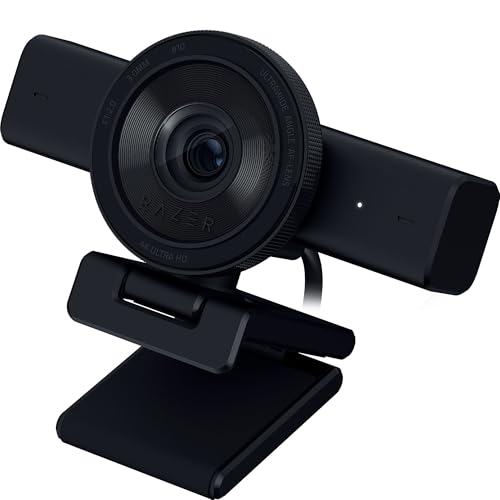
Razer Kiyo Pro
A larger sensor and bright lens target the single most common cause of a poor webcam picture: a dim room. Usable frame rates hold up in conditions where smaller sensors turn grainy. Its wide field of view is generous, useful in a small room and less so if the background is untidy.
Pros
- Clearly the best low light performer here
- Smooth 60fps at 1080p
- Adjustable field of view
Cons
- Wide setting captures a lot of background
- Bulky compared with slim meeting cameras
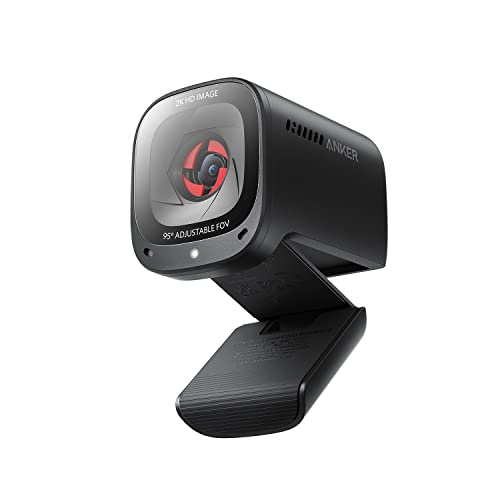
Anker PowerConf C200
2K capture, dual microphones with noise reduction, and switchable fields of view undercut established names at this price. It holds up well as an everyday meeting camera. Owners report the image looks a little more processed than Logitech’s cameras, a fair trade given the cost.
Pros
- 2K capture and field of view choices for the money
- Dual microphones handle voice well
- Integrated privacy cover
Cons
- Image processing looks slightly artificial
- Software is less mature than Logitech’s

Insta360 Link
A motorised gimbal physically tracks you around the room, and the camera flips down to shoot a desk surface for documents or hardware. Teaching and demonstrations benefit most from that flexibility. It costs the most of any camera here, and tracking occasionally locks onto the wrong subject in a busy room.
Pros
- Physical tracking keeps you framed while moving
- Desk view mode is excellent for demonstrations
- Gesture control avoids reaching for software
Cons
- Highest cost in this group
- Tracking can lock onto the wrong person

NexiGo N60 Webcam
Basic 1080p capture, a privacy cover, and a built-in microphone cover the essentials at the low end of the market. It handles meetings acceptably in good light. Fixed focus and a small sensor mean dim rooms and close-up detail are where it visibly gives ground to pricier cameras.
Pros
- Lowest cost route to reliable 1080p
- Privacy cover included as standard
- Plug and play on all platforms
Cons
- Fixed focus limits close up sharpness
- Noticeably noisy in low light
Before you buy
Does lighting matter more than resolution? A window behind the speaker with nothing in front is the most common cause of a bad video call picture. Any webcam underexposes a backlit face. Put a light source in front of you, even a bright screen or a desk lamp bounced off a wall, and a mid-range camera will comfortably outperform an expensive one in a dark room. Fix the lighting before spending on hardware.
What field of view suits your setup, and what’s behind you? Wide angle lenses capture more of the room, helpful for two people at a desk and unhelpful when it reveals a kitchen. Around 65 to 78 degrees frames a single person naturally. Ninety degrees and above starts distorting faces at close range and includes far more background. Cameras with switchable fields of view give you the choice rather than committing you.
Autofocus or fixed focus: which avoids hunting? Autofocus is convenient on a laptop where distance varies, but it can hunt distractingly when you move your hands or shift in your chair. Fixed focus cameras lock at a typical desk distance, eliminating hunting entirely, which suits streamers who sit in the same place. Most software lets you disable autofocus and set it manually if hunting becomes constant.
How much do microphones, mounting and a privacy shutter matter? Built-in webcam microphones are convenient and universally worse than even a cheap dedicated microphone, since they sit far from your mouth and pick up the whole room. Budget separately for audio if it matters. Check the mount fits your monitor’s bezel and whether the camera also takes a tripod thread. A physical privacy shutter is worth having, since software indicators aren’t a guarantee.
How they compare
| # | Model | Resolution | Best for | Score | Price |
|---|---|---|---|---|---|
| 1 | Logitech C920s HD Pro Webcam | 1080p at 30fps | Best overall | 9.4 | Check price |
| 2 | Elgato Facecam MK.2 | 1080p at 60fps | Best for streaming | 9.2 | Check price |
| 3 | Logitech Brio 4K Pro Webcam | 4K at 30fps, 1080p at 60fps | Best for detail | 9.0 | Check price |
| 4 | Razer Kiyo Pro | 1080p at 60fps | Best for low light | 8.8 | Check price |
| 5 | Anker PowerConf C200 | 2K at 30fps | Best value | 8.6 | Check price |
| 6 | Insta360 Link | 4K at 30fps | Best for presenting | 8.3 | Check price |
| 7 | NexiGo N60 Webcam | 1080p at 30fps | Best budget | 8.0 | Check price |
Frequently asked questions
Is a 4K webcam worth it for video calls?
For calls, usually not. Most meeting platforms compress video to 720p or 1080p regardless of what your camera captures, so extra resolution gets discarded. A 4K sensor pays off if you record locally, crop in post, or want tighter framing from a wide sensor.
Why does my webcam look worse than my phone camera?
Phones use much larger sensors, better processing, and far more computing power on the image. Webcams are constrained by size, USB bandwidth, and cost. Improving your lighting closes most of the gap, since sensor size matters most when light is scarce.
Do I need a webcam if my laptop already has one?
Built-in laptop cameras use very small sensors and sit at an unflattering angle. An external webcam at eye level with a larger sensor is a noticeable improvement, particularly on older laptops. Daily callers get one of the cheapest quality upgrades available here.
What field of view is best for one person?
Around 65 to 78 degrees frames a single speaker naturally without much background. Wider settings suit two people sharing a desk or a room camera, but they include more of your surroundings and introduce mild distortion close to the lens.
Should I use a webcam’s built in microphone?
It works, but it’s the weakest part of any webcam. The microphone sits far from your mouth and picks up keyboard noise and room echo. A basic headset or desk microphone sounds clearly better for very little cost.
Do webcams need drivers to work?
Standard webcams are UVC compliant and work without drivers on Windows, macOS, Linux and ChromeOS. Manufacturer software is optional and usually adds manual exposure, field of view switching, and firmware updates rather than being required for basic operation.
How do I stop my webcam from constantly refocusing?
Disable autofocus in the manufacturer’s software or your meeting app’s advanced video settings, then set focus manually for your seating distance. Hunting is usually triggered by hand movement in frame or a busy background competing for focus.
Is a privacy shutter necessary on a webcam?
It’s a simple, reliable safeguard that costs nothing extra on most cameras. Software indicators depend on the operating system reporting correctly. A physical shutter is a guarantee, which is why most current webcams include one.
The verdict
For most people the Logitech C920s HD Pro Webcam remains the sensible purchase because it stays consistent everywhere and adds a privacy shutter to a proven design. Streamers who want a locked, controllable image should take the Elgato Facecam MK.2 and pair it with a separate microphone. If your room is dim and staying that way, the Razer Kiyo Pro and its larger sensor will do more for your picture than any resolution upgrade.
Marcus Chen
Marcus covered consumer electronics for enthusiast tech publications for six years before joining ChoiceCrest. He specializes in translating manufacturer spec sheets into plain-language buying advice, with a focus on audio, computing accessories and smart-home gear.


