Liquid Reagents or Test Strips: Which Tank Kit Wins?
API Freshwater Master Test Kit stays the top pick for most indoor tanks, reading ammonia, nitrite, nitrate, and pH with reliable accuracy. API Saltwater Master Test Kit fits reef and marine setups instead, and Tetra EasyStrips 6-in-1 Test Strips suit owners who want fast results without counting reagent drops.
API Freshwater Master Test Kit leads this comparison for indoor freshwater aquariums. Its liquid reagents read ammonia, nitrite, nitrate, pH, and high range pH with lab level precision. Counting drops and reading color charts, though, takes longer than dipping a strip.
Freshwater, saltwater, and reef tanks each demand different parameters, and strip kits trade accuracy for speed in ways that matter more at higher stocking density. We compared reagent formats, parameter counts, test durations, and owner feedback on shelf life to match each kit to a specific setup.
The best picks, ranked

API Freshwater Master Test Kit
Ammonia, nitrite, nitrate, pH, and high range pH all get tested from one box of liquid reagents. Roughly 800 tests come in a single kit, enough to last most home aquarists over a year. Reading results means counting drops and matching color cards, a slower process than a strip but a more precise one.
Pros
- Covers every core freshwater parameter in one box
- Reagent supply lasts most tanks well over a year
- Color charts track trends more precisely than strips
Cons
- Counting drops and reading charts takes longer than a strip
- No KH, GH, or saltwater specific parameters included
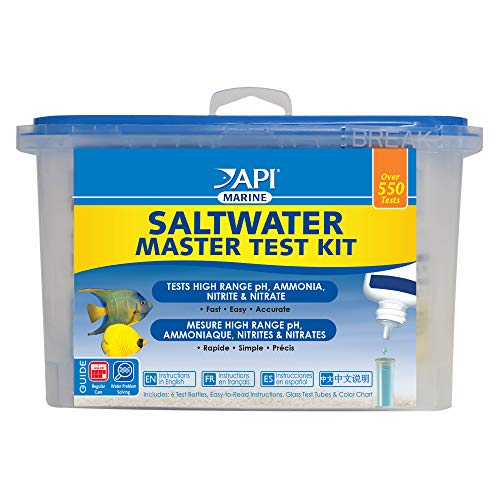
API Saltwater Master Test Kit
Marine and reef tanks get ammonia, nitrite, nitrate, pH, and carbonate hardness readings through the same liquid reagent method as the freshwater kit. Calcium, magnesium, and phosphate are absent, so reef tanks with corals eventually need a supplemental kit. Fish only saltwater tanks, though, often find this sufficient by itself.
Pros
- Matches the core marine parameters most fish only tanks need
- Uses the same reliable drop and compare method as the freshwater kit
- Adds carbonate hardness, a parameter most freshwater kits skip
Cons
- No calcium, magnesium, or phosphate testing for corals
- Carbonate hardness reagent runs out faster than the other tests

Red Sea Reef Foundation Pro Multi Test Kit
Reef keepers track calcium, alkalinity, and magnesium for coral growth, and this kit covers exactly those three parameters. Titration based testing gives finer resolution than color matching strips, which matters for dosing calcium reactors or two part supplements. Ammonia and nitrate are not covered at all, so this works as a companion to a master kit rather than a replacement.
Pros
- Titration delivers finer precision than strip based color matching
- Covers all three parameters coral growth depends on
- Compact syringes make dosing accuracy easier to judge
Cons
- No ammonia, nitrite, or nitrate testing at all
- Titration takes practice to read consistently

Salifert Calcium Test Kit
Calcium alone is the focus here, tested through a drop count titration that many reef keepers consider more precise than multi test kits. Hobbyists already dosing calcium reactors or additives, and fine tuning levels weekly, get the most from this format. A single parameter, though, means separate kits are still needed for alkalinity, magnesium, and nitrate.
Pros
- Narrow focus sharpens resolution for calcium levels specifically
- Small reagent bottles fit easily in a tank cabinet
- Favored by reef keepers dosing calcium reactors
Cons
- Single parameter means buying more kits for full coverage
- Drop counting gets fiddly when testing multiple tanks

Tetra EasyStrips 6-in-1 Test Strips
pH, KH, GH, nitrite, nitrate, and chlorine all read out in about 60 seconds with a single dip. No reagent drops or slow color chart comparisons are needed. Precision takes a hit, since strip pads shift shade gradually instead of at clear color breakpoints. That tradeoff still suits quick weekly checks between more detailed liquid tests.
Pros
- Reads six parameters at once faster than any liquid kit here
- No reagent measuring or drop counting required
- Simple enough for kids or beginners to read
Cons
- Less precise than liquid reagent kits for ammonia tracking
- Strips degrade if the bottle is left open to humidity

API 5-in-1 Test Strips
Nitrate, nitrite, hardness, alkalinity, and pH all come from a single dip, giving a fast readout for weekly maintenance checks. Ammonia is not part of the lineup, the parameter most likely to spike dangerously in a new or overstocked tank. Pairing this with an ammonia specific test closes that gap without the cost of a full liquid master kit.
Pros
- Costs less than liquid reagent master kits
- Fast single dip readout for routine checks
- Familiar API color chart matches its liquid kits
Cons
- No ammonia testing, a critical gap for new tanks
- Smaller bottle count means more frequent repurchases

JNW Direct 7-in-1 Aquarium Test Strips
pH, hardness, alkalinity, nitrate, nitrite, chlorine, and carbonate all get tested per dip, more parameters than most competing strip kits cover. A larger bottle count keeps the per test cost down for owners running multiple tanks. Shade differences between adjacent readings, like on other strips, can be hard to judge in dim indoor lighting.
Pros
- Tests seven parameters per strip, more than most competitors
- Large bottle count lowers the cost per test
- Works across both freshwater and saltwater tanks
Cons
- Color gradients are harder to judge in low light
- No ammonia parameter included in the strip lineup
What to look for
What to look for in an indoor aquarium test kit Ammonia, nitrite, nitrate, and pH monitoring form the baseline for every indoor tank, since these four parameters flag cycling problems before fish show symptoms. Reef and planted tanks add hardness, alkalinity, or calcium to that list. Format matters as much as parameter count. Liquid reagents read more precisely, while strips finish in under a minute. Test count also deserves a look, since a reagent bottle that runs dry after a few months costs more over a year than a larger strip pack.
Liquid reagent kits vs test strips Reagent drops and color cards give liquid kits distinct color breakpoints that are easier to match consistently. Strips shift shade gradually instead, so borderline readings between two colors are open to interpretation. A single, lightly stocked tank rarely needs more than a strip for weekly checks. Chasing an ammonia spike or cycling a new tank calls for the sharper resolution liquid reagents provide.
Does a saltwater tank need a different test kit than freshwater? Freshwater kits stop at ammonia, nitrite, nitrate, and pH, enough for standard community tanks. Saltwater and reef tanks add carbonate hardness at minimum. Coral heavy reef tanks need calcium and magnesium on top of that to track supplement dosing. Salinity dependent chemistry will not read correctly on a freshwater kit, so saltwater owners need a kit formulated for marine water from the start.
When do reef keepers need extra dosing tests? Fish only saltwater tanks rarely need more than the saltwater master kit’s five parameters. Corals change that equation, since calcium, alkalinity, and magnesium start drifting as coral skeletons consume them. A master kit alone will not catch that decline. Reef keepers running calcium reactors or two part dosing typically add a dedicated titration kit like Red Sea’s Reef Foundation Pro, or a single parameter Salifert kit for weekly fine tuning.
How they stack up
| # | Model | Water type | Best for | Score | Price |
|---|---|---|---|---|---|
| 1 | API Freshwater Master Test Kit | Freshwater | Best overall | 9.4 | Check price |
| 2 | API Saltwater Master Test Kit | Saltwater and reef | Best for saltwater and reef beginners | 9.1 | Check price |
| 3 | Red Sea Reef Foundation Pro Multi Test Kit | Reef and saltwater | Best for advanced reef parameters | 8.9 | Check price |
| 4 | Salifert Calcium Test Kit | Reef and saltwater | Best for precision reef dosing | 8.6 | Check price |
| 5 | Tetra EasyStrips 6-in-1 Test Strips | Freshwater | Best for fast results | 8.4 | Check price |
| 6 | API 5-in-1 Test Strips | Freshwater | Best budget | 8.2 | Check price |
| 7 | JNW Direct 7-in-1 Aquarium Test Strips | Freshwater and saltwater | Best value | 8.0 | Check price |
Questions worth asking
How often should I test water in an indoor aquarium?
New or recently stocked tanks need ammonia and nitrite checks every two to three days until the tank cycles. Established tanks usually only need a full parameter check weekly, with reef tanks testing calcium and alkalinity on the same schedule.
What is the difference between liquid test kits and test strips?
Liquid kits add reagent drops to a water sample, then compare the resulting color against a printed chart for a specific parameter. Strips get dipped once and read multiple parameters from pre-treated pads, trading some precision for speed.
Which water test kit works best for a freshwater community tank?
API Freshwater Master Test Kit covers ammonia, nitrite, nitrate, and pH in one box and lasts most owners over a year. That makes it the standard pick for freshwater community and planted tanks.
Can a freshwater test kit be used on a saltwater tank?
Freshwater reagents are not calibrated for the mineral content and salinity of marine water, so readings turn inaccurate. Saltwater and reef tanks need a kit formulated specifically for marine chemistry, such as API Saltwater Master Test Kit.
What water parameters should a beginner test first?
Ammonia, nitrite, nitrate, and pH matter most in the first weeks of a new tank. Ammonia and nitrite spikes cause most early fish loss during cycling.
Are test strips accurate enough for aquarium water?
Strips work fine for routine monitoring and spotting trends, but their gradual color shifts make exact values harder to pin down than liquid reagents. Diagnosing a specific problem, like an ammonia spike, gets a clearer answer from a liquid kit.
How long do liquid aquarium test kits last before they expire?
Most liquid reagent kits stay accurate for around a year after opening, if stored away from direct sunlight and heat. Replace any reagent that changes color or turns cloudy before use, even with tests still left in the bottle.
Do reef tanks need more water tests than freshwater tanks?
Yes, reef tanks with corals need calcium, alkalinity, and magnesium testing on top of the standard ammonia, nitrite, nitrate, and pH checks. Corals consume those minerals as they grow.
Which test kit is best for a saltwater reef tank with corals?
API Saltwater Master Test Kit covers the core ammonia, nitrite, nitrate, pH, and carbonate hardness readings. Pair it with Red Sea’s Reef Foundation Pro or a Salifert calcium kit once corals start consuming calcium and magnesium.
Is a master test kit worth it over individual test strips?
A master kit costs more upfront but covers more parameters with sharper precision per test. Strips work better for owners who only need a fast weekly snapshot, not lab level accuracy.
The bottom line
API Freshwater Master Test Kit stays the strongest pick for standard indoor freshwater tanks, since its four core parameters and near year long reagent supply cover most cycling and maintenance needs. Reef keepers with corals should pair API Saltwater Master Test Kit with a dedicated calcium and alkalinity kit like Red Sea’s Reef Foundation Pro, since neither master kit alone tracks coral consumed minerals. Owners who just want a fast weekly check without reagent drops should reach for Tetra EasyStrips instead.
Olivia Hartley
Olivia spent several years working at an animal shelter and a pet-supply retailer before joining the editorial team. She researches pet gear with an emphasis on safety, comfort and the fine print that owners often miss.

