Indoor or Beach? Picking the Right Volleyball
Mikasa V200W suits indoor leagues wanting the official FIVB-style match ball. Molten V5M5000 fits club teams needing a competitive indoor alternative. Mikasa VQ2000 works specifically for beach and sand court play.
Mikasa’s V200W is the volleyball most indoor leagues recognize as the official match ball, built with a soft composite cover that reduces sting on forearm passes compared to a harder recreational ball. Molten’s V5M5000 covers similar indoor competitive ground with a different panel layout, giving club teams a credible alternative when a specific league does not require Mikasa by name. Mikasa’s VQ2000 shifts entirely to beach volleyball, using a water-resistant cover and different panel construction suited to sand court conditions rather than an indoor gym floor.
Volleyballs differ mainly in cover material, panel construction and whether they are built for indoor hardwood or outdoor sand, and using an indoor ball on the beach wears it down fast. We compared cover material, panel layout, bladder type and intended court surface before ranking these seven.
What we recommend

Mikasa V200W
Mikasa’s V200W carries FIVB recognition as an official match ball used in many high level indoor competitions, built with a soft microfiber composite cover that reduces sting on forearm passes. The panel construction and bladder combination deliver a consistent, predictable flight across a full match. Leagues and clubs that specify a Mikasa ball by name typically mean this model or a close relative.
Pros
- FIVB recognition fits official league requirements
- Soft composite cover reduces sting on passes
- Consistent flight across a full match
Cons
- Costs more than basic recreational volleyballs
- Indoor-specific cover will not hold up outdoors

Molten V5M5000
Molten’s V5M5000 carries its own FIVB approval, giving club and competitive teams a credible option when a league does not specifically require a Mikasa ball. The panel layout differs visibly from Mikasa’s design, which some players notice in flight and spin behavior during serves. International competitions use Molten balls alongside Mikasa, so switching between the two is common at higher levels.
Pros
- FIVB approval suits club and competitive play
- Distinct panel layout offers a credible Mikasa alternative
- Used alongside Mikasa in many international events
Cons
- Flight feel differs slightly from Mikasa, requiring adjustment
- Costs more than basic recreational volleyballs

Wilson Super Soft Play Volleyball
Wilson softens the cover on the Super Soft Play ball beyond what a competitive indoor ball uses, reducing sting and discomfort for players new to passing and serving. That softer cover trades some of the predictable flight competitive players expect for a more forgiving feel while learning. Youth programs and casual players building basic skills benefit most from this softer construction.
Pros
- Soft cover reduces sting for new players
- Good fit for youth and beginner skill building
- Reasonable cost for a dedicated training ball
Cons
- Less predictable flight than a competitive match ball
- Not built for serious club or league competition
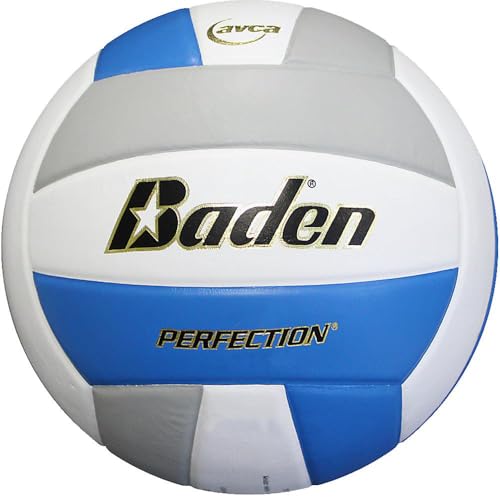
Baden Perfection Volleyball
Baden prices the Perfection below the major Mikasa and Molten competitive balls while still covering the basic needs of indoor recreational and lower-tier league play. The cover and panel construction trail official match balls in refinement but remain serviceable for regular practice and casual matches. Teams or schools working with a limited equipment budget get reasonable value here.
Pros
- Lower cost than official FIVB match balls
- Reasonable performance for practice and casual matches
- Suitable for school or budget-limited programs
Cons
- Flight consistency trails official match balls
- Not approved for top-tier competitive play

Tachikara SV5WSC
Tachikara’s SV5WSC shows up frequently in US high school and recreational league play, built with a synthetic leather cover that balances durability with reasonable touch. It does not carry the same international FIVB recognition as Mikasa or Molten, but many US school programs specify it directly. The construction holds up well across a full season of regular practice and matches.
Pros
- Widely specified by US high school programs
- Durable cover holds up across a full season
- Balanced touch for regular practice and matches
Cons
- Lacks the FIVB recognition of Mikasa or Molten
- Less common at international competitive levels

Spalding TF-Trainer
Spalding builds the TF-Trainer for everyday training and backyard use rather than official competition, prioritizing durability over the refined touch of a match ball. The cover resists wear from casual outdoor contact with grass or sand better than a true indoor-only ball would. Families or casual groups wanting one all-purpose ball for backyard games get practical value from this over a specialized indoor or beach ball.
Pros
- Durable cover handles casual outdoor contact well
- Reasonable all-purpose option for backyard games
- Lower cost than dedicated indoor or beach balls
Cons
- Touch and flight trail dedicated indoor match balls
- Not approved for competitive league play

Mikasa VQ2000
Mikasa builds the VQ2000 specifically for beach volleyball, using a water-resistant cover and panel construction suited to sand court conditions rather than indoor hardwood. The slightly softer touch compared to an indoor ball helps with the different passing angles common in beach play. Dedicated beach players get a more appropriate ball here than trying to adapt an indoor-specific model like the V200W.
Pros
- Water-resistant cover suits outdoor sand conditions
- Softer touch matches beach passing technique
- Built specifically for beach rather than adapted from indoor
Cons
- Not intended for indoor league or match play
- Cover feel differs enough that switching takes adjustment
How to choose
What to look for in a volleyball Cover material affects touch and sting on contact, with softer composite covers favored for passing comfort and beginner play. Construction and FIVB approval matter most for competitive club or league play where a specific ball may be required by name. Intended surface, indoor, beach or backyard, should guide the final decision since each ball type wears differently outside its intended environment.
Indoor match balls versus recreational balls An official FIVB-recognized ball, like the Mikasa V200W or Molten V5M5000, delivers the most consistent flight and is often specifically required for club or league competition. A recreational ball, like the Baden Perfection, costs less and performs adequately for practice but trails the official ball’s refinement and approval status.
Indoor versus beach volleyballs An indoor ball, like the V200W or Tachikara SV5WSC, is built for a hardwood gym floor and will not hold up well to sand or water exposure. A beach-specific ball, like the Mikasa VQ2000, uses a water-resistant cover and different construction suited to outdoor sand court conditions.
Choosing a ball for beginners or casual play A softer touch ball, like the Wilson Super Soft Play, reduces sting for new players still learning to pass and serve. A durable all-purpose ball, like the Spalding TF-Trainer, suits casual backyard games where competitive flight consistency matters less than durability.
How they compare
| # | Model | Cover | Best for | Score | Price |
|---|---|---|---|---|---|
| 1 | Mikasa V200W | Microfiber composite | Best overall for indoor league and match play | 9.1 | Check price |
| 2 | Molten V5M5000 | Synthetic leather composite | Best for club and competitive indoor alternatives | 8.9 | Check price |
| 3 | Wilson Super Soft Play Volleyball | Soft synthetic composite | Best for beginners and soft-touch learning | 8.3 | Check price |
| 4 | Baden Perfection Volleyball | Synthetic composite | Best value indoor volleyball | 8.1 | Check price |
| 5 | Tachikara SV5WSC | Synthetic leather | Best for recreational and high school leagues | 8.6 | Check price |
| 6 | Spalding TF-Trainer | Durable synthetic | Best for backyard and all-around training use | 7.9 | Check price |
| 7 | Mikasa VQ2000 | Water-resistant synthetic composite | Best for beach and sand court play | 8.8 | Check price |
Good to know
What is the difference between an FIVB-approved and a recreational volleyball?
An FIVB-approved ball, like the Mikasa V200W or Molten V5M5000, meets international competition standards for flight consistency and construction, while a recreational ball like the Baden Perfection trails that refinement at a lower cost.
Can an indoor volleyball be used on the beach?
An indoor ball is not built for sand or water exposure and will wear down faster outdoors, which is why a dedicated beach ball like the Mikasa VQ2000 uses a water-resistant cover instead.
Why do some volleyballs feel softer than others?
Softer covers, like on the Wilson Super Soft Play, are designed specifically to reduce sting on forearm passes for new players still developing technique.
Do US high schools require a specific volleyball brand?
Many US high school programs specify the Tachikara SV5WSC or a similar model directly, though requirements vary by state athletic association and individual school.
What does an 18-panel construction mean for a volleyball?
An 18-panel layout, used on the Mikasa V200W and Molten V5M5000, refers to the number of stitched or bonded panels making up the ball’s cover, which affects flight consistency and touch.
Is a Molten volleyball different from a Mikasa volleyball?
Yes, Molten and Mikasa use different panel layouts and cover materials, which some experienced players notice in flight and spin behavior, even though both carry FIVB approval.
What ball should I buy for backyard volleyball games?
A durable all-purpose ball like the Spalding TF-Trainer suits casual backyard games better than a specialized indoor match ball, since it handles grass and outdoor contact more reliably.
How long does a competitive volleyball typically last?
A match-quality ball used primarily for practice and matches, kept away from abrasive surfaces, can last multiple seasons before the cover or bladder noticeably degrades.
The verdict
The Mikasa V200W remains the strongest choice for indoor league and match play, given its FIVB recognition and soft composite cover. Club teams needing a credible alternative when Mikasa is not specifically required should choose the Molten V5M5000 instead. Anyone playing primarily on sand rather than indoor hardwood should skip both and get the beach-specific Mikasa VQ2000.
Derek Holt
Derek has a background coaching recreational and amateur athletes and has worked the sales floor at specialty fitness retailers. He focuses on equipment durability, ergonomics and realistic use cases rather than marketing claims.


