Volleyball Gear Built for Beach and Backyard Courts
Wilson Super Soft Play Volleyball leads, thanks to a synthetic cover that sheds damp sand instead of soaking it up. Franklin Sports Portable Volleyball Net Set gets a backyard game running in under ten minutes. Mikasa VQ2000 Beach Volleyball serves players chasing tournament feel.
Wilson Super Soft Play suits weekend players moving between grass and sand. Its synthetic cover stays light after a damp session, and cushioned panels spare bare forearms during long passing drills. Daily tournament use wears it smooth faster than leather.
Gear made for a gym floor meets different enemies outside: UV, grit and gusts. Ranking here came from cover material, published pole metal, net width, anchor type and stated setup time. Owner reports on rusted poles and bent stakes adjusted the final order.
Our top picks

Wilson Super Soft Play Volleyball
Synthetic leather panels take on far less water than genuine leather, which matters on dew-soaked grass. Cushioned construction keeps the sting down when bare forearms pass for an hour. Owners report it holds inflation pressure across a full season of weekend games.
Pros
- Cover sheds moisture on damp grass and sand
- Soft panels reduce forearm sting during passing
- Holds pressure between weekend sessions
Cons
- Wears faster than leather under daily tournament play
- Bright panels pick up dirt marks
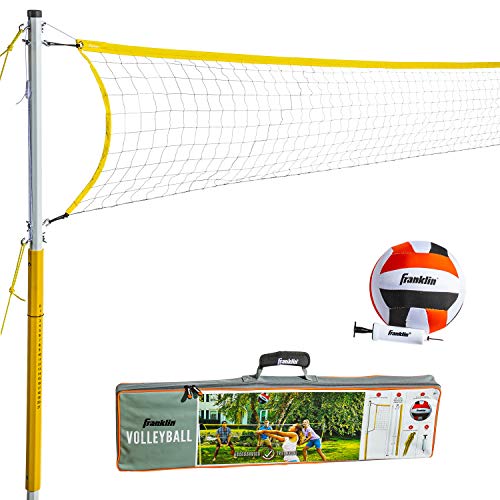
Franklin Sports Portable Volleyball Net Set
Net, steel poles, ground stakes and a ball ship together, so a bare lawn becomes a court the same afternoon. Height adjusts for adults or younger players sharing the same net. Owners report setup runs under ten minutes with no tools involved.
Pros
- Goes up in under ten minutes without tools
- Ball and stakes arrive in the same box
- Height settings cover mixed age groups
Cons
- Steel poles rust if packed away wet
- Strong wind pushes the uprights out of line

Mikasa VQ2000 Beach Volleyball
Texture across the synthetic cover gives sweaty or sandy hands something to hold. Construction follows the pattern used in competitive beach play. Panel seams resist splitting under repeated hard spiking.
Pros
- Texture grips through sweat and loose sand
- Seams hold up to repeated spiking
- Feel matches competitive beach balls
Cons
- Surface smooths out after heavy seasons
- Costs more than a recreational ball

Park & Sun Sports Tournament Doubles Volleyball Net System
Aluminum uprights hold their line in wind that bends thinner steel poles. In-ground sockets return the court to the same footprint every time, and the poles lift out for winter storage. Height settings cover both volleyball and badminton.
Pros
- Aluminum resists bending in coastal wind
- Sockets keep court placement consistent
- Doubles as a badminton setup
Cons
- Sockets must be dug in before first use
- Less portable than a stake-based kit

Tachikara SV-5WSC Sensi-Tec Volleyball
Sensi-Tec composite resists the stiffening that plain synthetics develop after long hours in direct sun. Feel stays consistent whether the court runs cool or blazing. Moisture resistance suits humid coastal air as much as dry inland fields.
Pros
- Cover stays supple after long sun exposure
- Feel holds steady across temperature swings
- Handles humid coastal conditions
Cons
- Stocked less widely than Wilson or Mikasa
- Composite construction costs more than rubber practice balls

GoSports Regulation Size Volleyball Net System
Regulation-width netting, steel poles and stakes arrive with a carry bag for moving between the yard and the beach. Build quality targets casual games rather than league schedules. Setup runs slightly longer than Franklin’s kit, closer to fifteen minutes.
Pros
- Complete kit at a lower outlay than aluminum systems
- Carry bag makes beach trips practical
- Regulation net width supports real rallies
Cons
- Steel uprights sway more than aluminum in wind
- Not built for daily competitive play

Baden Champion Volleyball Kneepads
Foam here runs thicker than indoor pads, which matters when a dig lands on packed sand or a rock hidden in grass. Moisture-wicking compression fabric handles afternoon heat better than closed foam sleeves. Adjustable straps stop the pads sliding during a dive.
Pros
- Thicker foam absorbs landings on uneven ground
- Wicking fabric keeps heat manageable
- Straps hold position through dives
Cons
- Bulkier than slim indoor kneepads
- Deep loose sand makes them unnecessary
What to look for
What to look for in outdoor volleyball gear Water resistance, UV stability and grip separate outdoor kit from gym equipment. Synthetic and composite ball covers shed moisture that leather absorbs. Pole metal decides how a net behaves once wind arrives, and anchor style decides whether it stays put on loose ground. Padding matters more outside too, since grass hides rocks and packed sand gives less than a sprung gym floor. Everything here trades a little performance for weather tolerance.
Picking a ball for sand versus grass Sand rewards texture. Mikasa’s VQ2000 gives sweaty hands purchase that a smooth indoor ball never offers. Grass courts ask less of the grip and more of the cover, since dirt and the occasional stone scuff panels over a season. Wilson’s Super Soft Play splits the difference for players who use both surfaces. Anyone leaving a ball in a hot car or on a beach all summer should look at Tachikara’s composite instead, because sun stiffens cheaper synthetics.
Net systems: portable stakes or in-ground sockets Stake-based kits like Franklin’s and GoSports go up on a lawn in minutes and pack into a bag afterward. Sand holds stakes poorly, so beach setups often need deeper anchors or weighted bases. In-ground sockets from Park & Sun ask for one afternoon of digging and then repay it every weekend with consistent placement. Court width is 32 feet across all three, so the real difference is stability, not size.
Gear for hot, windy and coastal courts Wind is what actually breaks a backyard setup. Aluminum uprights flex and return where steel bends and stays bent, which is why Park & Sun suits exposed coastal yards. UV does slower damage, stiffening ball covers over a summer of afternoon games. Kneepads earn their place on grass and hard-packed sand, though players on deep loose sand can skip them entirely. Buy for the worst conditions your court sees, not the average ones.
How they stack up
| # | Model | Cover material | Best for | Score | Price |
|---|---|---|---|---|---|
| 1 | Wilson Super Soft Play Volleyball | Synthetic leather | Best overall | 9.4 | Check price |
| 2 | Franklin Sports Portable Volleyball Net Set | 32 feet | Best for quick setup | 9.1 | Check price |
| 3 | Mikasa VQ2000 Beach Volleyball | Textured synthetic leather | Best for tournament-style sand play | 8.9 | Check price |
| 4 | Park & Sun Sports Tournament Doubles Volleyball Net System | Aluminum | Best for a fixed backyard court | 8.7 | Check price |
| 5 | Tachikara SV-5WSC Sensi-Tec Volleyball | Sensi-Tec composite | Best for constant sun and heat | 8.5 | Check price |
| 6 | GoSports Regulation Size Volleyball Net System | 32 feet | Best value net set | 8.3 | Check price |
| 7 | Baden Champion Volleyball Kneepads | High-density foam | Best for rough outdoor surfaces | 8.0 | Check price |
Questions worth asking
What volleyball is best for outdoor use?
Wilson Super Soft Play and Mikasa VQ2000 both use water-resistant synthetic covers built for sand and grass. Leather indoor balls soak up moisture and wear out faster outside.
Can you use an indoor volleyball outside?
Occasionally, yes. Leather covers absorb damp and abrade quickly on sand or rough grass, so a dedicated outdoor ball lasts far longer.
Which portable volleyball net works best on the beach?
Franklin’s Portable Volleyball Net Set goes up fast and includes stakes, though loose sand often needs deeper anchors or weighted bases to hold.
Do outdoor volleyball nets need special poles?
Aluminum uprights handle gusts better than basic steel, which matters on exposed or coastal courts. Steel is fine for sheltered backyards.
What size is an official outdoor volleyball?
Size 5, the same as indoor regulation. Outdoor versions differ in cover material and texture rather than dimensions.
How are beach volleyballs different from regular volleyballs?
Beach balls run slightly softer, with textured water-resistant covers for grip in sandy or sweaty hands. Indoor balls stay smoother and firmer.
Are kneepads necessary for outdoor volleyball?
On grass or hard-packed sand, yes, since landings are unpredictable and the ground gives little. Deep loose sand cushions well enough on its own.
How do you keep a volleyball net stable on sand?
Use long stakes driven deep, weighted bases, or sandbags on the pole feet. Short stakes made for lawns pull free under net tension.
How wide should a backyard volleyball net be?
Regulation width is 32 feet, which every net system here matches. Narrower recreational nets change rally spacing and the feel of the game.
Does sun damage volleyball equipment?
Yes. UV stiffens synthetic ball covers and fades netting over a season, which is why UV-stable composites like Tachikara’s cover hold their feel longer.
The verdict
Wilson Super Soft Play Volleyball is the pick for most players, because one ball covers grass and sand without waterlogging or stinging the forearms. Serious sand players should go with the Mikasa VQ2000 for its grip and seam strength. Anyone who needs a court on a bare lawn this weekend should start with Franklin’s portable net set and upgrade to Park & Sun’s aluminum system only if wind becomes a recurring problem.
Derek Holt
Derek has a background coaching recreational and amateur athletes and has worked the sales floor at specialty fitness retailers. He focuses on equipment durability, ergonomics and realistic use cases rather than marketing claims.


