How to Gear Up for Indoor Cycling Without Overspending
The Wahoo KICKR CORE ranks first here because a direct drive smart trainer changes indoor riding more than anything else you can add afterward. The Wahoo KICKR HEADWIND solves overheating better than a household fan, and the Garmin Cadence Sensor 2 delivers useful training data for the least money of any upgrade here.
Building an indoor setup starts with the Wahoo KICKR CORE as the foundation, then the Wahoo KICKR HEADWIND to fix overheating, and the Garmin Cadence Sensor 2 to add data cheaply. Together these three cover the reasons riders quit indoor training, which are boredom, heat, and a lack of feedback during sessions.
Most riders buy a trainer, use it a handful of times, then let it collect dust in a garage, and accessories are usually what decides which outcome happens. Cooling, floor protection, and something engaging to look at matter more day to day than an extra fraction of power accuracy. We compared what each product adds to a real setup against published accuracy and compatibility figures, measured noise levels, and owner reports on durability under repeated sweat exposure, which stresses equipment harder than outdoor riding ever does.
Before you buy
Why cooling comes before any other upgrade Outdoor riding moves air across a cyclist constantly. Indoors, that airflow disappears, so core temperature climbs and power output falls before legs ever tire. Any fan beats no fan, but a focused unit aimed at the torso outperforms a room fan on a shelf by a wide margin. Owners describe this single change as what kept them riding past the first two weeks.
Keep sweat away from bolts and cables, not just the floor Salt in sweat corrodes stems, headsets, and bottom bracket bolts over a season of regular riding. A cheap sweat net or an old towel draped over the top tube prevents most of that damage. Wipe the frame down after every session, paying extra attention to where the bars meet the stem, since corrosion typically starts there first.
Choosing between smart resistance and a classic trainer Smart trainers adjust resistance automatically to match a workout or virtual course, which is what makes structured plans and apps like Zwift function properly. Classic fluid trainers and rollers rely on speed and gearing alone for resistance, an approach that works fine for steady endurance riding and costs considerably less. Riders chasing structured plans should buy smart, while those wanting simple, steady time on the bike can stay classic.
Managing noise when walls and floors are shared Direct drive trainers run far quieter than wheel on units, leaving drivetrain noise and vibration as the main remaining sources of sound. A heavy mat placed under the setup absorbs much of what would otherwise travel into the floor below. Cleaning and lubricating the chain regularly cuts drivetrain noise noticeably, a detail that matters indoors since nothing else masks it.
Our top picks

Wahoo KICKR CORE Smart Trainer
A direct drive design replaces the rear wheel, removing tyre slip and most of the noise that wheel on trainers produce. Training apps control resistance automatically here, so climbs feel like climbs and the flywheel adds a road like pulse to the pedal stroke. Fitting a cassette is required before first use, a small job for most riders or a quick shop visit for everyone else.
Pros
- Automatic resistance control inside training apps
- Noticeably quieter than wheel on trainers
- Flywheel delivers a realistic road feel
Cons
- Cassette must be purchased and fitted separately
- Weighs enough to make moving it between rooms awkward
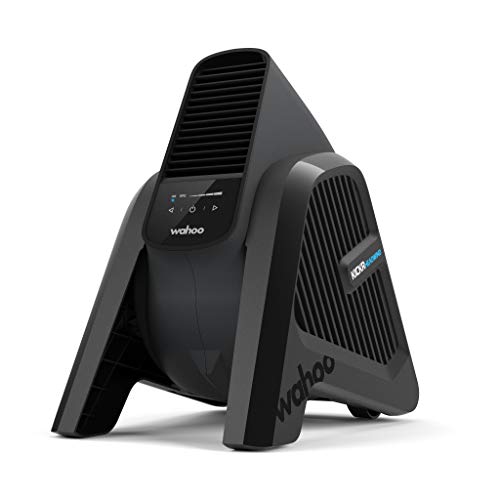
Wahoo KICKR HEADWIND Bluetooth Fan
Indoor rooms give riders no natural airflow, so core temperature climbs and power drops well before legs give out. This fan aims a focused column of air at the rider instead of spreading it across the room, and it can ramp automatically with heart rate or speed data. Cost sits well above a household fan, though the output justifies the difference for regular sessions.
Pros
- Focused airflow reaches the rider directly
- Ramps automatically as effort increases
- Height adjusts to aim at the torso
Cons
- Priced well above a standard box fan
- Runs loud at its highest setting
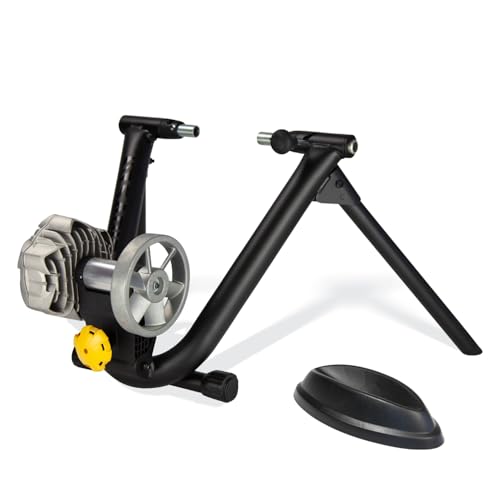
Saris Fluid2 Indoor Bike Trainer
Fluid resistance rises progressively with speed, so a wheel on trainer like this one feels natural across a full gear range without any software involved. Clamping the bike to the rear axle takes about a minute, and the wheel stays fitted throughout. Rear tyre wear runs higher than on direct drive units, so a dedicated trainer tyre pays off for frequent use.
Pros
- No electronics or firmware to fail
- Progressive resistance feels natural through the gears
- Sets up and packs away in minutes
Cons
- Runs louder than direct drive trainers
- Wears down the rear tyre noticeably faster

Garmin Cadence Sensor 2
Strapped to a crank arm, this sensor reports pedalling cadence to any connected app or head unit, turning aimless spinning into structured work. Cadence ranks as the most useful indoor training number after power, since it shows whether you are grinding or spinning through an interval. Battery life stretches to roughly a year, and there are no magnets to align during setup.
Pros
- Adds meaningful training data at low cost
- Skips magnet alignment entirely
- Pairs with nearly any cycling app or computer
Cons
- Measures cadence only, not power output
- Rubber strap eventually perishes and needs replacing

Elite Sterzo Smart Steering Plate
The front wheel rests inside this plate, letting the bars turn while the unit reports steering angle to compatible apps for navigating around virtual riders. Natural front end movement also relieves the locked in feeling that makes long indoor sessions uncomfortable. Steering input only works in apps that support it, so compatibility is worth checking before buying.
Pros
- Restores natural front end movement
- Enables steering input in supported apps
- Reduces the fixed, locked in sensation of a static trainer
Cons
- Steering functions only within a limited set of apps
- Adds one more battery to keep charged

Supermats 15GS Heavy Duty Equipment Mat
Sweat drips straight down during a session, and it is corrosive enough to stain carpet or lift laminate flooring over time. Heavy PVC construction catches all of it, wipes clean afterward, and damps some vibration into the floor below, a detail apartment neighbours notice. Fresh mats arrive curled from shipping and take a few days to lie flat.
Pros
- Shields flooring from sweat damage
- Absorbs vibration transmitted to the floor below
- Wipes clean in seconds after each ride
Cons
- Ships curled and needs days to flatten
- Heavy and awkward to store between uses

Tacx Antares Rollers
Riding rollers demands the same balance a road bike requires, which exposes a sloppy pedal stroke and then forces you to smooth it out. Folded storage takes up far less space than a fixed trainer, and running noise stays low compared with wheel on units. Early sessions belong near a doorway or wall for support, so this is not a first purchase for beginners.
Pros
- Sharpens balance and pedalling smoothness
- Folds down smaller than any fixed trainer
- Runs quietly compared with wheel on units
Cons
- Carries a real learning curve before it feels stable
- Offers no resistance adjustment for structured intervals
The lineup, side by side
| # | Model | Type | Best for | Score | Price |
|---|---|---|---|---|---|
| 1 | Wahoo KICKR CORE Smart Trainer | Direct drive smart trainer | Best overall | 9.4 | Check price |
| 2 | Wahoo KICKR HEADWIND Bluetooth Fan | Focused column up to about 30 miles per hour | Best for cooling | 9.2 | Check price |
| 3 | Saris Fluid2 Indoor Bike Trainer | Wheel on fluid trainer | Best value trainer | 9.0 | Check price |
| 4 | Garmin Cadence Sensor 2 | Crank mounted cadence sensor | Best budget upgrade | 8.8 | Check price |
| 5 | Elite Sterzo Smart Steering Plate | Smart steering front wheel block | Best for immersion | 8.6 | Check price |
| 6 | Supermats 15GS Heavy Duty Equipment Mat | Heavy duty PVC | Best floor protection | 8.3 | Check price |
| 7 | Tacx Antares Rollers | Three drum rollers | Best for pedalling technique | 8.0 | Check price |
Frequently asked questions
What accessory should I buy right after a trainer?
A fan ranks first. Heat limits indoor performance faster than fitness ever does, and a unit aimed at the torso changes how a session feels more than any data device would.
Is a smart trainer worth it over a basic model?
A basic fluid trainer suits steady riding and costs far less. A smart trainer earns its price if structured workouts or virtual worlds are the goal, since automatic resistance is what makes those features work.
Does indoor riding damage a bike over time?
Sweat poses the real risk, corroding bolts, cables, and the headset area across a season. Covering the frame with a towel or sweat net and wiping the bike down after each ride prevents most of it. Frame stress from modern trainers is rarely a concern.
Do wheel on trainers need a special tyre?
Yes, considerably so. Trainer tyres resist the heat build up that shreds standard road tyres against a roller, and they run quieter. Riders using a wheel on trainer often keep a dedicated rear wheel fitted with one.
How can I keep a trainer setup from bothering neighbours?
A heavy mat absorbs vibration into the floor, a clean drivetrain cuts mechanical noise, and positioning the setup away from a shared wall helps further. Direct drive trainers transmit noticeably less sound than wheel on models to begin with.
Are rollers a good choice for a beginner?
Rollers build strong pedalling technique but demand real practice before they feel safe. Most riders start on a fixed trainer and add rollers later, learning near a doorway or wall for support.
Can a regular household fan replace a cycling specific one?
It can, and it beats using no fan at all. A purpose built cycling fan pushes a focused column of air at the rider rather than stirring the whole room, a difference that shows up clearly at high effort.
How accurate does a trainer’s power reading need to be?
Consistency matters more than absolute accuracy for tracking progress. A trainer that reads slightly high but stays consistent still shows real training gains. Stated accuracy within one to two percent suits most riders fine.
Wheel on trainer vs direct drive, which suits shared living spaces better?
Direct drive units run quieter and skip tyre wear entirely, making them the better fit for apartments or shared walls. Wheel on trainers cost less and set up faster, a fair trade for riders without noise constraints.
Our take
Start with the Wahoo KICKR CORE, since a direct drive smart trainer changes indoor riding more than any single accessory while staying quiet enough for shared homes. Add the Wahoo KICKR HEADWIND next, because heat ends more indoor sessions than fitness does, then pick up the Garmin Cadence Sensor 2 for structured data if a power meter is not yet in the budget.
Derek Holt
Derek has a background coaching recreational and amateur athletes and has worked the sales floor at specialty fitness retailers. He focuses on equipment durability, ergonomics and realistic use cases rather than marketing claims.