UVB Reptile Lamps Compared by Output, Not Marketing
Zoo Med’s ReptiSun 10.0 T5 HO spreads usable UVB across a whole basking area rather than one hot spot. Arcadia’s ProT5 12% Kit delivers the strongest output for desert species, and the Zoo Med PowerSun UV combines heat and UVB in a single bulb.
A linear tube gives a reptile a gradient to move through instead of one intense spot, which is why the Zoo Med ReptiSun 10.0 T5 HO fits most setups. Desert species do better under the Arcadia ProT5 12% Kit, and keepers who want heat and UVB from one fixture reach for the Zoo Med PowerSun UV.
Output drops sharply with distance, and mesh screening compounds the loss further. Lamps also keep producing visible light long after their UVB output has fallen below useful levels. We compared published output percentages, lamp formats, recommended mounting distances and stated lifespans, then weighed that against what keepers report about output falling off and species specific results.
The top picks, ranked
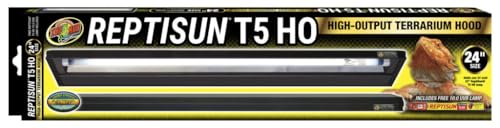
Zoo Med ReptiSun 10.0 T5 HO UVB Lamp
A high output linear tube projects usable UVB deep into an enclosure while spreading it along its full length, letting an animal self regulate exposure. Current husbandry guidance points toward this format over compact bulbs. A separate T5 HO fixture with a reflector is required, which roughly doubles effective output once added.
Pros
- Even coverage lets animals self regulate
- High output reaches deep enclosures
- Widely available in multiple lengths
Cons
- Needs a separate T5 HO fixture
- Reflector is essential for full output

Arcadia Reptile ProT5 12% UVB Kit
This kit ships complete with a highly polished reflector fixture, removing the guesswork of matching lamp to housing. Twelve percent output suits bearded dragons, uromastyx and other high UV requirement species at the correct mounting distance. Arcadia publishes unusually clear distance guidance, which simplifies setting basking height.
Pros
- Complete kit with matched reflector
- Output suits high UV desert species
- Clear mounting distance guidance
Cons
- Too strong for low UV requirement species
- Higher outlay than a bare lamp
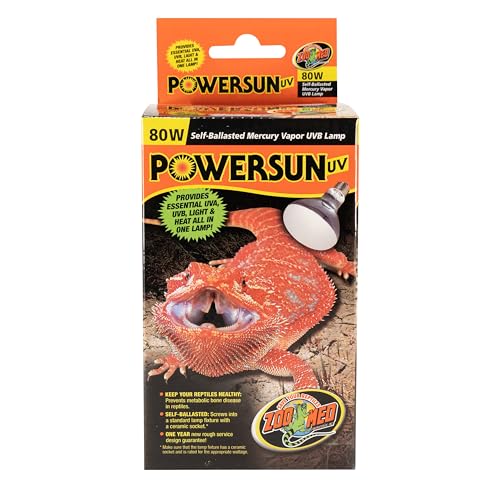
Zoo Med PowerSun UV Mercury Vapor Lamp
Heat, UVA and UVB all come from one self ballasted bulb here, simplifying a setup down to a single fixture. That convenience is also a limitation, since heat and UVB output cannot be tuned independently. Large, tall enclosures suit it best, where the required mounting distance is achievable without overheating the basking spot.
Pros
- Single lamp covers heat and UVB
- Strong output for large enclosures
- Simplifies fixture and wiring
Cons
- Heat and UVB cannot be tuned separately
- Unsuitable for small enclosures

Exo Terra Solar Glo Mercury Vapor Lamp
Broad daylight spectrum output makes an enclosure look noticeably better while still delivering heat and UVB. Height is non negotiable with this lamp type, since output needs room to spread safely. Keepers report strong plant growth in planted vivariums, thanks to the visible light quality.
Pros
- Excellent visible light quality
- Supports live plants in vivariums
- Heat and UVB from one source
Cons
- Requires substantial mounting height
- Runs hot enough to need careful placement

Zoo Med ReptiSun 5.0 Compact Fluorescent UVB Lamp
This screw fitting compact lamp suits enclosures too small for a linear tube, such as gecko or amphibian setups with lower UV requirements. Output concentrates in one area rather than spreading, so placement matters more than with a tube. Forest and crepuscular species suit the 5.0 rating better than desert reptiles do.
Pros
- Fits standard screw sockets
- Right output level for low UV species
- Works in small enclosures
Cons
- Concentrated output rather than a gradient
- Coverage area is small

REPTI ZOO T5 HO Reptile UVB Bulb
Available in both 5.0 and 10.0 equivalents, this linear T5 HO tube costs noticeably less than the established brands here. Output consistency is the usual question mark with value lamps, and keepers who own a UV meter tend to check these more carefully. As a scheduled replacement tube it holds up as solid value.
Pros
- Considerably lower outlay per tube
- Available in several lengths and outputs
- Fits standard T5 HO fixtures
Cons
- Output consistency varies more between units
- Less published testing than premium brands

LUCKY HERP UVA UVB Mercury Vapor Bulb
For a large enclosure and a tight outlay, this bulb offers an inexpensive route to combined heat and UVB. It works as intended, though lifespan and output consistency trail the premium mercury vapor lamps here. A ceramic socket is mandatory, since standard plastic fittings are not rated for this level of heat.
Pros
- Low outlay for a combined lamp
- Multiple wattage choices
- Adequate output for large enclosures
Cons
- Shorter useful life than premium lamps
- Output varies more between individual bulbs
How they stack up
| # | Model | Output | Best for | Score | Price |
|---|---|---|---|---|---|
| 1 | Zoo Med ReptiSun 10.0 T5 HO UVB Lamp | 10 percent UVB | Best overall | 9.4 | Check price |
| 2 | Arcadia Reptile ProT5 12% UVB Kit | 12 percent UVB | Best for desert species | 9.2 | Check price |
| 3 | Zoo Med PowerSun UV Mercury Vapor Lamp | Self ballasted mercury vapor | Best combined heat and UVB | 9.0 | Check price |
| 4 | Exo Terra Solar Glo Mercury Vapor Lamp | Mercury vapor, self ballasted | Best for large tall enclosures | 8.8 | Check price |
| 5 | Zoo Med ReptiSun 5.0 Compact Fluorescent UVB Lamp | 5 percent UVB | Best for small enclosures | 8.6 | Check price |
| 6 | REPTI ZOO T5 HO Reptile UVB Bulb | T5 HO linear tube | Best value tube | 8.3 | Check price |
| 7 | LUCKY HERP UVA UVB Mercury Vapor Bulb | Mercury vapor, self ballasted | Best budget mercury vapor | 8.0 | Check price |
How to pick the right one
What UVB output does your reptile actually need? UVB lamps are rated by the percentage of output in the UVB range, and species requirements vary enormously. Desert basking reptiles such as bearded dragons need high output lamps at the correct distance. Crested geckos, many snakes and amphibians need low output or none at all. Too much UVB causes real harm, so start from published guidance for the species rather than assuming stronger is safer.
Linear tubes versus compacts versus mercury vapor Linear T5 tubes give a broad gradient across the enclosure, letting the animal choose its own exposure, which is the format most current guidance favors. Compact screw fittings work well in small enclosures but produce a narrow, concentrated beam. Mercury vapor bulbs combine heat and UVB in one fitting, suited to large tall enclosures, though heat and UVB then can’t be adjusted separately.
Does distance and mesh really cut output that much? UVB intensity falls off rapidly with distance, so a lamp mounted too high delivers almost nothing at the basking spot. Fine enclosure mesh compounds this further, absorbing a substantial share of what passes through. Mount inside the enclosure where the design allows, use the widest safe mesh gauge, and follow the manufacturer’s published distance guidance for that specific lamp.
When should UVB bulbs be replaced? A UVB lamp keeps producing visible light long after its UVB output has fallen below useful levels. Most fluorescent and T5 lamps need replacing roughly annually, and mercury vapor lamps on a similar or shorter cycle. Note the installation date somewhere visible, since relying on appearance leads to animals living under a lamp that stopped working months earlier.
Frequently asked questions
Do all reptiles need UVB lighting?
No. Diurnal basking species such as bearded dragons, tortoises and many lizards need it for calcium metabolism. Some nocturnal species and many snakes have much lower requirements, though current research suggests low level UVB benefits more species than once thought.
How often should UVB bulbs be replaced?
Roughly every twelve months for most fluorescent and T5 lamps, sooner for some mercury vapor bulbs. Output falls steadily even while the lamp still lights, so replacement is driven by time rather than failure.
Does mesh block UVB output?
Yes, significantly. Fine screens can absorb a large share of the output, so mount lamps as close as is safe, use coarser mesh where possible, or mount the fixture inside the enclosure if the design allows it safely.
Can UVB pass through glass?
Standard glass blocks most UVB, which is why a lamp placed outside a glass lid delivers almost nothing. A window offers no usable UVB for a reptile for the same reason.
Is a combined UVB and heat bulb a good idea?
It’s convenient for large tall enclosures, but it ties heat and UVB together. If basking temperature is correct at a distance where UVB reads too weak, separate lamps give the control to fix it.
How do I know if UVB output is set correctly?
A UV index meter placed at the basking spot is the only reliable check. Without one, follow the manufacturer’s published distance guidance closely and replace lamps on schedule.
Can too much UVB harm a reptile?
Yes. Excessive exposure can cause eye and skin damage. Shaded areas and a proper gradient let an animal move away from the light, which is why linear tubes with good coverage are generally safer than one intense spot.
Which UVB lamp works best for desert species like bearded dragons?
High output options such as the Arcadia ProT5 12% Kit are built for that requirement level, provided mounting distance follows the published guidance.
Do UVB lamps need to run all day?
They should follow a day and night cycle, typically ten to twelve hours on, adjusted seasonally for some species. Leaving UVB on continuously prevents proper rest and offers no added benefit.
Our take
Zoo Med’s ReptiSun 10.0 T5 HO is the UVB lamp most enclosures should start with, since a linear tube gives animals a gradient to choose from rather than one intense spot. Desert species are better served by the Arcadia ProT5 12% Kit, and the Zoo Med PowerSun UV makes sense in large tall enclosures where a single fixture keeps setup simple.
Olivia Hartley
Olivia spent several years working at an animal shelter and a pet-supply retailer before joining the editorial team. She researches pet gear with an emphasis on safety, comfort and the fine print that owners often miss.