Litter Scoops Compared for Clumping and Odor Control
The DurAnimals DuraScoop Original tops this list, a one piece aluminium tool built to outlast several cats. Sticky clumping litter calls for the iPrimio Non-Stick Sifter, and the PetFusion scoop with its own holder suits small bathrooms best.
Three scoops separate themselves here. The DuraScoop Original is the buy once, forget about it option, the iPrimio Non-Stick Sifter solves litter that welds itself to metal, and the PetFusion scoop keeps the job tidy with a matching holder.
Slot spacing decides how much clean litter gets thrown out with the waste, blade rigidity decides whether clumps break or lift whole, and handle length decides whether you kneel on the floor. We compared blade material and stiffness, slot design, edge geometry and handle ergonomics, then weighed those against what owners report about bending and clogging over months of daily use.
The best picks, ranked

DurAnimals DuraScoop Original Cat Litter Scoop
Cast from a single piece of aluminium alloy, this scoop has no seams or joints to snap, and owners report using the same one for a decade. Its rigid blade cuts through clumps stuck to the box floor rather than flexing around them. A contoured, rubber gripped handle stays comfortable across two or three boxes.
Pros
- Effectively unbreakable in normal use
- Cuts clumps welded to the box floor
- Comfortable in the hand over multiple boxes
Cons
- Heavier than plastic scoops
- Clumps can stick to bare metal without a coating

iPrimio Non-Stick Sifter Cat Litter Scoop with Deep Shovel
A deep shovel pan paired with a non-stick coating answers litter that welds itself to a bare blade. Extra depth means a large box takes fewer passes to clear. Owners switching from bare aluminium report the coating is the single feature they notice most.
Pros
- Non-stick surface releases wet clumps
- Deep pan reduces the number of passes
- Long handle keeps hands clear
Cons
- Coating can wear at the edges over years
- Narrow slots sift more slowly with fine litter
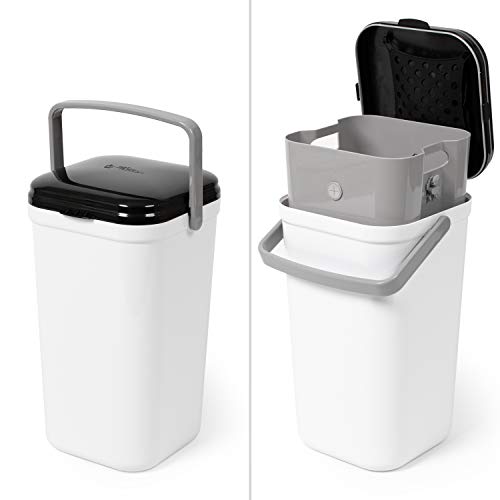
PetFusion Portable Cat Litter Scoop with Holder
This scoop lives in a matching stand instead of propped against a wall or buried in the box. The stand catches stray granules and keeps the blade off the floor, which shows in a bathroom or hallway. Underneath, a stiff plastic blade and wide slots sift quickly.
Pros
- Keeps the scoop off floors and surfaces
- Stand catches loose granules
- Discreet appearance in a living space
Cons
- Plastic blade flexes more than metal
- Caddy takes extra floor space

Litter Lifter Cat Litter Scoop
Angled fins replace the usual slotted pan here, so clean litter falls through with a gentle shake while clumps stay put. Light weight means scooping several boxes never turns into a workout. Owners report it clears fine grained clumping litter that clogs conventional slots.
Pros
- Sifts fine litter without clogging
- Very light in the hand
- Simple to rinse clean between uses
Cons
- Fins can flex against hardened clumps
- Not suited to non-clumping litter

Petmate Deluxe Cat Litter Scoop
A thicker, more rigid take on the standard plastic scoop, with a reinforced spine that resists the flex that ruins cheap designs. It is the sensible upgrade from the free scoop bundled with a litter box. Based on specifications it handles clumping and non-clumping litters equally well.
Pros
- Noticeably stiffer than budget plastic scoops
- Comfortable moulded grip
- Works with any litter type
Cons
- Still flexes more than aluminium
- Slots can trap fine crystal litter

Van Ness Sifting Cat Litter Scoop
Van Ness has made this basic sifting scoop for decades, and it remains the lowest outlay way to get a functional tool. Wide slots sift quickly, and the low cost makes it easy to keep one per box instead of carrying a single scoop through the house. It will not outlast the DuraScoop, but it gets the job done.
Pros
- Lowest outlay of any pick here
- Cheap enough to keep one per box
- Wide slots sift quickly
Cons
- Flexes against heavy clumps
- Shorter useful life than metal scoops
DuraScoop Jr. Cat Litter Scoop
This is the same one-piece aluminium build as the full size DuraScoop, just in a smaller blade that reaches the corners of covered boxes, corner boxes and kitten trays. Storage next to a box is easier with the narrower body. Owners with limited hand strength report the lighter weight is easier to control.
Pros
- Reaches corners of covered and small boxes
- Same durable one-piece build
- Lighter than the full size version
Cons
- Smaller pan means more passes on a big box
- Bare metal without a non-stick coating
What to look for
What to look for in a litter scoop Rigidity is the biggest factor. A blade that flexes when it meets a stuck clump is the single most common complaint owners raise. Metal scoops solve that outright, while a good plastic scoop needs a moulded spine or reinforcing ribs rather than a flat sheet. Slot width and handle length matter almost as much.
How slot width should match your litter Wide slots sift fast but let small clumps and used pellets slip through. Narrow slots catch everything, then clog with fine dust. Fine grained clumping clay generally wants narrow slots or a fin design like the Litter Lifter. Coarse crystal and pellet litters do better with wide slots so clean material falls back into the box.
Why non-stick coatings earn their place Clumping litter binds moisture, and it happily binds to a bare metal blade too. A non-stick coating, as on the iPrimio sifter, lets clumps drop cleanly into the bag instead of needing a knock against the box rim. The trade is a coating that eventually wears at the leading edge after years of use.
Where and how to store the scoop Leaving a scoop buried in the litter or leaning on a wall spreads granules and bacteria around the room. A holder, like the one PetFusion includes, or a simple wall hook keeps the blade off surfaces. Rinse metal scoops occasionally and dry them fully, since damp litter dust corrodes metal over time.
Compared at a glance
| # | Model | Material | Best for | Score | Price |
|---|---|---|---|---|---|
| 1 | DurAnimals DuraScoop Original Cat Litter Scoop | Cast aluminium alloy, one piece | Best overall | 9.4 | Check price |
| 2 | iPrimio Non-Stick Sifter Cat Litter Scoop with Deep Shovel | Aluminium with non-stick coating | Best for clumping litter | 9.2 | Check price |
| 3 | PetFusion Portable Cat Litter Scoop with Holder | Scoop and matching holder caddy | Best for tidy storage | 9.0 | Check price |
| 4 | Litter Lifter Cat Litter Scoop | Angled fin blade instead of slots | Best for fast sifting | 8.8 | Check price |
| 5 | Petmate Deluxe Cat Litter Scoop | Reinforced moulded plastic | Best value | 8.6 | Check price |
| 6 | Van Ness Sifting Cat Litter Scoop | Moulded plastic | Best budget | 8.3 | Check price |
| 7 | DuraScoop Jr. Cat Litter Scoop | Cast aluminium alloy, one piece | Best for small litter boxes | 8.0 | Check price |
Frequently asked questions
How often should I scoop a litter box?
At least once a day, and twice daily works better in a multi-cat home. Cats are genuinely fussy about box cleanliness, and inconsistent scooping is a common cause of a cat toileting elsewhere. A fast, rigid scoop makes it easier to keep to the routine.
Metal or plastic litter scoop, which is better?
Metal wins on rigidity and lifespan, and a one-piece aluminium scoop like the DuraScoop is close to a buy-once item. Plastic is lighter and gentler on a covered box’s hood, and a reinforced one like the Petmate Deluxe is perfectly serviceable. Avoid thin, unreinforced plastic entirely.
Why does litter stick to my scoop?
Clumping litter binds moisture, and a wet clump adheres to a bare blade. Non-stick coated scoops largely fix this. Letting clumps sit for a minute after use also helps, since fully formed clumps release far more cleanly than partly set ones.
What size scoop do I need for my litter box?
Match it to the box. A large open box takes fewer passes with a deep, wide scoop. A covered or corner box needs a narrower blade like the DuraScoop Jr. to reach into corners without fighting the hood. Households with several box types often keep two sizes on hand.
Should each litter box have its own scoop?
Ideally yes, especially in multi-cat homes, since it lowers the chance of moving bacteria and parasites between boxes. Inexpensive scoops such as the Van Ness make this affordable. At minimum, rinse and dry the scoop between boxes.
How do I clean a litter scoop?
Rinse with hot water and mild dish soap weekly, scrub the slots with an old brush, and dry it completely. Skip harsh disinfectants that leave a smell cats dislike, and never use bleach near ammonia-rich litter, since the combination releases harmful fumes.
Do sifting scoops work with crystal litter?
Wide slot scoops handle crystal litter well for removing solids, since the crystals are large enough to fall through. Fine slot and fin designs clog more easily. Crystal litter absorbs urine rather than clumping it, so scooping only removes solid waste and the litter still needs periodic full changes.
Is an automatic litter box a better answer than a scoop?
It can be, particularly for people with mobility issues or busy schedules, but it costs considerably more and some cats refuse them outright. A good scoop and a consistent routine solve the same problem reliably. Many owners with automatic boxes still keep a scoop for the corners the machine misses.
Can a bent or worn scoop be fixed?
Rarely worth the effort. Plastic that has flexed repeatedly loses its shape permanently, and worn slots widen further with continued use. Replacing a scoop costs little next to the daily frustration of one that no longer sifts cleanly.
The bottom line
The DuraScoop Original is the scoop to buy if you want to stop thinking about scoops, since a one-piece aluminium blade simply does not fail. Choose the iPrimio Non-Stick Sifter instead when litter sticks to bare metal, and add the PetFusion scoop and holder where the box lives somewhere you would rather not see a dirty scoop leaning against the wall.
Olivia Hartley
Olivia spent several years working at an animal shelter and a pet-supply retailer before joining the editorial team. She researches pet gear with an emphasis on safety, comfort and the fine print that owners often miss.
