Reptile Heat Lamps That Hold a Steady Temperature
Zoo Med’s Repti Basking Spot Lamp leads this list for daytime basking, since its double reflector focuses heat into one defined spot. Fluker’s Ceramic Heat Emitter handles overnight warmth without any light. Simple Deluxe’s Ceramic Heat Emitter does the same job for less, making it the budget pick.
Zoo Med’s Repti Basking Spot Lamp earns the top spot because its reflector concentrates heat into a tight basking zone instead of warming the whole tank evenly. Fluker’s Ceramic Heat Emitter covers night heat with zero light output, and Simple Deluxe matches that job at a lower cost. Every bulb here still needs a ceramic socket fixture rated for its wattage.
Reptile heating works by gradient, not by a single number, and that trips up a lot of first time keepers. A basking bulb needs a hot spot at one end while the opposite end stays cooler, giving the animal room to move and self regulate. Colored night bulbs still emit visible light, which disrupts sleep cycles, so ceramic emitters exist to solve that specific problem. We compared wattage range, beam spread, whether each bulb emits light, dimmer compatibility and fixture requirements, drawing on manufacturer specifications and owner reports. A reptile veterinarian or species care sheet should confirm the exact temperature target for your animal.
What we recommend
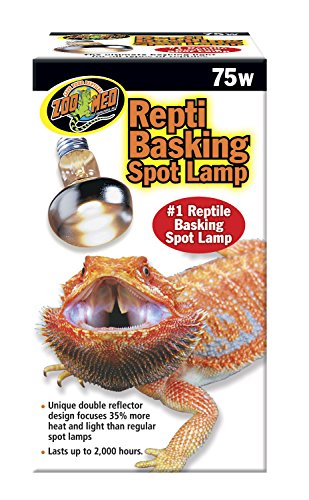
Zoo Med Repti Basking Spot Lamp
A double reflector concentrates heat and light into a tight basking spot instead of spreading warmth thinly across the tank. That focus lets you build a real hot end without overheating the rest of the enclosure. Multiple wattages are available, so sizing to your tank and room temperature is straightforward.
Pros
- Tight beam builds a defined basking spot
- Wide wattage range fits most tank sizes
- Widely stocked, so replacements are easy to find
Cons
- Light output rules it out for night heat
- Filament bulbs wear out faster than emitters

Fluker’s Ceramic Heat Emitter
A ceramic element radiates infrared heat with zero visible light, which keeps a day and night cycle intact through the dark hours. Service life runs far longer than a filament bulb. Surface temperature climbs extremely high, so a ceramic socket and a guard are mandatory, not optional.
Pros
- Delivers heat without disturbing sleep cycles
- Lasts much longer than a standard bulb
- Pairs well with a thermostat for steady overnight heat
Cons
- Runs dangerously hot without a wire guard
- Adds no light or UVB, so another fixture is still needed

Simple Deluxe Ceramic Heat Emitter
This lower cost emitter handles the same overnight job as name brand versions, at a price that makes keeping a spare realistic. Output stays consistent, and wattage options span small tanks through larger enclosures. Build finish runs more basic, so check the element and threads before first use.
Pros
- Costs little enough to stock a backup
- Consistent infrared output across wattages
- Several sizes fit different enclosure setups
Cons
- Finish quality trails premium brands
- Still needs a properly rated ceramic fixture

Exo Terra Sun Glo Basking Spot Lamp
This reflector bulb pushes heat and bright light downward, suiting diurnal species that respond to a strong visible basking cue. Its beam runs a bit broader than the Zoo Med, which some keepers prefer in wider tanks. Wattage choice matters more than brand for hitting the right temperature.
Pros
- Bright light encourages natural basking behavior
- Broader beam suits wider basking platforms
- Solid value across its wattage lineup
Cons
- Daytime use only
- Filament needs periodic replacement

Zoo Med Deep Dome Dual Lamp Fixture
Two ceramic sockets in one deep dome let you run a basking bulb and a UVB bulb from a single housing. Extra depth keeps each bulb recessed away from screen tops. Ceramic sockets also accept heat emitters, not just standard bulbs.
Pros
- Runs two bulbs from a single fixture
- Ceramic sockets handle heat emitters safely
- Deep dome cuts contact risk with screen tops
Cons
- Gets heavy once loaded with two bulbs
- Needs a secure mount or stand above the tank

Zilla Mini Halogen Bulb
Halogen technology packs more heat per watt than a standard incandescent bulb, useful where a full size dome would be overkill. Its compact shape fits mini dome fixtures without crowding a small tank. Because it runs hot and bright, pair it with a thermostat or dimmer and check surface readings.
Pros
- More heat per watt than standard incandescent
- Compact size suits smaller dome fixtures
- Works well for juveniles and small species
Cons
- Runs very hot relative to its size
- Bright output is wrong for nocturnal species

Fluker’s Repta-Clamp Lamp with Dimmer
A built in dimmer switch lets you fine tune basking temperature as room conditions shift, without swapping bulbs. Its ceramic socket accepts heat emitters as well as incandescent bulbs. Clamp lamps need a secure mount, since a fallen fixture is a genuine fire risk.
Pros
- Dimmer tunes heat without a bulb swap
- Ceramic socket also accepts heat emitters
- Clamp mount adapts to varied enclosure shapes
Cons
- Clamp alone should never be the only support
- Skip the dimmer if the bulb already runs on a thermostat
How to pick the right one
How to build a heat gradient Reptiles regulate body temperature by moving between warm and cool zones, not by sitting at one fixed number. Position the heat source over one end only, never the center of the tank. Measure at the basking surface with a digital probe or an infrared thermometer, since air temperature in the middle of the tank reads very differently.
Basking bulb or ceramic emitter for night heat Basking bulbs pair light and heat together, mimicking sunlight and triggering natural activity during the day. Most species need real darkness at night, yet colored red or blue bulbs still throw enough light to disturb sleep. Ceramic emitters solve that by producing infrared heat with no light at all. Some species also want a modest overnight temperature drop, so check your species requirements instead of heating around the clock by default.
What wattage and fixture do you need Ceramic sockets are required for heat bulbs and mandatory for emitters, because plastic sockets can melt under the load. Base wattage on enclosure size and room temperature, then adjust with the seasons. A thermostat holds output steady instead of leaving it at the mercy of the room, and it is the single most valuable accessory in this category. Match the thermostat type to the bulb, a dimming unit for basking bulbs and a pulse or dimming unit for emitters as the manufacturer specifies.
Are heat lamps a substitute for UVB Every heat source needs a guard so the animal cannot make direct contact with it. Secure clamp lamps with a chain or bracket instead of trusting the clamp alone, and keep bulbs away from screen tops and anything flammable. Heat lamps are not UVB lamps, and most diurnal species need a separate UVB source for calcium metabolism that a basking bulb cannot provide. A reptile veterinarian or a trusted care sheet should confirm species specific temperature and lighting needs before setup.
Compared at a glance
| # | Model | Type | Best for | Score | Price |
|---|---|---|---|---|---|
| 1 | Zoo Med Repti Basking Spot Lamp | Incandescent basking spot | Best overall | 9.4 | Check price |
| 2 | Fluker’s Ceramic Heat Emitter | Ceramic infrared heat emitter | Best for night heat | 9.2 | Check price |
| 3 | Simple Deluxe Ceramic Heat Emitter | Ceramic infrared heat emitter | Best budget | 9.0 | Check price |
| 4 | Exo Terra Sun Glo Basking Spot Lamp | Incandescent basking spot | Best value basking bulb | 8.8 | Check price |
| 5 | Zoo Med Deep Dome Dual Lamp Fixture | Dual socket dome fixture | Best fixture | 8.6 | Check price |
| 6 | Zilla Mini Halogen Bulb | Mini halogen basking bulb | Best for small enclosures | 8.3 | Check price |
| 7 | Fluker’s Repta-Clamp Lamp with Dimmer | Clamp lamp fixture with dimmer | Best adjustable fixture | 8.0 | Check price |
Good to know
What is the difference between a basking bulb and a ceramic heat emitter?
A basking bulb produces heat with visible light, which suits daytime use and natural basking behavior. A ceramic heat emitter produces infrared heat with no light, so it is the standard choice for overnight warmth that will not disturb sleep.
Do reptiles need heat at night?
It depends on the species. Many tolerate or benefit from a modest overnight drop, while others need supplemental heat once the room cools. Check a species specific care sheet or ask a reptile veterinarian, since both overheating and chilling cause real harm.
Are red or blue night bulbs safe to use?
Not ideally. Colored bulbs still give off visible light, which can disrupt day and night cycles over time. A ceramic heat emitter paired with a thermostat is the more widely recommended way to add night heat.
What wattage heat lamp do I need?
Enclosure size, height, ventilation and room temperature all affect the answer, so there is no single fixed number. Start with the manufacturer’s guidance for your tank size, measure the basking surface with a digital probe, and adjust wattage or add a thermostat until the reading matches your species target.
Do heat lamps provide UVB?
No. Basking bulbs and ceramic emitters provide heat, not usable UVB. Most diurnal species need a separate UVB lamp for calcium metabolism, and skipping one leads to serious health problems over time.
Can I use a regular household bulb for reptile heat?
It is not recommended. Reptile basking bulbs use reflectors built to concentrate heat into a defined spot, with output rated for enclosure use. Household bulbs, especially modern low energy types, generate very little usable basking heat.
Is a thermostat necessary with a heat lamp?
Yes, in most setups. A thermostat holds the basking temperature steady rather than letting it drift with room conditions, and it prevents overheating if something changes. Match the thermostat type to the heat source, a dimming unit for bulbs and the manufacturer specified type for emitters.
How often do reptile heat bulbs need replacing?
Incandescent and halogen basking bulbs are consumables and typically need swapping every few months of daily use, sooner with frequent switching. Ceramic emitters last considerably longer. Keeping a spare on hand avoids a cold enclosure when one fails without warning.
Which reptile heat lamp is best for small tanks?
The Zilla Mini Halogen Bulb suits small to medium enclosures well, since its compact size fits mini dome fixtures without overheating a small footprint. Pair it with a thermostat to keep output in check.
Basking bulb vs ceramic emitter: which should I buy first?
Buy the basking bulb first, since almost every reptile setup needs daytime heat and light. Add a ceramic emitter only if your species requires supplemental warmth after dark.
Our pick
Zoo Med’s Repti Basking Spot Lamp remains the strongest daytime option here, since its focused beam builds the defined hot spot a real thermal gradient needs. Add Fluker’s Ceramic Heat Emitter if your species needs overnight warmth without light, and run both through a proper thermostat. Confirm target temperatures for your specific species with a reptile veterinarian before finalizing the setup.
Olivia Hartley
Olivia spent several years working at an animal shelter and a pet-supply retailer before joining the editorial team. She researches pet gear with an emphasis on safety, comfort and the fine print that owners often miss.


