Best Trivia Games for Mixed Ages and Big Groups
Wits and Wagers Party tops this list because betting on guesses keeps non-experts fully in the game. Trivial Pursuit Family Edition works best for mixed-age households thanks to split question decks. Professor Noggin’s Trivia Card Games suit younger kids at a low price.
Want a trivia game where knowing nothing does not mean losing every round? Wits and Wagers Party earns the top spot for its betting mechanic. Trivial Pursuit Family Edition splits questions by age so nobody gets outmatched, and Professor Noggin’s card games suit younger children.
Buying a trivia game badly is easy, since most reward whoever already knows the most facts and the outcome becomes obvious by round three. Question age, cultural bias and round length matter more than the card count in the box. We compared question balance, scoring mechanics, player counts and setup time, then weighed what families report about how often each game leaves the shelf.
Before you buy
Why most trivia games have one obvious winner The recurring complaint about trivia is that whoever knows the most facts wins every time, killing suspense for everyone else. Modern designs fix this through mechanics rather than easier questions. Wits and Wagers lets players bet on other people’s guesses, so reading the room beats knowing facts. Split-difficulty decks, used by Trivial Pursuit Family Edition and Professor Noggin’s, let different ages answer at their own level within the same game.
Matching player count and game length to your group Board-based trivia like classic Trivial Pursuit typically supports two to six players and runs an hour or more, fine for a committed group but not a restless one. Card and party formats such as Wits and Wagers Party scale past a dozen players and finish in under half an hour. Think honestly about your usual group size before buying, since a game that outlasts everyone’s patience simply stops getting played.
Question age and cultural bias Trivia questions age badly, and a set printed years ago carries references younger players have never seen. Questions also carry regional bias, so a game built for one country can feel unfair elsewhere, especially in sport and entertainment categories. Decade-specific editions solve this by narrowing scope on purpose, while a split-difficulty deck or a non-knowledge mechanic handles a wide age range better than any single question pool.
House rules that make any trivia game better Most trivia games improve with small house rules. Cap thinking time with a timer so rounds keep moving, and play in teams to close the gap between confident and hesitant players. Agree a shortened win condition for long board games, such as four wedges instead of six. Retire answered cards between plays, and mix in a second subject deck for card-based games to widen the range.
What we recommend
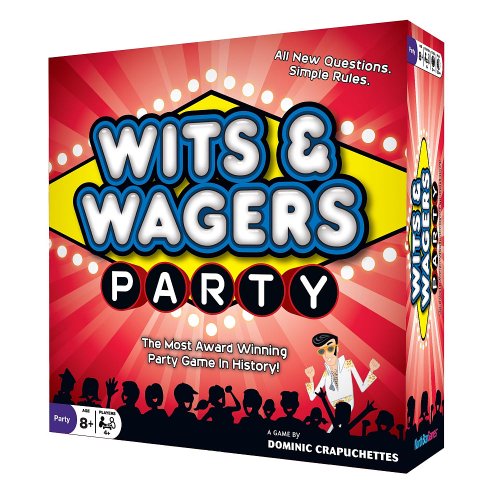
North Star Games Wits and Wagers Party
Every question here has a numerical answer, so players guess first and then bet on whose guess lands closest. That single mechanic means someone who knows nothing can still win. Setup takes seconds, and a full game runs about 25 minutes, short enough for a weeknight.
Pros
- Players who know nothing can still win
- Fast to explain and set up
- Scales easily to large groups
Cons
- All questions have numerical answers
- Needs at least four players to work well

Hasbro Trivial Pursuit Family Edition
Family Edition splits every category into adult and junior questions, letting a ten-year-old compete against a grandparent on even terms. The familiar wedge-collecting structure stays intact, minus the punishing difficulty of the classic set. Games still run long, so plan for a full evening rather than a quick round.
Pros
- Separate question sets level mixed-age play
- Familiar, satisfying wedge-collecting structure
- Strong question quality across categories
Cons
- Games run long compared with card-based trivia
- Some questions date over time

Outset Media Professor Noggin’s Trivia Card Game
Professor Noggin’s cards cover single subjects, from animals to space to history, with each card offering an easy and a hard version chosen by a die roll. That built-in difficulty switch lets children and adults share the same deck fairly. Flat card packs travel well and cost little, so families often collect several subjects.
Pros
- Die roll picks easy or hard questions fairly
- Very portable and inexpensive
- Many subject decks to collect
Cons
- Each deck covers a narrow subject
- Less engaging for adult-only groups

Hasbro Trivial Pursuit Classic Edition
Classic Edition is the full-strength original, testing general knowledge across geography, entertainment, history, arts, science and sport. Adults who actually want a challenge should start here. Casual or younger players will find it unforgiving, and a full game can stretch past ninety minutes when someone gets stuck on a category.
Pros
- Genuinely challenging general knowledge
- Deep question pool with high replay value
- The definitive trivia board game experience
Cons
- Too difficult for younger or casual players
- Games can run very long

University Games Smart Ass Board Game
Smart Ass drops turn order entirely: clues get read one at a time, and anyone can shout the answer at any point, with earlier guesses worth more. That format keeps everyone paying attention instead of waiting their turn. Lively groups thrive here, though the energy can overwhelm quieter players and younger kids who need time to think.
Pros
- No waiting for turns keeps everyone engaged
- Progressive clues reward early risk-taking
- Fast rounds suit shorter evenings
Cons
- Loud format can overwhelm quieter players
- Faster reactors dominate over more knowledgeable ones
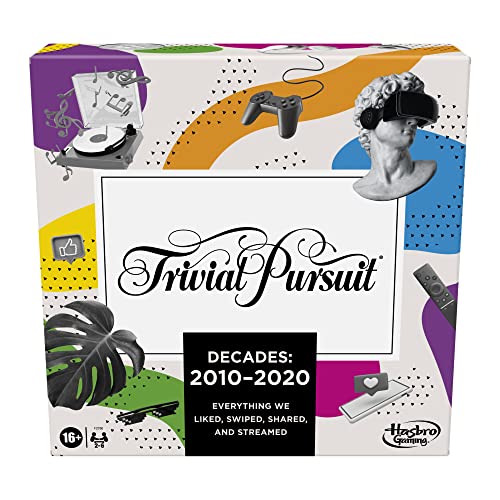
Hasbro Trivial Pursuit Decades 2010s Edition
Decades narrows the question pool to a single decade of pop culture, music, news and sport, which suits players who find classic Trivial Pursuit weighted toward older references. Younger adults and teenagers noticeably outperform on this set compared with the classic board. That narrow focus also limits replay value once a group cycles through the cards a few times.
Pros
- Levels the field for younger players
- Recognizable, enjoyable question topics
- Shorter than the classic full board game
Cons
- Narrow decade focus limits replay value
- Frustrating for players outside that age range

Endless Games Family Feud Strikeout
Family Feud Strikeout uses survey-style questions, where the goal is guessing what most people said rather than knowing a correct fact. That format suits players who feel shaky on hard trivia. Team play keeps everyone contributing, though some cards feel dated and a technically correct answer can still score zero.
Pros
- Team format encourages discussion
- Survey questions suit non-trivia players
- Familiar television format needs little explanation
Cons
- Some survey answers feel dated
- Correct answers can still score zero
How they stack up
| # | Model | Players | Best for | Score | Price |
|---|---|---|---|---|---|
| 1 | North Star Games Wits and Wagers Party | 4 to 18 | Best overall | 9.4 | Check price |
| 2 | Hasbro Trivial Pursuit Family Edition | 2 or more | Best value | 9.2 | Check price |
| 3 | Outset Media Professor Noggin’s Trivia Card Game | 2 to 8 | Best budget | 9.0 | Check price |
| 4 | Hasbro Trivial Pursuit Classic Edition | 2 to 6 | Best for serious trivia players | 8.8 | Check price |
| 5 | University Games Smart Ass Board Game | 2 to 6 | Best for fast rounds | 8.6 | Check price |
| 6 | Hasbro Trivial Pursuit Decades 2010s Edition | 2 to 6 | Best for younger adults | 8.3 | Check price |
| 7 | Endless Games Family Feud Strikeout | Teams, 4 or more | Best for team play | 8.0 | Check price |
Questions worth asking
Which trivia game works best for mixed ages?
Trivial Pursuit Family Edition splits questions into adult and junior sets, and Professor Noggin’s uses a die roll to choose easy or hard versions. Both let children and adults compete fairly.
What is the best trivia game for a large group?
Wits and Wagers Party supports up to eighteen players and finishes in about twenty five minutes, making it the easiest option for a crowd.
How long does a trivia game usually take to play?
Card and party formats run twenty to thirty minutes. Full board games such as classic Trivial Pursuit commonly take an hour or more, sometimes considerably longer.
Are trivia games good for children?
Yes, when the difficulty matches their age. Professor Noggin’s suits ages seven and up, and Trivial Pursuit Family Edition works from around eight. Classic adult trivia sets are usually too hard.
Do trivia questions become outdated over time?
They do. Questions about current events, technology and entertainment age within a few years. Decade specific editions embrace this on purpose, while general sets gradually accumulate dated references.
Can trivia games be played in teams?
Most can, and it usually improves them. Team play closes the gap between confident and hesitant players and encourages discussion. Family Feud Strikeout is built around teams from the start.
Which trivia game does not reward general knowledge?
Wits and Wagers Party, since players bet on whose numerical guess is closest rather than answering directly. Family Feud style games similarly reward predicting popular answers over facts.
How do I stop one person from dominating every game?
Pick a game with a betting or survey mechanic, play in mixed teams, or choose split difficulty question decks. A thinking timer as a house rule also stops knowledgeable players from controlling the pace.
Trivial Pursuit vs Wits and Wagers: which should I buy first?
Choose Trivial Pursuit Family Edition for a classic board game feel with fair mixed-age scoring. Choose Wits and Wagers Party for larger groups and faster rounds where facts matter less than reading the table.
Is Family Feud Strikeout good for people who dislike trivia?
Yes. Its survey format rewards guessing popular answers rather than recalling facts, which suits players who feel intimidated by traditional trivia questions.
Final word
Wits and Wagers Party keeps most groups coming back, since the betting mechanic means nobody is ever out of contention regardless of knowledge. Families with a wide age spread should reach for Trivial Pursuit Family Edition, and Professor Noggin’s card games are the cheapest way to get younger children genuinely involved.
Rachel Simmons
Rachel previously worked in child-product retail and brings a practical, detail-first eye to gear reviews, focusing on safety standards, ease of use and the fine print that matters most for new caregivers.


