Dice Games Worth Keeping in the Family Game Cabinet
Tenzi wins for fast, all ages family play, since everyone rolls at once with rules learned in seconds. Yahtzee remains the classic that quietly teaches arithmetic. Zombie Dice brings cheap, portable push your luck thrills for kids around age ten who enjoy a little risk.
Tenzi is the fastest dice game for mixed age groups, since ten dice per player means everyone finishes within minutes. Yahtzee remains the classic that sneaks arithmetic into play, and Zombie Dice adds cheap push your luck suspense for kids near age ten. Qwixx and Roll for It add light strategy and travel friendly play.
Age labels only tell part of the story, since a game that dazzles for one round can bore fast by the third. Reading level, scoring complexity and round length matter more than the box’s suggested age. We compared rule simplicity, real world age fit and replay value based on what parents and young players report, favoring games that survive a tenth playthrough.
How to choose
Match the game to your child’s actual age Printed age labels are a starting point, not a guarantee of fit. Games built around reading and scorekeeping, like Yahtzee, suit kids around age eight and up, while pass the chip games like LCR work fine at five. Look at the actual skill a game demands, not just the number on the box.
Fast rounds keep younger kids at the table Attention spans shrink fast when a turn drags on. Quick rollers such as Tenzi wrap a round in about five minutes and keep every player rolling at once, cutting the downtime that leads to squirming. Save longer scoring games for kids with more patience for turns.
Balance luck against strategy for the group Pure luck games level the field, letting a five year old beat an adult, which keeps things fair for the youngest players at the table. Titles with light choices, like Qwixx, add just enough strategy to stay interesting for older siblings without overwhelming beginners. Mixed age groups often do best with a game from each category in rotation.
Prioritize replay value over a flashy first round The strongest dice games survive dozens of playthroughs without feeling stale. Built in variations and push your luck tension, as in Tenzi and Zombie Dice, keep rounds fresh over time. Single mode games with no variation tend to feel repetitive after just a few sessions.
Our top picks

Tenzi Dice Game
Every player races to roll all ten of their own dice to a matching number, so rounds finish in minutes rather than dragging. Included variation cards keep the game fresh across dozens of family nights. A wide age range can join without reading a rulebook first.
Pros
- Rules click in under a minute
- Rounds move fast and stay loud
- Bundled variation cards add replay value
Cons
- Volume climbs fast with excited players
- Offers little depth for strategy minded kids

Hasbro Yahtzee Classic
Five dice and a score sheet have taught generations of kids to add, compare and plan ahead. Scoring categories reward basic probability thinking without feeling like a math lesson. Adults enjoy it as much as kids, which keeps it in rotation on family game night.
Pros
- Builds arithmetic and probability skills naturally
- Playable and fun across a wide age range
- Rules are widely known already
Cons
- Score sheet requires some reading ability
- Runs longer than quick roll and go games

Zombie Dice Game by Steve Jackson Games
Players draw and roll custom dice to collect brains while risking a shotgun blast that ends their turn. That push your luck tension keeps kids around age ten fully engaged. A compact cup travels easily to restaurants and car trips.
Pros
- Push your luck mechanic creates real tension
- Compact cup travels well
- Scales up to eight players at once
Cons
- Better suited to older kids than young ones
- Zombie theme is mildly spooky for sensitive players
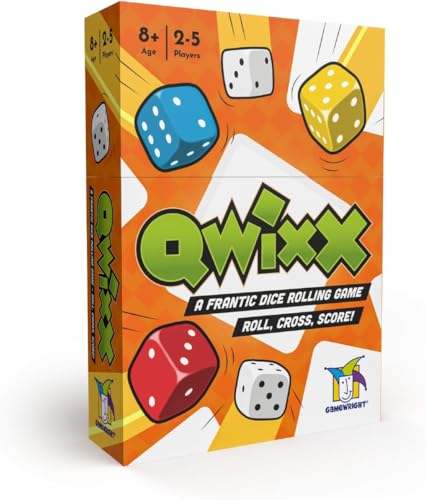
Qwixx Dice Game by Gamewright
Players mark numbers across colored rows using every roll, not just their own, so downtime between turns nearly disappears. Meaningful choices about which numbers to lock in teach sequencing and light planning. Score pads are replaceable but do run out eventually.
Pros
- Every player acts on every roll
- Simple rules hide real decision making
- Sequencing practice suits early strategy fans
Cons
- Score pads are a recurring cost
- Larger numbers can challenge younger players

LCR Left Center Right Dice Game
Players pass chips left, center or right based on dice symbols, and nobody needs to read a rule to join in. Grandparents and five year olds compete on equal footing since outcomes rely entirely on luck. A round typically wraps up in about ten minutes.
Pros
- No reading required to play
- Scales easily to large family gatherings
- Pure luck keeps young kids competitive
Cons
- Offers zero strategic decisions
- Small chips scatter and get lost easily

Roll for It! Dice Game by Calliope Games
Dice get rolled to match combinations printed on cards, then claimed for points in a format that packs into a bag. Light targeting choices add just enough strategy without slowing the pace. Setup takes seconds at a restaurant table.
Pros
- Compact enough for travel bags
- Blends luck with light strategic choice
- Quick to teach new players
Cons
- Cards bend and wear with repeated use
- Runs slower than pure roll and win games

Farkle Dice Game by PlayMonster
Six dice and a scoring chart ask kids to weigh banking points against risking everything on the next roll. A metal tin keeps the set compact and durable for years. Round length stays short enough to hold shorter attention spans.
Pros
- Low price point for a durable set
- Teaches risk versus reward decision making
- Storage tin travels and stores easily
Cons
- Scoring rules take a few rounds to learn
- Fewer dice included than party focused sets
Side by side
| # | Model | Players | Best for | Score | Price |
|---|---|---|---|---|---|
| 1 | Tenzi Dice Game | 2 to 4 | Best overall | 9.4 | Check price |
| 2 | Hasbro Yahtzee Classic | 2 or more | Best classic | 9.1 | Check price |
| 3 | Zombie Dice Game by Steve Jackson Games | 2 to 8 | Best push-your-luck | 8.9 | Check price |
| 4 | Qwixx Dice Game by Gamewright | 2 to 5 | Best for light strategy | 8.7 | Check price |
| 5 | LCR Left Center Right Dice Game | 3 or more | Best for big groups | 8.4 | Check price |
| 6 | Roll for It! Dice Game by Calliope Games | 2 to 4 | Best for travel | 8.2 | Check price |
| 7 | Farkle Dice Game by PlayMonster | 2 or more | Best budget | 8.0 | Check price |
Frequently asked questions
What is the best dice game for young kids?
Tenzi works well since rules click in seconds and everyone rolls at the same time, avoiding any wait. For kids who cannot read yet, a no reading game like LCR works even better because outcomes rely purely on luck.
At what age can kids start playing Yahtzee?
Most children manage Yahtzee around age eight, once they can add up dice and read the score sheet independently. Younger kids can still join on a team with an adult handling the scoring categories.
Do dice games actually help with math skills?
Yes. Titles like Yahtzee and Farkle have kids add totals, compare outcomes and weigh scoring choices, reinforcing arithmetic through play rather than drills. The math stays hidden inside the fun.
Which dice game works best for a big family gathering?
LCR suits large groups since it needs no reading, moves fast, and welcomes any number of players. Zombie Dice also scales well and adds a bit more suspense for older relatives.
What dice game travels well for trips?
Compact sets like Zombie Dice and Roll for It pack into a small bag and set up in seconds, making them easy to bring to restaurants or road trips. Look for a cup or tin that keeps all the dice together.
How long does a typical dice game round take?
Quick rollers like Tenzi finish a round in about five minutes, while scoring games such as Yahtzee run closer to twenty. Match the length to your child’s attention span and the time available.
Can these dice games work with just two players?
Several do. Tenzi, Yahtzee, Qwixx and Roll for It all play well with two people, though party style games like LCR shine more with a larger group.
Are push your luck games too intense for young kids?
Titles like Zombie Dice and Farkle add mild risk and reward tension that most kids around age eight and up enjoy. The suspense stays light and the themes remain family friendly.
Tenzi vs Yahtzee: which should we buy first?
Tenzi teaches faster and suits younger kids better, since rounds finish in minutes with almost no rules to learn. Yahtzee rewards patience with real arithmetic practice, making it the better second purchase once kids can read a score sheet.
Our pick
Tenzi is the dice game most families should start with, since rounds move fast and nearly any age understands it instantly. Yahtzee adds a classic that builds math skills over time, and Zombie Dice gives older kids a taste of push your luck suspense.
Rachel Simmons
Rachel previously worked in child-product retail and brings a practical, detail-first eye to gear reviews, focusing on safety standards, ease of use and the fine print that matters most for new caregivers.


