How to Pick a Tennis Racquet That Matches Your Swing
Babolat Pure Drive leads for club players who generate their own pace and want depth without extra effort. Wilson Clash 100 v3 suits players managing elbow or wrist discomfort. HEAD Ti.S6 fits beginners who need a light, oversized head for free power. Each targets a different swing style.
Swing speed matters more than skill level when picking a racquet. Fast, full swings suit control frames like the Wilson Pro Staff 97 v14. Slower, shorter swings need built in power, which is where the HEAD Ti.S6 and Wilson Ultra Power 100 come in. Most club players land in between, and the Babolat Pure Drive covers that middle ground best.
Marketing sorts racquets by player level, yet that label ignores swing mechanics. A long looping swing generates its own pace, so it needs mass and a tighter pattern to hold the ball in court. Short, compact swings need the frame to supply that pace instead. We compared head size, strung weight, balance point, stiffness rating and string pattern across seven current listings, then checked those numbers against what owners report about comfort and stability.
How to pick the right one
How to match a tennis racquet to your swing Swing length and speed matter more than any player level label on the box. Full, fast swings generate their own pace, so control frames around 97 to 100 square inches at 11.5 ounces or heavier keep shots in bounds. Compact or slower swings need the opposite: a larger head, lighter weight and a head heavy balance supply the missing power. Start with swing style, then narrow by comfort and pattern.
Which stiffness rating is best for your arm Stiffer frames return more energy to the ball, along with more shock to the arm. Players managing elbow or wrist trouble gain more comfort from a flexible frame and a soft multifilament string than from any grip or dampener. Healthy arms chasing free depth benefit from extra stiffness instead. This single tradeoff explains most of the gap between the Pure Drive and the Clash.
16 x 19 vs 18 x 20 string pattern: how spin changes An open 16 x 19 pattern lets strings move and snap back, producing more spin and a softer feel, though strings wear faster this way. Denser 18 x 20 patterns flatten ball flight for predictable control and last longer between restrings. Most club players do better with the open pattern unless they break strings weekly.
Do grip size and string tension matter as much as the frame A grip that runs too small forces a harder squeeze, a common contributor to arm pain. Measure from the middle crease of the palm to the tip of the ring finger for a starting point, then remember an overgrip adds roughly a sixteenth of an inch. Tension reshapes how any single frame plays, so adjusting it is worth trying before buying a new racquet.
What we recommend

Babolat Pure Drive
Babolat built this frame around a stiff layup and open string spacing, a combination that turns a fast swing into heavy topspin depth. Club level players find it forgiving, yet it still rewards clean technique. Owners report harsh feedback when strings sit too tight or contact comes late.
Pros
- Produces effortless depth on baseline drives
- Open string pattern adds heavy topspin
- Stays stable when blocking back pace
Cons
- Stiff layup can transmit shock to the arm
- Overpowers touch shots close to the net

Wilson Clash 100 v3
Wilson engineered flex into this frame rather than resisting it, which is why players managing elbow trouble often switch to it. Contact still lands accurately despite the give in the hoop. Anyone pushed off court by a stiffer racquet should consider it first.
Pros
- Comfortable through contact for sore joints
- Holds directional control despite its flex
- Manoeuvrable at net for quick volleys
Cons
- Delivers less raw power than stiffer frames
- Feels soft against very heavy hitters
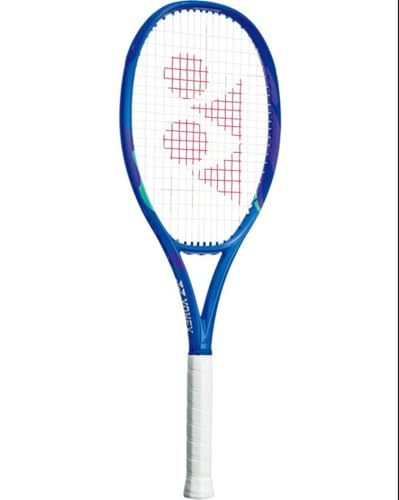
Yonex EZONE 100
Yonex shaped this head isometrically, stretching the usable hitting area toward the upper hoop. Stiffness sits between the Pure Drive and the Clash, so power arrives without harsh feedback. Serve returns benefit most, since the larger sweetspot forgives imperfect timing.
Pros
- Wide sweetspot from the isometric head shape
- Balances power with a comfortable feel
- Reliable on mishit serve returns
Cons
- Less plush feel than the softest frames
- Not built for flat, hard hitting control players

Wilson Pro Staff 97 v14
Extra mass and a denser build define this control frame for players who already generate their own pace. Precise contact matters, since the smaller head punishes late footwork. Beginners should avoid it, but strong flat hitters gain real depth control.
Pros
- Directs flat drives with real precision
- Ploughs through pace without losing stability
- Delivers a classic connected feel at net
Cons
- Requires a full, fast swing to find depth
- Small sweetspot punishes off centre contact

HEAD Boom MP
Mid weight construction gives this racquet a comfort lean while keeping enough mass for doubles exchanges. Players graduating from a light beginner frame fit its profile well. Open string spacing keeps topspin within easy reach.
Pros
- Bridges the gap from lighter beginner frames
- Stays comfortable without feeling too soft
- Handles both baseline rallies and net play
Cons
- Lacks a standout strength versus rivals
- Falls short of dedicated power or control frames

HEAD Ti.S6
Decades of popularity back this ultralight, oversized frame, which sends the ball deep with minimal swing effort. Stability suffers against harder hitters as a tradeoff. Social players and returning beginners get the most out of it.
Pros
- Weighs very little and swings easily
- Oversized head forgives off centre contact
- Adds depth without a long swing
Cons
- Twists against heavy incoming pace
- Head heavy balance tires the wrist over time

Wilson Ultra Power 100
Recreational courts and holiday matches suit this light, factory strung frame better than league play. Comfort and easy swing speed come standard, alongside enough head size to keep rallies alive. Serious improvers will outgrow it within a season or two.
Pros
- Arrives pre strung and ready for play
- Stays light for occasional, casual players
- Absorbs mishits comfortably
Cons
- Lacks stability for competitive matches
- Offers limited control on aggressive swings
The lineup, side by side
| # | Model | Head size | Best for | Score | Price |
|---|---|---|---|---|---|
| 1 | Babolat Pure Drive | 100 square inches | Best overall | 9.4 | Check price |
| 2 | Wilson Clash 100 v3 | 100 square inches | Best for arm comfort | 9.2 | Check price |
| 3 | Yonex EZONE 100 | 100 square inches | Best for spin and feel | 9.0 | Check price |
| 4 | Wilson Pro Staff 97 v14 | 97 square inches | Best for control players | 8.8 | Check price |
| 5 | HEAD Boom MP | 100 square inches | Best for improving intermediates | 8.6 | Check price |
| 6 | HEAD Ti.S6 | 115 square inches | Best budget | 8.3 | Check price |
| 7 | Wilson Ultra Power 100 | 100 square inches | Best for casual social play | 8.0 | Check price |
Questions worth asking
What racquet should a beginner buy?
Light frames around 9 to 10 ounces strung, with a head size of 100 square inches or larger, work best. That combination swings easily and forgives off centre contact. Heavy control frames ask for a developed swing before they produce any depth.
Does a heavier racquet actually help my game?
Extra mass resists twisting and drives through the ball against pace. It backfires if fatigue breaks down your form by the third set. Pick the heaviest frame you can still swing with good technique deep into a match.
Which racquet is best for tennis elbow?
A flexible frame strung with soft multifilament or natural gut at moderate tension helps most. Wilson Clash models get recommended often for this reason. Technique and string choice matter just as much as the frame itself.
How often should I restring a tennis racquet?
Restring frequency commonly ties to how often you play in a week. Three sessions a week suggests roughly three restrings a year as a baseline. Polyester strings lose playability long before they snap, and waiting for a break usually means weeks on dead strings.
Does head size change how much spin I get?
Only indirectly. Larger heads carry longer main strings that move more, which can assist spin, but string pattern and string type matter more. Pairing an open pattern with a shaped polyester string is the usual setup for heavy topspin.
Should I buy the same racquet a pro uses?
Swing similarity matters more than brand loyalty here. Pro frames typically carry added lead weight and far tighter string tension than retail versions. A stock retail model plays as a genuinely different racquet from the tour setup.
How do I choose the right grip size?
Hold the racquet and check for a finger sized gap between your fingertips and palm. Between sizes, pick the smaller grip and build it up with an overgrip. Material can be added later, but it cannot be removed.
Is a pre strung racquet good enough for casual play?
For social and occasional matches, yes. Factory strings are usually basic synthetic gut at a middling tension, which handles recreational rallies fine. Weekly players chasing spin or comfort will notice more from a custom string job.
Babolat Pure Drive vs Wilson Clash 100: which is better?
Pure Drive suits players who want free depth and can tolerate a stiffer feel. Clash 100 suits players prioritizing arm comfort over outright power. Neither beats the other outright, since the choice depends on swing speed and joint health.
Can an oversized head racquet help my game improve?
An oversized head like the HEAD Ti.S6 forgives off centre contact and helps beginners find depth sooner. It loses stability against harder hitters as skill grows. Many players size down to a 100 square inch frame once technique develops.
The verdict
Babolat Pure Drive remains the strongest all round choice for club players who generate their own pace. Wilson Clash 100 v3 takes over when arm comfort limits play, and Wilson Pro Staff 97 v14 rewards players who already swing fast and want tighter control. Newer players do better starting light with the HEAD Ti.S6, then moving to a denser frame as the swing develops.
Derek Holt
Derek has a background coaching recreational and amateur athletes and has worked the sales floor at specialty fitness retailers. He focuses on equipment durability, ergonomics and realistic use cases rather than marketing claims.