Streaming Box Shootout: Apple TV vs Roku vs Fire TV
The Apple TV 4K (3rd generation) leads on speed, picture processing and years of software support. The Roku Ultra pairs the most neutral app catalogue with the best remote. The Amazon Fire TV Stick 4K Max is the value pick for a second television.
The important differences between streaming boxes rarely show up in a spec sheet. What matters is how long the manufacturer keeps issuing updates and whether the home screen pushes its own content ahead of yours. The Apple TV 4K (3rd generation) stays quick for years and handles Dolby Vision and Atmos without fuss, the Roku Ultra pairs a genuinely useful remote with the broadest app catalogue, and the Amazon Fire TV Stick 4K Max covers a second room cheaply.
We compared processor performance, HDR format support, wired network options and remote features like voice search and lost-remote finders. Owner reports on slowdown after a couple of years filled in what the spec sheets leave out.
The shortlist, ranked

Apple TV 4K (3rd generation)
Longevity is the real reason this stays on top. The processor sits far ahead of what streaming actually needs, so it still feels instant years later when rivals have started to stutter. Dolby Vision and Dolby Atmos are both supported, and the Siri Remote is the sturdiest handset in the category. Owners report the clean home screen, free of sponsored rows, is a real daily benefit.
Pros
- Stays fast for years
- No sponsored content on the home screen
- Excellent remote with rechargeable battery
Cons
- Costs more than any rival
- Ethernet only on the higher storage model
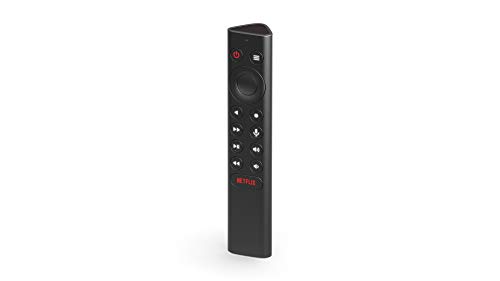
NVIDIA SHIELD TV Pro
USB ports and generous storage let this device run as its own Plex server, which is why it remains the pick for anyone running a home media setup. Artificial intelligence upscaling genuinely improves older content on a large screen. Owners report NVIDIA has supported this device with updates for an unusually long stretch.
Pros
- Runs as a Plex media server
- USB ports for local storage
- Long record of software updates
Cons
- Android TV interface is busier than rivals
- Overkill if you only use streaming apps

Roku Ultra
Nearly every app is carried here without favoring one service over another, which suits households juggling several subscriptions at once. The Voice Remote Pro recharges over USB, includes a lost-remote finder and adds a headphone jack for private listening. Owners report the wired Ethernet port solves buffering in homes with weak Wi-Fi.
Pros
- Broadest and most neutral app catalogue
- Excellent remote with headphone jack
- Wired Ethernet included
Cons
- Home screen carries banner advertising
- Interface looks dated next to rivals
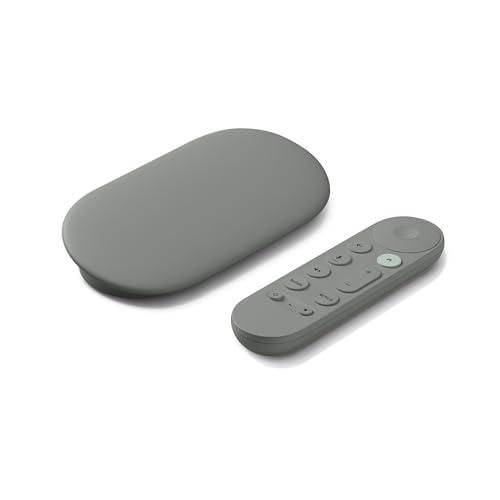
Google TV Streamer 4K
Recommendations from every service pull into one row here, with a single watchlist that spans apps instead of living inside each one separately. A Thread radio and Matter support let it double as a smart home hub. Owners report the Ethernet port and improved storage fixed the main complaints about older Chromecast dongles.
Pros
- Best cross app recommendations
- Doubles as a smart home hub
- Ethernet built in
Cons
- Home screen pushes Google content
- Ties you to a Google account
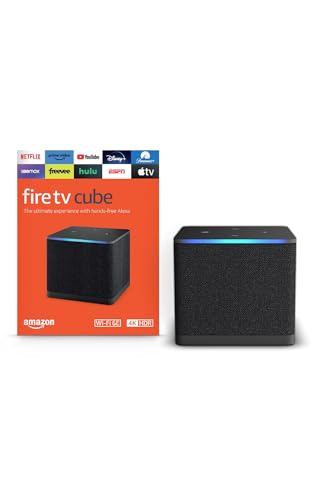
Amazon Fire TV Cube (3rd Gen)
No remote is needed to change inputs, start a show or dim the lights, since this device listens from across the room. An HDMI input lets it sit between a cable box and the television, controlling both. Owners report it is the fastest device in the Fire TV range, avoiding the sluggishness that affects the cheaper sticks.
Pros
- Hands free voice control across the room
- HDMI input for a set top box
- Fastest device in the Fire TV range
Cons
- Interface heavily promotes Amazon content
- Larger than a typical streaming box

Amazon Fire TV Stick 4K Max
A bedroom or spare room television gets 4K, Dolby Vision and Atmos from a stick small enough to hide behind the screen. Wi-Fi 6E support helps in busy households running congested networks. Owners report it runs noticeably quicker than the standard 4K stick, worth the small step up in price.
Pros
- Very affordable for full 4K HDR
- Hides behind the television
- Fast Wi-Fi for congested homes
Cons
- No Ethernet without an adapter
- Advertising heavy home screen

Roku Express 4K Plus
An older 4K television gets Roku’s full app catalogue here at the lowest sensible outlay, paired with a simple remote and a small box that tucks behind the screen. Dolby Vision and Ethernet are skipped to hit the price. Owners report it stays quick enough for casual viewing in a spare room.
Pros
- Lowest cost route to Roku apps
- Small and easy to hide
- Straightforward remote
Cons
- No Dolby Vision or Atmos
- Wi-Fi only, no wired option
The lineup, side by side
| # | Model | Video | Best for | Score | Price |
|---|---|---|---|---|---|
| 1 | Apple TV 4K (3rd generation) | 4K with Dolby Vision and HDR10 Plus | Best overall | 9.4 | Check price |
| 2 | NVIDIA SHIELD TV Pro | 4K with Dolby Vision | Best for enthusiasts | 9.2 | Check price |
| 3 | Roku Ultra | 4K with Dolby Vision and HDR10 Plus | Best neutral platform | 9.0 | Check price |
| 4 | Google TV Streamer 4K | 4K with Dolby Vision | Best for content discovery | 8.8 | Check price |
| 5 | Amazon Fire TV Cube (3rd Gen) | 4K with Dolby Vision and HDR10 Plus | Best for voice control | 8.6 | Check price |
| 6 | Amazon Fire TV Stick 4K Max | 4K with Dolby Vision and HDR10 Plus | Best value | 8.3 | Check price |
| 7 | Roku Express 4K Plus | 4K with HDR10 Plus | Best budget | 8.0 | Check price |
Before you buy
Which platform should you pick before the hardware? The device lived with day to day is the interface, not the chip inside it. Apple keeps its home screen clean, Roku stays neutral and shows almost everything, Google pushes discovery across services, and Amazon promotes its own catalogue heavily. Think about which home screen gets seen thousands of times, since that decision matters more than a small difference in processor speed.
Do the HDR formats on your TV actually matter? Dolby Vision, HDR10 Plus and plain HDR10 are not interchangeable. A television that handles Dolby Vision gets noticeably better contrast and color from a box that outputs it. A set that only does HDR10 gains nothing today from paying extra for Dolby Vision support, though it does future proof the box for the next television.
Will wired networking fix buffering complaints? Wi-Fi drops and congestion cause most streaming problems, especially in apartments and homes running many devices. A box with an Ethernet port removes that variable entirely. When running a cable is impractical, look for Wi-Fi 6 or 6E support, which handles crowded networks far better than older standards, and place the box within line of sight of the router.
How long should a streaming box realistically last? Streaming boxes slow down as apps grow more demanding, and a device with a modest processor can feel sluggish within two or three years. Paying more for headroom is the difference between replacing it soon and keeping it for five years. Update support matters just as much, since a device that stops receiving updates eventually loses app compatibility.
Good to know
Do I need a streaming box if my TV is already smart?
Often yes. Built-in smart platforms tend to slow down faster than dedicated boxes, receive updates for less time, and sometimes lack apps. A separate box also lets you keep the same interface when you replace the television.
What is the difference between a streaming stick and a streaming box?
A stick plugs directly into the HDMI port and hides behind the screen, powered by USB. A box sits on the shelf and usually has a faster processor, more storage and connections such as Ethernet and USB. Boxes stay quick for longer.
Does Dolby Vision actually make a visible difference?
On a television that supports it properly, yes. Dolby Vision carries scene-by-scene metadata, which typically means better shadow detail and more consistent brightness than static HDR10. On a budget set with limited peak brightness, the gap narrows considerably.
Will a streaming box improve buffering?
It can, particularly a model with Ethernet or newer Wi-Fi. Buffering usually comes from network conditions rather than the device itself, so a wired connection is the single most effective fix in a congested home.
Can I use one streaming box on several televisions?
It can move between rooms, but each screen needs its own device to be used at the same time. Sticks are the practical choice for secondary televisions because of their cost and how they tuck out of sight.
Do streaming boxes work without a subscription?
The hardware works out of the box, and every platform includes free ad-supported channels. Paid services still need their own subscriptions, signed into within each app.
Which platform has the most streaming apps?
Roku has historically carried the broadest catalogue, including many niche and local channels. Major services sit on every platform, so app choice only becomes a deciding factor for smaller or regional providers.
Are streaming box remotes rechargeable?
Some are. The Apple Siri Remote and Roku Voice Remote Pro both recharge over USB, while most Fire TV and entry level Roku remotes use replaceable batteries. Remote finder features are worth having if the handset regularly disappears down the sofa.
Apple TV vs Roku, which should I actually buy?
Apple TV wins on speed and longevity but costs the most. Roku wins on app neutrality and value, especially for households juggling several streaming subscriptions across different platforms.
Our take
The Apple TV 4K (3rd generation) is the box worth buying for a main television, since it stays quick long after cheaper devices have started to lag and keeps advertising off the home screen. The Roku Ultra is the better neutral choice for multi service households, and the Fire TV Stick 4K Max covers spare rooms cheaply.
Marcus Chen
Marcus covered consumer electronics for enthusiast tech publications for six years before joining ChoiceCrest. He specializes in translating manufacturer spec sheets into plain-language buying advice, with a focus on audio, computing accessories and smart-home gear.