Small Shelf, Real Stereo Sound: Seven Systems Compared
Panasonic SC-PM250 leads for balanced CD, Bluetooth and FM playback through detachable two-way speakers. Budget shoppers get similar features from the Jensen JMC-180 in a smaller three-piece build. For fuller sound in the same footprint, the Yamaha MCR-B043BL pairs a stronger amplifier with real bookshelf cabinets instead of thin satellites.
Panasonic SC-PM250 suits most shelves best. Detachable two-way speakers throw more sound than a sealed one-piece cabinet, while a single amp still handles CD, Bluetooth and FM/AM. It fits anyone replacing an old boombox who wants real stereo separation without stacking components. Its plain black finish reads utilitarian rather than retro, the main tradeoff against pricier designs.
Shelf systems split into two designs: an all-in-one box like the Bose Wave with speakers sealed into the cabinet, and a component style like the Panasonic or Yamaha with detachable satellites that widen the stereo image. Sealed cabinets save shelf space and skip speaker wire, while component designs sound fuller but need more room. We compared rated wattage, input formats, speaker separation and control layout, then weighed owner reports on remote reliability, Bluetooth pairing range and CD tray durability.
What we recommend

Panasonic SC-PM250
Panasonic pairs a slim CD/MP3 deck with a two-way speaker pair that detaches for wider stereo spread. Bluetooth streams from a phone while the FM/AM tuner still catches local stations, and a credit-card remote handles volume and track skip from across the room. Total rated output reaches 20 watts RMS, enough to fill a bedroom or den without distortion.
Pros
- Detachable speakers widen the stereo image
- CD tray reads CD-R and CD-RW discs
- Remote covers volume, track skip and tuner
Cons
- No aux-in for older devices
- Bluetooth skips NFC pairing

Jensen JMC-180
Jensen ships a compact center unit with two small satellite speakers that plug in using included cables, closer to a soundbar than a full component stack. A digital PLL tuner locks FM and AM stations, and CD playback covers standard and CD-R discs. Output stays modest, better suited to a bedroom desk than an open living room.
Pros
- Lowest-cost way into a three-piece system
- Detachable speakers still separate stereo channels
- Compact footprint fits small desks
Cons
- Low wattage struggles to fill larger rooms
- Plastic cabinet feels light next to pricier sets
Sony CMT-SBT20
Sony drops the CD drive entirely and builds around Bluetooth with NFC one-touch pairing, USB playback and an FM tuner. That shrinks the main unit enough to fit a narrow shelf. Two matching speaker cabinets connect by cable and sit apart for stereo width, and 20 combined watts covers a studio apartment without needing floor space for a receiver.
Pros
- Small main unit suits narrow shelves
- NFC pairs a phone in one tap
- USB port plays audio straight from a drive
Cons
- No CD player for disc collections
- FM only, no AM band

Yamaha MCR-B043BL
Yamaha fits a 30 watt per channel amplifier into a unit paired with dedicated bookshelf speaker cabinets rather than thin satellites. Bass runs deeper and highs stay cleaner than boombox-style systems typically manage. A CD player, Bluetooth and a front USB port for charging cover common sources, though the wider cabinets need more shelf width than compact all-in-ones.
Pros
- Stronger amp drives real bookshelf speakers
- Noticeably fuller bass than satellite systems
- USB port charges a phone during playback
Cons
- Wider footprint than compact all-in-ones
- FM only, no AM tuner

LG XBOOM CM4590
LG builds the CM4590 around tower speaker cabinets rated for high combined output, with a CD player, Bluetooth, USB and a microphone input for karaoke in the center console. Multicolor LED lighting syncs to the beat, suiting a living room gathering more than background listening. Larger cabinets take up noticeably more shelf and floor space than compact micro systems.
Pros
- High output fills a large room easily
- Mic input adds karaoke without extra gear
- LED lighting effects suit parties
Cons
- Large cabinets need floor or wide shelf space
- Power output is overkill for quiet background listening

Bose Wave Music System IV
Bose seals patented waveguide speakers inside a single cabinet instead of wiring detached satellites, so setup is a power cord and nothing else. CD playback, an FM/AM tuner and an aux-in cover wired sources, while a separate Bluetooth adapter, sold on its own, adds wireless streaming. The single-box design trades stereo width for a clean look and zero speaker wire.
Pros
- No speaker wires or separate cabinets to place
- Compact single footprint fits a narrow shelf
- Remote and display stay simple to use
Cons
- Bluetooth needs a separate adapter purchase
- Narrower stereo image than two-speaker systems
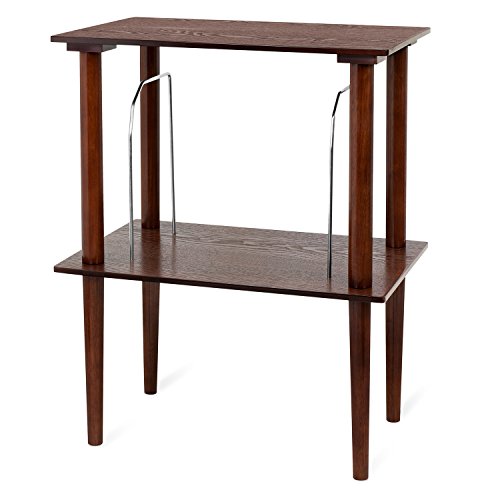
Victrola Music Center 50
Victrola centers this system on a belt-drive three-speed turntable, then adds a CD player, Bluetooth and an FM tuner so one shelf handles records, discs and phone audio. Dual detachable stereo speakers connect by cable for real stereo separation instead of a single grille. It suits a listener building a record collection who still wants CD and Bluetooth as backup, though the amp favors midrange over deep bass.
Pros
- Only pick here with a built-in turntable
- Detachable speakers separate stereo channels
- Covers vinyl, CD and Bluetooth in one shelf system
Cons
- Bass runs lighter than dedicated bookshelf speakers
- No AM band for talk radio
The lineup, side by side
| # | Model | Power output | Best for | Score | Price |
|---|---|---|---|---|---|
| 1 | Panasonic SC-PM250 | 20W RMS total | Best overall | 9.4 | Check price |
| 2 | Jensen JMC-180 | 2W RMS per channel | Best budget | 9.2 | Check price |
| 3 | Sony CMT-SBT20 | 20W total (2x10W) | Best for small shelves | 9.0 | Check price |
| 4 | Yamaha MCR-B043BL | 30W RMS per channel | Best sound quality | 8.8 | Check price |
| 5 | LG XBOOM CM4590 | 700W total | Best for parties | 8.6 | Check price |
| 6 | Bose Wave Music System IV | Internal amplifier, no published wattage | Best all-in-one design | 8.3 | Check price |
| 7 | Victrola Music Center 50 | 3-speed belt-drive (33/45/78) | Best for vinyl records | 8.0 | Check price |
What to look for
All-in-one versus component shelf systems A stereo shelf system is either one sealed cabinet with speakers built in, like the Bose Wave, or a component style with a separate amplifier and two detachable speakers, like the Panasonic or Yamaha. Sealed designs need no speaker wire and fit a narrow shelf, but sound stays centered in one box. Detachable speakers spread across a wider shelf for real stereo separation. Anyone upgrading from a phone speaker or old boombox notices the difference in stereo width first.
How much amplifier power actually matters Rated wattage ranges from about 2 watts per channel on entry-level three-piece sets up to 700 combined watts on party-oriented towers like the LG XBOOM. A bedroom or home office rarely needs more than 20 to 30 watts total. Distortion at low volume usually comes from cheap drivers, not a lack of power. Save the higher wattage tiers for open living rooms or gatherings where the system competes with conversation and noise.
Which inputs does a shelf system need Bluetooth now covers most day-to-day listening from a phone, so treat it as the baseline rather than a bonus. CD playback still matters for anyone with an existing disc collection. A few systems, like the Victrola Music Center, add a turntable for vinyl instead. FM/AM tuners persist as a radio fallback, though newer compact models such as the Sony CMT-SBT20 drop AM entirely. Check for an aux-in or USB port if older MP3 players need to connect.
Matching the footprint to your shelf Detachable-speaker systems need enough width to place two cabinets apart, typically two to three feet for real stereo spread. Sealed all-in-one units fit a single narrow slot instead. Studio apartments and dorm shelves favor compact designs like the Sony CMT-SBT20 or the Bose Wave, where footprint matters more than maximum output. Larger rooms with a media console can spread component speakers wider for a fuller soundstage. Anyone adding a turntable should confirm the shelf sits level, since vibration causes needle skip.
Common questions
What is a stereo shelf system?
A compact stereo built to sit on a shelf or console, combining an amplifier, a source like CD or Bluetooth, and either built-in or detachable speakers in one package. It replaces a separate receiver, disc player and bookshelf speakers with fewer boxes and cables.
How much power do I need for a shelf system?
Twenty to thirty watts total covers a bedroom, office or small living room without distortion. Reserve higher tiers, like the LG XBOOM CM4590 at 700 watts, for large open rooms or parties where the system competes with noise.
Bluetooth or CD: which format matters more on a shelf system?
Bluetooth covers daily phone listening and works on nearly every current model, so treat it as the default. Keep CD on the checklist only if physical discs are part of the collection, since compact systems like the Sony CMT-SBT20 skip the drive to save space.
Can a stereo shelf system play vinyl records?
Most cannot, since CD and Bluetooth systems skip the turntable and phono stage entirely. The Victrola Music Center 50 is a rare exception, building a three-speed turntable into the same shelf system as CD and Bluetooth.
What is the best stereo shelf system for a small apartment?
The Sony CMT-SBT20 keeps a narrow main unit and compact speaker pair, well suited to a dorm or studio shelf. The Bose Wave Music System IV works even better where width is limited, since its speakers sit inside one sealed cabinet.
What is the difference between component speakers and an all-in-one design?
Component systems, like the Panasonic SC-PM250 or Yamaha MCR-B043BL, run a separate amplifier to two detachable speakers spaced apart for real stereo width. All-in-one designs, like the Bose Wave, seal both speakers inside a single cabinet for a simpler, wire-free setup.
Do stereo shelf systems still have AM/FM radio?
Many do, though coverage varies by model. The Panasonic SC-PM250 and Jensen JMC-180 include both AM and FM, while newer compact models like the Sony CMT-SBT20 and Yamaha MCR-B043BL carry FM only.
How long do stereo shelf systems typically last?
A well-built system runs five to ten years before a CD drive or Bluetooth chip becomes the failure point. Turntable belts on systems like the Victrola Music Center wear faster and need replacing every few years with normal use.
Is a higher wattage shelf system always better?
No. A bedroom or office rarely uses more than 20 to 30 watts before neighbors complain. High-wattage towers like the LG XBOOM suit parties and open rooms, not everyday background listening.
The bottom line
The Panasonic SC-PM250 suits most shelves, since detachable speakers deliver real stereo width while one box still handles CD, Bluetooth and FM/AM. Anyone building a vinyl collection should skip straight to the Victrola Music Center 50, the only system here with a built-in turntable alongside CD and Bluetooth. For a tight apartment shelf where width is the real constraint, the Sony CMT-SBT20 trades the CD drive for a smaller footprint and still streams from a phone in one tap.
Marcus Chen
Marcus covered consumer electronics for enthusiast tech publications for six years before joining ChoiceCrest. He specializes in translating manufacturer spec sheets into plain-language buying advice, with a focus on audio, computing accessories and smart-home gear.