Which Squat Rack Fits Your Garage or Basement?
HulkFit Pro Series Multi-Function Adjustable Power Cage leads for most home gyms, rated to 1000 pounds with dip bars and a multi grip pull up bar. Fitness Reality 810XLT offers 19 height positions for less. Papababe Squat Rack fits under joists a cage cannot clear.
HulkFit Pro Series 1000-Pound Multi-Function Adjustable Power Cage earns the default slot in garages with roughly 7 feet of clearance. Four uprights and a 1000 pound rating let you fail a squat safely with nobody spotting. Ceiling height is the hard limit, since the pull up bar sits at the top of an 83 inch frame.
Rack listings blend load ratings, steel gauge and safety design into one headline number, which hides what actually matters. Rated capacity means little when the uprights sit too wide to catch a dropped bar. Hole spacing decides how precisely bench safeties land, and that detail separates racks far more than the rating does. We compared load ratings, tube dimensions, adjustment spacing, total height, attachment options and floor footprint, then used owner feedback on bolt alignment and assembly quality to break ties.
The top picks, ranked
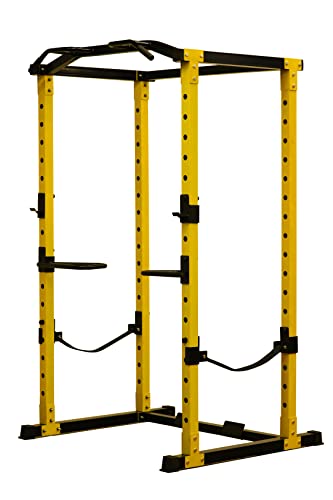
HulkFit Pro Series 1000-Pound Multi-Function Adjustable Power Cage
Four uprights and a 1000 pound rating cover squats, bench press and rack pulls with nobody spotting. Steel tubing measures 2 by 2 inches, and a multi grip pull up bar spans the top for neutral, wide and standard hand positions. Dip bars and safety bars ship in the box, so nothing essential becomes a second order.
Pros
- Four post frame catches a failed rep from either side
- Multi grip bar covers three pull up hand positions
- Dip bars arrive included rather than sold separately
Cons
- Needs close to 7 feet of ceiling clearance
- Assembly of the 83 inch frame takes two people

Fitness Reality 810XLT Super Max Power Cage
Nineteen height positions along the uprights beat the spacing on most cages in this bracket. Finer steps matter when setting bench safeties just above chest height. Rated to 800 pounds, it covers the loads a home lifter realistically reaches, and a lat pulldown bolts on later.
Pros
- 19 positions give finer safety height control
- Multi grip pull up bar built into the frame
- Cable and dip attachments bolt on later
Cons
- 800 pound rating limits advanced powerlifters
- Lat pulldown is a separate purchase
Major Lutie PLM03 Power Cage
Cable work is integrated here rather than bolted on, with a lat pulldown above and a low row below. That turns one frame into something close to a full gym when a separate machine will not fit. Depth grows as a result, so measure the floor before ordering.
Pros
- Lat pulldown and low row remove the need for a machine
- Rear plate pegs add ballast and tidy storage
- Landmine sleeve expands rowing and pressing options
Cons
- Deeper footprint than a plain four post cage
- Cable and pulley assembly adds hours to the build

Sunny Health & Fitness Power Zone Squat Rack SF-XF9931
Two heavy uprights with adjustable J-hooks and long safety arms deliver a 1000 pound rating in a fraction of a cage footprint. Open sides make walking a loaded bar out and stepping back in simple. Benching alone carries more risk here, since nothing sits behind you to catch the bar.
Pros
- 1000 pound rating from a compact two upright frame
- Open front suits walking out a heavy squat
- Plate posts anchor the base against tipping
Cons
- Safety arms catch less than a four post cage
- Wants bolting down or loading for heavy work

RitFit PPC03 Power Cage
RitFit sells this cage in configurations that add a bench, barbell and plates, removing the guesswork from a first home gym. Core hardware covers J-hooks, safety bars and a pull up bar. Experienced lifters tend to outgrow the bundled bar and replace it early.
Pros
- One order supplies rack, bench, bar and plates
- Four post design allows safe solo training
- Plate pegs keep the floor clear around the cage
Cons
- Bundled barbell is entry level steel
- Fewer attachment options than Fitness Reality 810XLT

Papababe Squat Rack with Weight Plate Storage
Two independent uprights adjust in height and stand only as tall as your squat requires, which solves the basement joist problem outright. Plate posts at the base add mass exactly where stability comes from. No pull up bar and no rear uprights make this a stand rather than a cage, so spotter arm placement matters more than usual.
Pros
- Fits rooms where a full cage will not stand upright
- Base plate posts weigh the frame down
- Uprights reposition for different bar heights
Cons
- No pull up bar on the frame
- Least protection of any rack listed here

CAP Barbell FM-CS7030 Power Rack Exercise Stand
Powder coated steel tube, adjustable J-hooks and a pull up bar cover the fundamentals at the entry end of the market. Hardware is basic, and owners commonly report retightening bolts after the first few sessions. Treat it as a starting frame for moderate loads rather than a lifetime rack.
Pros
- Cheapest entry into barbell training at home
- Pull up bar included on an entry level frame
- Small enough for a spare bedroom corner
Cons
- Bolts need retightening after early sessions
- Not built for heavy powerlifting loads
Side by side
| # | Model | Load rating | Best for | Score | Price |
|---|---|---|---|---|---|
| 1 | HulkFit Pro Series 1000-Pound Multi-Function Adjustable Power Cage | 1000 pounds | Best overall | 9.4 | Check price |
| 2 | Fitness Reality 810XLT Super Max Power Cage | 800 pounds | Best value | 9.1 | Check price |
| 3 | Major Lutie PLM03 Power Cage | Squat rack, lat pulldown and low row | Best for cable training | 8.9 | Check price |
| 4 | Sunny Health & Fitness Power Zone Squat Rack SF-XF9931 | 1000 pounds | Best half rack for heavy squats | 8.6 | Check price |
| 5 | RitFit PPC03 Power Cage | Four post power cage | Best starter package | 8.4 | Check price |
| 6 | Papababe Squat Rack with Weight Plate Storage | Two independent adjustable uprights | Best for low ceilings | 8.2 | Check price |
| 7 | CAP Barbell FM-CS7030 Power Rack Exercise Stand | Powder coated steel tube | Best budget | 8.0 | Check price |
Before you buy
Cage, half rack or squat stand: which do you need Three formats solve three different problems. A four post cage surrounds the lifter and catches a failed rep from any direction, which is what makes solo bench press reasonable. Half racks use two uprights plus long spotter arms and save several feet of floor. Squat stands are bare uprights, cheap and movable, but they rely on you bailing the bar forward or backward correctly. Training alone points toward a cage, while shared rooms and folding setups point toward a stand.
How to measure your ceiling and floor before ordering Ceiling height cancels more purchases than budget does. Full cages want roughly 7 feet, and using the pull up bar needs a few inches beyond that. Allow 2 feet in front for walking a bar out and at least 3 feet behind for loading plates. Garage slabs slope toward the door, so check level with a long straight edge before siting the frame. Exposed basement joists usually force a squat stand, which is exactly the Papababe case.
What load ratings, steel gauge and hole spacing mean A 1000 pound rating describes static load on the frame, not the impact a dropped bar puts through the safeties. Tube size tells you more than the headline figure, and 2 by 2 inch steel is the practical minimum for serious training. Gauge refers to wall thickness, where lower numbers mean thicker steel. Hole spacing sets how precisely bench safeties can sit, so 19 positions on the Fitness Reality 810XLT is a real advantage over coarser racks.
Attachments, plate storage and staying safe alone Buy the rack you will want in two years, since attachments rarely transfer between brands. Lat pulldown and low row stations turn a frame into a full gym, and Major Lutie PLM03 builds both in from the start. Landmine sleeves, dip bars and plate pegs cost less and add rear ballast at the same time. Where bolting into concrete is not allowed, loaded plate posts are the practical way to stop a half rack tipping. Set safeties just above your chest at the bottom of a press, and never bench on a bare stand.
Frequently asked questions
What ceiling height do you need for a squat rack?
Full cages generally want about 7 feet, and clearing the pull up bar needs a few inches more. Squat stands adjust lower and work under joists at 7 feet or less.
Is a power cage better than a squat stand?
For solo training, yes, because four posts catch a failed rep from every direction. Stands cost less and move easily, which suits shared rooms and lifters who always train with a partner.
How much space does a home squat rack need?
Budget the rack footprint plus 2 feet in front and 3 feet behind for loading. Half racks and stands such as the Papababe still leave room to park a car.
Do you need to bolt a squat rack to the floor?
Full cages with loaded plate pegs usually stay put unbolted. Half racks and stands benefit from bolting or plate ballast, since the load sits outside the frame.
How much weight can a home squat rack hold?
Ratings here run from 800 to 1000 pounds. Practical limits arrive from the bar and the floor first, because most home barbells top out near 700 pounds.
Can you bench press safely in a squat rack alone?
Only inside a cage with safety bars set just above chest height at the bottom of the press. Half racks need long spotter arms. Never bench alone on a bare squat stand.
Which squat rack works in a small garage?
Sunny Health & Fitness Power Zone SF-XF9931 gives a 1000 pound rating from two uprights. Papababe Squat Rack takes even less floor and drops below low joists.
Do I need a lat pulldown attachment?
Not at first, since a pull up bar covers vertical pulling for most lifters. Add cables for controlled high rep work or when pull ups are still out of reach, which is where Major Lutie PLM03 fits.
Will a squat rack damage a garage floor?
Bare concrete chips under dropped plates rather than under the rack feet. Horse stall mats or rubber tiles at least three quarters of an inch thick protect the slab and cut noise.
The verdict
HulkFit Pro Series 1000-Pound Multi-Function Adjustable Power Cage is the pick for most home gyms, because four posts, dip bars and a multi grip pull up bar remove every reason to need a spotter. Lifters who want finer safety adjustment and plan to add cables gradually should take the Fitness Reality 810XLT instead. Anyone working under low basement joists should stop looking at cages and fit the Papababe squat stand.
Derek Holt
Derek has a background coaching recreational and amateur athletes and has worked the sales floor at specialty fitness retailers. He focuses on equipment durability, ergonomics and realistic use cases rather than marketing claims.