How to Choose a Soldering Iron That Fits Your Work
The Weller WE1010NA suits most home electronics work, the Hakko FX888D handles daily repair-shop sessions, and the TS100 wins for portable field soldering away from an outlet. Wattage matters less than tip ecosystem and control style when choosing between them.
The Weller WE1010NA balances price and precision for most hobbyists, though its ET tips cost more than generic alternatives. The Hakko FX888D adds faster heat recovery for techs running back-to-back joints, and the TS100 trades a control station for pocket-sized, battery-run portability.
Wattage alone does not predict performance, since tip mass, thermocouple placement, and station ergonomics decide how fast an iron recovers heat between joints. We compared spec sheets against owner reports on real-world tasks like desoldering and SMD rework.
What to look for
What to look for in a soldering iron Wattage determines how fast the tip recovers heat after touching a cold joint, not how hot the iron ultimately gets. A 40-watt iron suits occasional wiring, while 60 to 80 watts handles thicker gauge wire and larger connectors. Digital temperature control matters most for SMD work, where a few degrees of overshoot can lift a pad off the board.
Best soldering iron for daily electronics repair Repair techs run an iron for hours across dozens of small joints, so fast recovery and tip variety outweigh portability. Both the Hakko FX888D and Weller WE1010NA reach working temperature in seconds and support swappable tip families sized for different joints. Ceramic heating elements in these stations outlast nichrome coils under that kind of continuous use.
Best soldering iron for hobby and beginner use Occasional builders rarely need a full station. A fixed-temperature iron like the Weller SP40NKUS, or a bundled kit like the Vastar 60W, covers through-hole soldering on breadboard projects without paying for digital controls. Save the upgrade to a station for when SMD work or daily use enters the picture.
Best for portable and field soldering Field technicians and drone or RC hobbyists often solder away from a wall outlet entirely. The TS100 runs from battery packs and heats almost as fast as mains-powered stations, trading a bulky base for pocket portability. Pair it with a USB-C PD power bank rated for at least 65 watts to get full performance.
What we recommend
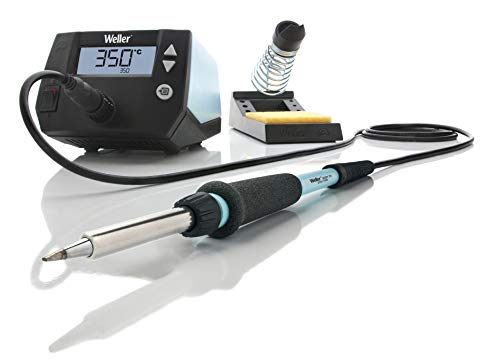
Weller WE1010NA
A 70-watt ceramic element heats this digital station to 900°F within seconds and holds within 10 degrees under load. Owners cite the LCD readout and locking tip as reasons it survives daily hobby sessions. An ET series tip ships pre-installed on the iron.
Pros
- Reaches working temperature within seconds
- Locking tip stays steady during fine work
- Digital readout simplifies temperature calibration
Cons
- Bulkier base than pen-style irons
- ET tips cost more than generic alternatives

Hakko FX888D
Hakko’s ceramic heater reaches working temperature in about 10 seconds from a cold start. Sleep and auto-shutoff modes protect the tip when the iron sits idle between jobs. T18 series tips snap on without tools, covering joint sizes from fine SMD pads to thicker wire.
Pros
- Warms up in about 10 seconds from cold
- Auto-sleep mode extends tip lifespan
- Wide T18 tip selection for different joint sizes
Cons
- Stand sold separately on some bundles
- No auto shutoff beyond sleep mode

X-Tronic 3020-XTS
Hot air rework and standard tip soldering share one footprint in this combo unit, priced below single-purpose stations. Digital temperature control governs both the iron and the fan-cooled hot air gun. Owners note the airflow settings on the hot air side take practice to dial in.
Pros
- Combines an iron and hot air gun in one unit
- Digital control on both tools
- Costs less than two single-purpose stations
Cons
- Hot air settings take practice to master
- Tips wear faster than premium ET or T18 tips

TS100 Digital Soldering Iron
Battery packs or a 19-24V power brick run this 65-watt pen-style iron away from a wall outlet. An OLED screen shows live temperature, and open firmware adds features like sleep timers through updates. It reaches 300°C in about 10 seconds given an adequate power supply.
Pros
- Runs on battery packs for field use
- Open firmware adds custom features via updates
- Compact enough for a tool bag
Cons
- Needs a separate power supply purchase
- Tip changes require the iron to cool first

Weller SP40NKUS
Forty watts of fixed-temperature heat covers basic wiring and through-hole soldering without a digital control panel. A three-way stand and sponge keep the tip clean between joints. Fine SMD work is out of reach here, but general hobby wiring holds up fine.
Pros
- Simple plug and solder operation
- Includes a stand and cleaning sponge
- Affordable entry point for beginners
Cons
- No adjustable temperature setting
- Heats slower than digital stations

Vastar 60W Soldering Iron Kit
Tips, solder wire, and a stand come bundled with this adjustable iron for anyone starting from zero gear. An analog dial sets the temperature, so matching a precise number takes some guesswork. Occasional hobby projects suit it better than daily use.
Pros
- Bundles tips, solder, and a stand
- Low cost for a complete starter set
- Adjustable dial covers most hobby needs
Cons
- Analog dial lacks a precise readout
- Included tips wear out faster than branded ones
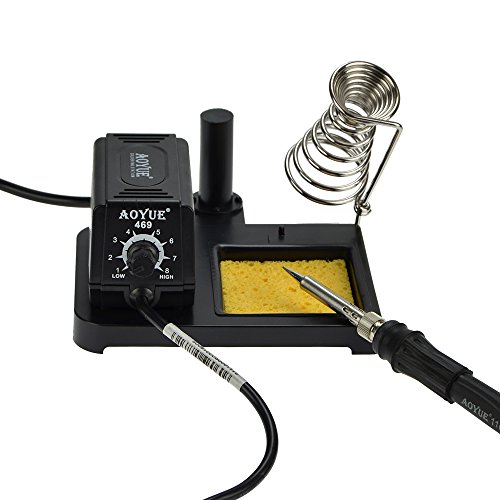
Aoyue 469 Soldering Station
A built-in fume extractor pulls solder smoke away from the work area on this combined iron and ventilation unit. Indoor workspaces without separate ventilation benefit most from that pairing. Recovery time trails ceramic-heater competitors like the Hakko by a noticeable margin.
Pros
- Built-in fume extraction protects indoor air quality
- One unit covers both iron and ventilation
- Carbon filter is replaceable
Cons
- Analog control is less precise than digital stations
- Filter replacement is an ongoing cost
How they compare
| # | Model | Wattage | Best for | Score | Price |
|---|---|---|---|---|---|
| 1 | Weller WE1010NA | 70W | Best overall | 9.4 | Check price |
| 2 | Hakko FX888D | 65W | Best for repair shops | 9.2 | Check price |
| 3 | X-Tronic 3020-XTS | 70W iron / 700W hot air | Best value | 8.8 | Check price |
| 4 | TS100 Digital Soldering Iron | Up to 65W | Best for field repairs | 8.6 | Check price |
| 5 | Weller SP40NKUS | 40W | Best budget | 8.2 | Check price |
| 6 | Vastar 60W Soldering Iron Kit | 60W | Best for beginners | 8.0 | Check price |
| 7 | Aoyue 469 Soldering Station | 60W iron / fume fan | Best for smoke control | 8.0 | Check price |
Good to know
What wattage soldering iron do I need for electronics?
A 40 to 70-watt iron covers most electronics work. Higher wattage recovers heat faster between joints but does not raise the maximum temperature on its own.
Is a digital soldering station worth it over a fixed-temp iron?
Digital control helps most with SMD components and mixed wire gauges, where precise temperature prevents lifted pads or cold joints. Fixed-temp irons are fine for basic through-hole wiring.
Can the TS100 run without a separate power supply?
No, it needs a 19-24V power brick or a compatible battery pack since one is not included in most listings.
Which soldering iron is best for beginners?
A bundled kit like the Vastar 60W or a simple fixed-temp iron like the Weller SP40NKUS keeps the learning curve low while covering common hobby tasks.
Hakko FX888D vs Weller WE1010NA, which should I buy?
Both perform similarly for general repair work. The Hakko heats up marginally faster from cold, while the Weller’s locking tip appeals to users doing fine detail work.
Do I need a fume extractor for soldering indoors?
Rosin core solder releases fumes that irritate eyes and lungs with repeated exposure. A station with built-in extraction, like the Aoyue 469, helps in rooms without separate ventilation.
What tip type should I buy for SMD rework?
Fine conical or chisel tips in the 0.2 to 0.5mm range suit SMD pads. Check that your iron’s tip series, such as T18 or ET, offers those sizes.
How often should I replace a soldering iron tip?
Replace a tip when it no longer accepts solder evenly or shows pitting, typically after several months of regular use depending on tip oxidation care.
How hot does a soldering iron need to get for lead-free solder?
Lead-free solder typically needs a tip temperature between 600 and 650 degrees Fahrenheit, higher than the range common for leaded solder joints.
Can one soldering iron handle both SMD and through-hole work?
Yes, a digital station with interchangeable fine and standard tips, like the Hakko FX888D or Weller WE1010NA, covers both joint types.
Final word
The Weller WE1010NA delivers the strongest mix of recovery speed, tip availability, and digital control for most home electronics work. Repair techs running longer sessions should lean toward the Hakko FX888D for its faster warm-up, and anyone soldering away from an outlet gets more use from the battery-capable TS100.
Marcus Chen
Marcus covered consumer electronics for enthusiast tech publications for six years before joining ChoiceCrest. He specializes in translating manufacturer spec sheets into plain-language buying advice, with a focus on audio, computing accessories and smart-home gear.