How to Pick a Home Server That Fits Your Network
Synology’s DiskStation DS224+ is the top pick because its software handles Plex, backups and photo sync with the least friction of any box here. The UGREEN NASync DXP4800 Plus offers more raw hardware, and the TerraMaster F4-424 is the value four bay choice.
Most households should start with the Synology DiskStation DS224+, since DSM handles backups, photo libraries and media serving with the least friction of any option here. Want more processor and network headroom instead? The UGREEN NASync DXP4800 Plus is the hardware pick, while the TerraMaster F4-424 covers four bays for less.
Home server means two different things: a purpose built NAS with polished software, or a mini PC you configure yourself and can push much further. We compared bay counts, processors and their transcoding support, maximum RAM, network interfaces and published noise figures, then weighed those against what owners report about setup time, app ecosystems and behavior under sustained load.
What matters most
Appliance NAS or mini PC: which one fits you? A NAS ships with a supported operating system, an app store and a setup wizard, so a working photo backup can happen in one evening. A mini PC delivers far more processing power for the same outlay and complete freedom, but every decision from filesystem to update policy becomes yours. If the phrase container stack sounds like work rather than fun, buy the appliance.
How many bays do you actually need? Two bays in a mirror protect against a single drive failure but halve usable capacity. Four bays with parity give better efficiency and room to grow. Add more capacity than you think you need, since media libraries and phone photo backups expand relentlessly. Redundancy is not a backup either, since it guards against drive failure but not deletion, corruption or theft.
Why transcoding decides your Plex experience Streaming media to devices that cannot play the source format directly forces the server to transcode it in real time. Processors with integrated graphics and hardware acceleration handle several streams comfortably, while models without integrated graphics fall back on the CPU and struggle. Check for integrated graphics specifically if media serving is the main reason you are buying.
Noise, power draw and where the box will live A home server runs continuously, so idle power draw and fan noise matter more than peak performance. Two bay units run quieter than four bay ones as a rule, and drive choice affects noise as much as the chassis does, with solid state storage silent and larger mechanical drives audibly seeking. Prioritise a quiet chassis if the server lives in a bedroom or living room, and consider a ventilated cupboard.
The shortlist, ranked

Synology DiskStation DS224+ 2-Bay NAS
DSM remains the most approachable server operating system, with apps for photo backup, file sync and surveillance that work without command line time. Two bays in a mirror protect family photos, and the Celeron processor handles hardware transcoding for most media. Owners report it runs quietly enough for a living room.
Pros
- Software is the most beginner friendly here
- Hardware transcoding covers common media
- Quiet enough for a living space
Cons
- Only two bays limits future expansion
- Base memory needs upgrading for heavy app use

UGREEN NASync DXP4800 Plus 4-Bay NAS
An Intel Core processor, room for substantial memory, NVMe cache slots and 10 gigabit networking outclass legacy brands at similar positioning. Software here is younger and less polished than DSM, which is the honest tradeoff. Anyone comfortable running their own container stack gets real hardware value.
Pros
- Far more processing power than typical NAS units
- 10 gigabit networking built in
- NVMe slots for caching or fast storage
Cons
- Software ecosystem is less mature
- Fans ramp audibly under sustained load

Synology DiskStation DS923+ 4-Bay NAS
Four bays, an AMD Ryzen processor, ECC memory support and an expansion unit option suit anyone whose library only ever grows. Integrated graphics are absent, so hardware transcoding is not a strength, and file serving, backups and virtualisation fit it better than heavy Plex duty. Build quality and DSM stay at the usual high standard.
Pros
- Expansion unit support for long term growth
- ECC memory suits critical data
- Excellent virtualisation and backup handling
Cons
- No integrated graphics for transcoding
- Higher outlay than two bay alternatives
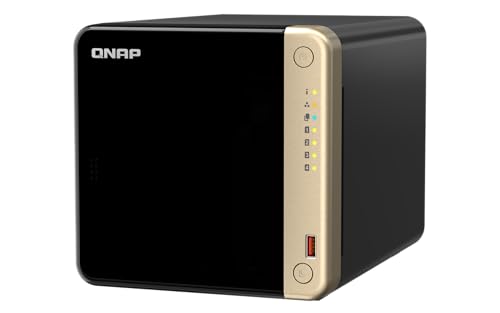
QNAP TS-464 4-Bay NAS
A Celeron N5105 with integrated graphics handles hardware transcoding well, and QNAP adds HDMI output plus a PCIe slot for future upgrades. QTS software packs in more features than DSM, which some owners find powerful and others find cluttered. Dual 2.5 gigabit ports give useful throughput headroom.
Pros
- Strong hardware transcoding for media libraries
- PCIe slot allows later upgrades
- 2.5 gigabit networking as standard
Cons
- QTS interface is dense for newcomers
- Bundled apps can feel like clutter

TerraMaster F4-424 4-Bay NAS
Four bays, an N95 processor and dual 2.5 gigabit ports arrive at a noticeably lower outlay than established brands. TOS software has improved considerably but still trails DSM for polish. Many owners buy this specifically to run TrueNAS or Unraid instead, treating it as inexpensive four bay hardware, which it does well.
Pros
- Four bays for a modest outlay
- Runs third party operating systems well
- Dual 2.5 gigabit networking
Cons
- Stock software lags the leading platforms
- Chassis fan is more noticeable than rivals
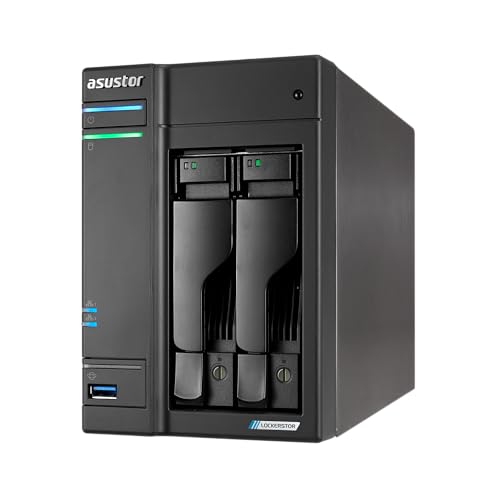
Asustor Lockerstor 2 Gen 2 AS6702T NAS
Two bays plus dual M.2 NVMe slots and two 2.5 gigabit ports make this quick for its size, especially with SSD caching enabled. ADM software stays clean, and the app selection covers common needs. Its compact chassis suits a desk or shelf rather than a rack.
Pros
- NVMe caching improves responsiveness noticeably
- Clean software without excessive clutter
- Compact enough for a desk
Cons
- Two bays limit total capacity
- Smaller app ecosystem than Synology

Beelink SER5 Max Mini PC
Not a NAS at all, but a compact Ryzen mini PC many people run as a home server on Proxmox, Docker or a full Linux install with external storage. It moves faster than any appliance here and offers more flexibility, at the cost of doing everything yourself. Internal storage stays limited to M.2 plus a single drive bay.
Pros
- Much faster than typical NAS processors
- Complete freedom over the software stack
- Very small footprint and low power draw
Cons
- No drive bays for a proper storage array
- Everything must be configured manually
Compared at a glance
| # | Model | Bays | Best for | Score | Price |
|---|---|---|---|---|---|
| 1 | Synology DiskStation DS224+ 2-Bay NAS | 2, hot swappable | Best overall | 9.4 | Check price |
| 2 | UGREEN NASync DXP4800 Plus 4-Bay NAS | 4 plus dual NVMe slots | Best hardware for the outlay | 9.2 | Check price |
| 3 | Synology DiskStation DS923+ 4-Bay NAS | 4, expandable via expansion unit | Best for growing storage | 9.0 | Check price |
| 4 | QNAP TS-464 4-Bay NAS | 4 plus dual M.2 slots | Best for media transcoding | 8.8 | Check price |
| 5 | TerraMaster F4-424 4-Bay NAS | 4 | Best value four bay | 8.6 | Check price |
| 6 | Asustor Lockerstor 2 Gen 2 AS6702T NAS | 2 plus dual M.2 NVMe | Best for fast networking | 8.3 | Check price |
| 7 | Beelink SER5 Max Mini PC | AMD Ryzen 7 | Best DIY server | 8.0 | Check price |
Good to know
Do I need a NAS or is an external drive enough?
An external drive is fine for backing up one computer. A NAS makes sense once several devices need access, you want automatic phone photo backup, or you want media available to the whole household without a computer switched on.
Are drives included with a NAS?
Almost never. NAS units usually sell as diskless enclosures, so budget separately for drives rated for continuous operation, built for the vibration and duty cycle of an always on array.
Is RAID a backup?
No. RAID protects against a drive failing, not against accidental deletion, ransomware or a house fire. A proper setup keeps at least one copy of important data somewhere else, ideally offsite or in cloud storage.
How much memory does a home server need?
Four to eight gigabytes covers file sharing, backups and a media server. Push to sixteen or more if you run several containers, virtual machines or memory hungry filesystems such as ZFS.
Can a home server replace cloud storage?
For file sync and photo libraries, largely yes, and most NAS platforms include apps that mirror the experience. What you take on instead is responsibility for backups, updates and remote access security.
How much electricity does a home server use?
Two bay NAS units typically draw a modest amount at idle, adding a small ongoing cost. Mini PCs sit similarly low. Multi bay units with several mechanical drives spinning constantly draw noticeably more.
Is it safe to access a home server from outside the house?
It can be, but exposing a server directly to the internet is risky. Use the manufacturer’s relay service or a VPN back into your home network rather than opening ports, and keep two factor authentication enabled.
Can I use regular desktop drives in a NAS?
They will work, but drives rated for NAS use handle continuous duty, multi drive vibration and error recovery in ways that suit arrays. In an always on system, the longevity difference is worth the small extra outlay.
NAS vs mini PC: which is better for Plex?
A NAS with integrated graphics, such as the QNAP TS-464, handles Plex transcoding with less fuss out of the box. A mini PC can outperform it for raw speed but needs manual setup for hardware acceleration.
Our take
The Synology DiskStation DS224+ is the home server that frustrates the fewest people, since its software handles the hard parts and it runs quietly enough to live anywhere. Choose the UGREEN NASync DXP4800 Plus for serious hardware if younger software does not bother you, or the Beelink SER5 Max if configuring everything yourself is the appeal rather than the obstacle.
Marcus Chen
Marcus covered consumer electronics for enthusiast tech publications for six years before joining ChoiceCrest. He specializes in translating manufacturer spec sheets into plain-language buying advice, with a focus on audio, computing accessories and smart-home gear.


