Snowboard Boots Built for Quick Changeovers at Indoor Domes
Burton Moto Boa Snowboard Boots suit most indoor sessions, with a Boa dial that speeds up changeovers between short runs. K2 Raider offers stiffer support once carving practice starts, while Vans Hi-Standard OG keeps cost down with traditional laces for casual dome visits.
Burton Moto Boa Snowboard Boots top this list for riders cycling through short sessions at an indoor snow dome. A single Boa dial tightens the whole boot in a few twists, cutting changeover time between runs. Medium flex keeps turns forgiving for beginners without feeling sloppy. Wet indoor slush can work into the dial cable, so it needs an occasional rinse.
A full outdoor day gets compressed into repeated 45 to 90 minute sessions indoors, so lacing speed and liner comfort outweigh raw stiffness. Rental scheduling means boots get pulled on and off dozens of times a shift, leaving no time for a liner that needs days to break in. We compared flex ratings, lacing mechanisms and liner materials against the listed specifications, then weighed owner reports on Boa durability, break-in time and fit across wide, women’s and youth sizing.
The best picks, ranked

Burton Moto Boa Snowboard Boots
A single Boa dial replaces laces entirely, tightening or loosening the boot in a few twists between runs. Medium flex balances support with the give beginners need on an indoor slope. Ability 3D liner material molds to the foot within a handful of sessions, cutting break-in time versus stiffer boots.
Pros
- Boa dial speeds up changeovers between sessions
- Medium flex stays forgiving without feeling sloppy
- Liner molds to the foot within a few uses
Cons
- Boa cable needs occasional cleaning after wet slush
- Runs narrow through the midfoot for wider feet
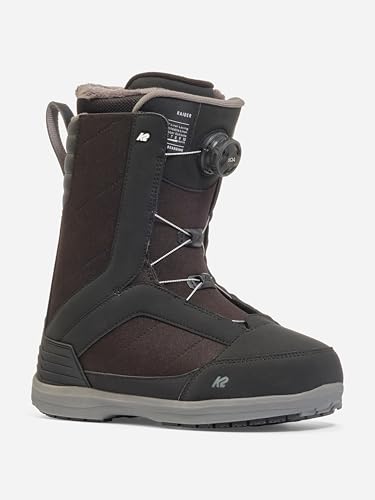
K2 Raider Snowboard Boots
Harshmellow padding cushions heel strikes across repeated indoor laps. A speed lace system pulls the lower and upper zones tight independently, giving finer adjustment than a single Boa dial. Medium-stiff flex rewards riders working on carving turns over casual cruising.
Pros
- Dual lace zones fine-tune ankle and forefoot separately
- Intuition Command Foam liner adds warmth on cold indoor snow
- Harshmellow padding softens repeated heel impact
Cons
- Stiffer flex feels harsh for first-time riders
- Speed lace pulls take longer than a Boa dial

Vans Hi-Standard OG Snowboard Boots
Traditional laces replace a Boa dial or speed lace zones, keeping cost down. UltraCush Lite padding under the footbed absorbs impact through a full afternoon of short runs. Soft to medium flex suits casual dome sessions more than aggressive carving.
Pros
- Lower cost than Boa or speed lace boots
- UltraCush Lite padding cushions repeated landings
- Wide size range fits most average feet
Cons
- Traditional laces take longer to tighten between runs
- Laces can loosen mid-session without rechecking

DC Shoes Phase Boa Snowboard Boots
A single Boa dial tightens the Phase Boa in one motion, useful when rental lines move fast at an indoor center. Soft flex stays comfortable through several short sessions in a row. Motion Fit liner material is thinner than Burton’s Ability 3D, breaking in faster but cushioning less on longer visits.
Pros
- Boa dial matches faster rental turnover at indoor centers
- Soft flex stays comfortable through repeat short sessions
- Thinner liner breaks in within one or two visits
Cons
- Thinner liner offers less cushioning on longer days
- Soft flex lacks support for aggressive carving
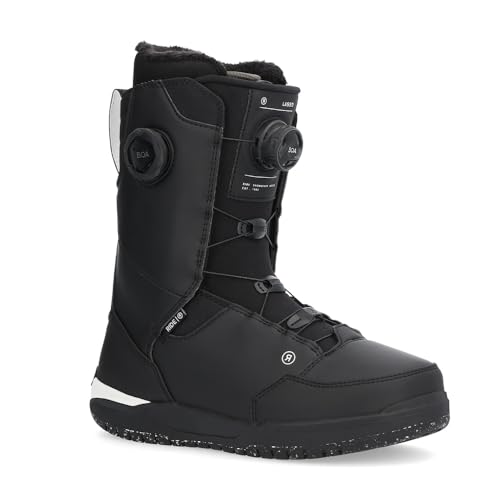
Ride Lasso Snowboard Boots
A dual zone Boa system spans a roomier last built specifically for wide feet. Independent lower and upper dials adjust forefoot and ankle fit without pinching across the width. Medium flex handles both beginner turns and moderate carving without feeling too stiff or too soft.
Pros
- Wider last accommodates wide feet without pinching
- Dual Boa zones adjust ankle and forefoot separately
- Medium flex suits both beginners and moderate carving
Cons
- Roomier fit feels loose for narrow feet
- Two dials add a step versus a single Boa boot

Salomon Pearl Boa Snowboard Boots
A women’s specific last gives the Pearl Boa a narrower heel pocket than a unisex boot resized down. A single Boa dial matches the quick changeovers common at indoor centers. Soft to medium flex suits shorter indoor sessions without demanding a long break-in period.
Pros
- Women’s specific last fits narrower heels better
- Boa dial speeds up changeovers between runs
- Soft-medium flex needs little break-in time
Cons
- Sizing tops out at US women’s 10
- EVA liner offers less warmth than molded foam options

Burton Grom Boa Snowboard Boots
Burton scaled the Grom Boa down for young riders learning at indoor snow domes. A single Boa dial lets kids tighten the boot themselves without tying laces. Soft flex and a 3D molded EVA liner keep small feet comfortable through short lesson blocks.
Pros
- Kids can tighten the Boa dial without adult help
- Soft flex suits first-time young riders
- Sized specifically for youth feet, not a scaled-down adult boot
Cons
- Sizing range stops at youth 6, unsuitable for teens
- Soft flex offers little support for advancing riders
How they stack up
| # | Model | Flex Rating | Best for | Score | Price |
|---|---|---|---|---|---|
| 1 | Burton Moto Boa Snowboard Boots | Medium | Best overall | 9.4 | Check price |
| 2 | K2 Raider Snowboard Boots | Medium-stiff | Best for carving practice | 9.2 | Check price |
| 3 | Vans Hi-Standard OG Snowboard Boots | Soft-medium | Best budget | 9.0 | Check price |
| 4 | DC Shoes Phase Boa Snowboard Boots | Soft | Best for fast rental changeovers | 8.8 | Check price |
| 5 | Ride Lasso Snowboard Boots | Medium | Best for wide feet | 8.5 | Check price |
| 6 | Salomon Pearl Boa Snowboard Boots | Soft-medium | Best women’s specific fit | 8.2 | Check price |
| 7 | Burton Grom Boa Snowboard Boots | Soft | Best for kids and junior sizing | 8.0 | Check price |
Before you buy
What matters most for indoor snow dome sessions Indoor domes compress an outdoor day into repeated 45 to 90 minute sessions, often on a shared rental schedule. Lacing speed counts for more here than on a resort trip, since boots come on and off several times a shift. Liner comfort matters too, because a stiff foam that needs days to break in never gets that chance indoors. Check how a boot tightens first, then flex, before comparing color or brand.
Boa dials versus traditional laces A Boa dial tightens a full boot with a few twists, cutting changeover time against tying laces by hand. Traditional laces cost less and rarely fail outright, though they loosen mid-session and need rechecking. Speed lace systems split the boot into two zones, letting a rider snug the ankle tighter than the forefoot. Boa cables need periodic rinsing once slush and dust work into the housing, a small maintenance cost against the time saved.
Which flex rating suits a beginner at an indoor center? Soft and medium flex boots forgive the shaky, uneven turns most beginners make during early indoor runs. A stiffer boot like the K2 Raider rewards riders already working on carving, transmitting edge pressure more directly. New riders who pick a stiff boot too early often blame the equipment for turns that flex alone would have absorbed. Renting or demoing a flex rating first makes sense where the local dome allows it.
Fitting wide feet, women’s and kids’ sizing Wide feet need a roomier last, not just a longer size, since a narrow boot still pinches across the midfoot at any length. Women’s specific boots like the Salomon Pearl Boa use a heel pocket sized for a typical women’s foot shape, not a resized men’s boot. Kids’ boots such as the Burton Grom Boa scale the entire last down instead of shrinking an adult design, keeping ankle support proportional. Match the sizing chart to the specific model, since ranges shift by several sizes between brands.
Common questions
What flex rating works best for indoor snowboard boots?
Soft to medium flex suits most indoor riders, forgiving the shaky turns common in short sessions. Stiffer boots suit riders already comfortable carving, who want more direct edge response. Picking a flex too stiff too early usually makes turns feel harder than necessary.
How does a Boa lacing system work on snowboard boots?
A dial on the boot winds a steel cable through guides across the upper, tightening evenly with each twist. Pulling the dial up releases the cable instantly for a quick exit. Dual zone versions add a second dial so the ankle and forefoot tighten independently.
Can beginners ride stiff snowboard boots at an indoor dome?
They can, but a stiff boot transmits every mistake straight to the edge, making early turns feel abrupt. Medium or soft flex absorbs some of that error while balance develops. Once turns feel controlled, moving up to a stiffer boot like the K2 Raider makes more sense.
Are Boa boots better than laces for repeated sessions?
For repeated short sessions, yes, since a Boa dial tightens in seconds where laces take longer to adjust properly. Traditional laces cost less and hold up well over years of use. Riders doing one long session rather than several short ones may notice little difference.
Which snowboard boots fit wide feet best?
The Ride Lasso uses a wider last built specifically for wide feet, rather than just offering a longer size. A standard boot in a bigger size still pinches across the midfoot if the last itself runs narrow. Checking the stated last width matters more than sizing up half a size.
Do women need snowboard boots built to women’s sizing?
Women’s specific boots like the Salomon Pearl Boa use a narrower heel pocket and adjusted volume compared to a men’s boot sized down. Riders with narrower heels often find a better lock-in fit this way. Anyone with a wider foot may still prefer a unisex or men’s last regardless of gender.
What size snowboard boots do kids need for indoor lessons?
Youth specific boots such as the Burton Grom Boa cover roughly youth sizes 1 to 6, scaled down from adult proportions rather than shrunk men’s boots. Measuring a child’s foot before buying beats guessing from age alone, since foot size varies widely. A snug fit now needs replacing as feet grow.
How often do Boa dial cables need cleaning?
Rinsing the dial and cable housing after sessions involving wet indoor slush keeps grit from building up inside the mechanism. Most riders only need to do this every several sessions rather than after every use. A dial that sticks or clicks unevenly usually needs cleaning before it needs replacing.
Is a Boa dial or speed lace system faster for rentals?
A single Boa dial tightens the whole boot in one motion, which beats a speed lace system’s two separate zones for pure speed. Speed lace zones trade a few seconds for more precise ankle and forefoot adjustment. Rental counters favor single-dial Boa boots like the Burton Moto or DC Phase Boa for that reason.
How long does it take to break in indoor snowboard boots?
Boots with a heat-moldable or foam liner, like Burton’s Ability 3D, shape to the foot within a handful of sessions. Thinner liners such as the Motion Fit on DC’s Phase Boa break in even faster but cushion less over time. A liner that still feels stiff after several sessions usually will not soften much more.
The verdict
Burton Moto Boa Snowboard Boots make the most sense for anyone riding an indoor dome repeatedly, since a single Boa dial cuts changeover time to seconds and medium flex forgives early mistakes. Riders working on carving should step up to the K2 Raider, where stiffer flex and dual lace zones transmit edge pressure more precisely. Budget-focused beginners can skip the Boa premium with the Vans Hi-Standard OG, trading lacing speed for a lower cost.
Derek Holt
Derek has a background coaching recreational and amateur athletes and has worked the sales floor at specialty fitness retailers. He focuses on equipment durability, ergonomics and realistic use cases rather than marketing claims.


