Yoga Mats Built to Handle Daily Studio Practice
Manduka PRO suits daily studio practice, since its closed-cell surface resists years of sweat without breaking down. Liforme adds printed alignment markers for practitioners refining pose accuracy. Jade Harmony delivers natural rubber grip at a lower price point than most closed-cell competitors.
A dense, closed-cell surface keeps Manduka PRO from absorbing sweat even after years of daily practice, which is why studios stock it over softer foam mats.
We compared material density, surface texture, and thickness across current listings and long-term owner reports, since thin PVC foam mats compress and lose grip within months.
Before you buy
Closed-cell vs open-cell material Closed-cell mats, like Manduka PRO, seal the surface so sweat sits on top instead of soaking in, which extends the mat’s working life. Open-cell natural rubber mats, like Jade Harmony, grip well from the first session but absorb moisture over years of use. Sweaty or hot yoga practice often favors a closed-cell surface for hygiene reasons.
Thickness and joint support Mats around 5 to 6mm, such as the Manduka PRO, cushion knees and elbows during floor poses, useful for anyone with joint sensitivity. Thinner mats near 2 to 4mm, like the B Yoga Everyday, give more ground feedback during balance poses but less padding. Studio classes heavy on floor work usually call for the thicker end of that range.
Grip texture for different practice styles Textured dry-grip surfaces, like Gaiam’s Performance mat, increase traction as they get wet, which suits hot yoga. Smooth natural rubber grips well from the first use without needing added moisture. Matching texture to the class practiced most often matters more than picking a mat by appearance.
Weight and portability for travel Studio-grade mats over 6 pounds, like the Lululemon Reversible, stay put during practice but add bulk in a bag. Lighter builds under 4 pounds, such as the Manduka eKO Lite, pack easier for classes away from home. Frequent travelers should weigh that portability against the reduced cushioning lighter mats carry.
What we recommend

Manduka PRO Yoga Mat
A dense, closed-cell surface keeps sweat and oils from soaking in, unlike open-cell foam that absorbs moisture over time. At 6mm thick, it cushions joints during floor poses without feeling unstable in standing sequences. Studios point to its lifetime guarantee as a sign of expected durability.
Pros
- Closed-cell surface resists sweat and oils
- 6mm cushioning stays stable in standing poses
- Backed by a lifetime guarantee
Cons
- Heavier than travel-style mats
- New mats need a short break-in period for full grip

Liforme Yoga Mat
Printed alignment lines mark foot and hand placement for common poses, useful for practitioners refining form without a mirror. A natural rubber base grips well even during hot, sweaty sessions. Its biodegradable top layer breaks down faster than PVC once retired.
Pros
- Printed alignment markers aid pose accuracy
- Strong grip during hot, sweaty sessions
- More biodegradable than standard PVC mats
Cons
- Priced higher than most competitors
- Natural rubber carries a noticeable odor when new

Jade Harmony Yoga Mat
An open-cell natural rubber surface grips both the floor and skin without needing a towel underneath. Jade plants a tree for every mat sold, appealing to environmentally minded buyers. At 4.76mm, the mat balances cushioning with ground stability.
Pros
- Strong grip without needing a towel
- Lower cost than premium closed-cell mats
- Biodegradable natural rubber construction
Cons
- Open-cell surface absorbs sweat over time
- Rubber scent takes days to fade
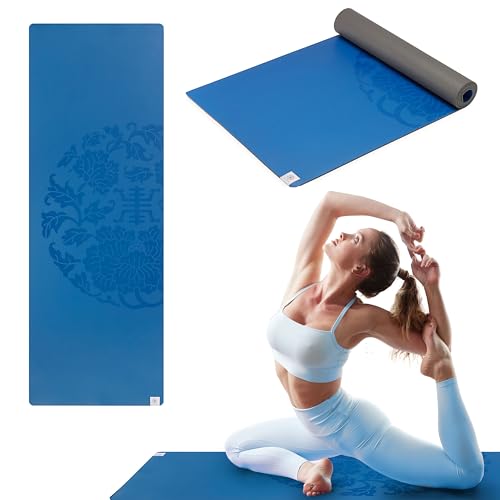
Gaiam Performance Dry-Grip Yoga Mat
Traction increases as this surface gets wet, unlike smooth PVC mats that turn slippery with sweat. At 5mm, it offers more cushioning than standard studio mats. Reviewers who take hot yoga classes note less slipping compared to their previous mats.
Pros
- Grip improves as the surface gets wet
- More cushioning than thin studio mats
- Lighter than natural rubber alternatives
Cons
- Texture collects dust and lint over time
- Less durable long-term than closed-cell PVC

B Yoga B Mat Everyday
This mat uses a closed-cell rubber surface similar to premium mats, at a thinner 2mm profile and lower price point. The reduced thickness suits practitioners who want more ground feedback in balance poses. It comes in a range of colors aimed at studio and home use.
Pros
- Closed-cell surface at a lower price point
- Thinner profile aids balance poses
- Wide range of color options
Cons
- Less cushioning for sensitive joints
- Thinner mat shows wear faster than 6mm versions

Manduka eKO Lite
Weight drops to under 4 pounds in this lighter build of Manduka’s natural rubber line, easing travel packing. It still grips well during sweaty flows despite the reduced thickness. Frequent travelers and off-site class attendees often choose this over the heavier PRO model.
Pros
- Lighter than standard studio mats
- Solid grip despite reduced thickness
- Natural rubber biodegrades faster than PVC
Cons
- Less cushioning than 6mm mats
- Natural rubber scent present when new

Lululemon The Reversible Mat
Two different surface textures on each side let practitioners choose more cushioning or more grip depending on class style. A 5mm polyurethane top layer resists moisture better than plain PVC. Studio-goers use the reversible design to adapt one mat to both vinyasa and restorative classes.
Pros
- Two textures suit different class styles
- Polyurethane top resists moisture well
- Sturdy build for regular studio use
Cons
- Heavier than lightweight travel mats
- Priced at a premium versus single-texture mats
Compared at a glance
| # | Model | Thickness | Best for | Score | Price |
|---|---|---|---|---|---|
| 1 | Manduka PRO Yoga Mat | 6mm | Best overall | 9.4 | Check price |
| 2 | Liforme Yoga Mat | 4.2mm | Best for alignment | 9.1 | Check price |
| 3 | Jade Harmony Yoga Mat | 4.76mm | Best value | 8.8 | Check price |
| 4 | Gaiam Performance Dry-Grip Yoga Mat | 5mm | Best for hot yoga | 8.6 | Check price |
| 5 | B Yoga B Mat Everyday | 2mm | Best budget | 8.5 | Check price |
| 6 | Manduka eKO Lite | 4mm | Best for travel | 8.7 | Check price |
| 7 | Lululemon The Reversible Mat | 5mm | Best for studio classes | 8.9 | Check price |
Good to know
What thickness works best for a professional yoga mat?
Studio-grade mats typically run 4 to 6mm, balancing joint cushioning with enough stability for standing poses.
Is natural rubber or PVC better for a yoga mat?
Natural rubber grips immediately and breaks down faster after retirement. Closed-cell PVC resists sweat absorption better over years of daily use.
How do I clean a yoga mat properly?
Wipe closed-cell mats with a damp cloth and mild soap after each session. Natural rubber mats should avoid oil-based cleaners, which can degrade the surface.
What makes a yoga mat good for hot yoga?
A textured, dry-grip surface that increases traction as it gets wet works best for hot yoga, since smooth mats can turn slippery with sweat.
How long does a quality yoga mat last?
A closed-cell mat used daily can last several years before showing real wear, compared to a few months for basic foam mats.
Do alignment markers on a yoga mat actually help?
Printed alignment lines help practitioners check foot and hand placement without a mirror, useful for refining form in standing poses.
What size yoga mat should I buy?
Standard mats run about 68 to 71 inches long. Practitioners taller than 5 foot 8 often prefer the longer 71 to 72.8 inch options.
Why do new yoga mats smell?
Natural rubber mats carry a manufacturing scent that typically fades within one to two weeks of airing out.
Manduka vs Liforme: which mat suits alignment-focused practice?
Liforme’s printed alignment markers suit practitioners refining pose accuracy, while Manduka PRO favors daily durability over guided placement.
Which yoga mat is best for frequent travel?
Manduka eKO Lite drops under 4 pounds, making it easier to pack than heavier studio mats like the Lululemon Reversible.
The bottom line
Manduka PRO remains worth the investment for anyone practicing several times a week, since its closed-cell surface outlasts foam mats by years. Practitioners focused on alignment and form should choose Liforme instead for its printed guide markers. Buyers who want strong natural rubber grip without premium pricing should look to Jade Harmony.
Derek Holt
Derek has a background coaching recreational and amateur athletes and has worked the sales floor at specialty fitness retailers. He focuses on equipment durability, ergonomics and realistic use cases rather than marketing claims.
You might also need

Portable Lacrosse Gear Built for Backyard and Park Practice

Compact Marine Coolers Built for Salt and Sun
How to Choose a Yoga Mat That Won’t Tear or Thin Out
