Which Type of Smoker Fits Your Backyard Best?
Traeger Pro 575 leads for steady pellet control and app monitoring. Weber Smokey Mountain 18 delivers the deepest charcoal flavor for purists. Masterbuilt 30-inch Digital Electric gives beginners simple, hands-off smoking with four chrome racks and a side wood chip loader.
Traeger Pro 575 suits most backyards, combining app-controlled pellet heat with room for ribs, brisket, and two chickens at once. Charcoal loyalists lean toward the Weber Smokey Mountain 18. Anyone wanting minimal fuss picks the Masterbuilt digital electric.
Fuel type, chamber insulation, and local climate change how each smoker performs, so a unit that excels in one backyard frustrates another. We compared manufacturer specifications, owner feedback, and reported temperature consistency across seven models spanning pellet, charcoal, and electric designs.
Before you buy
What type of smoker fits your cooking style? Pellet units hold temperature with a digital controller, so weeknight cooks rarely touch the dial. Charcoal delivers stronger traditional smoke flavor but asks for manual vent adjustments. Electric models trade some smoke intensity for the simplest set-and-forget operation. Offset rigs reward patience with the most direct control over airflow.
How much cooking area do you actually need? Around 500 square inches covers ribs and a whole chicken for a family of four. Hosts who cook for groups regularly should look above 800 square inches. Bigger chambers take longer to reach temperature and burn more fuel per session. Match grate size to how often you actually feed a crowd, not just peak capacity.
Does climate affect smoker temperature control? Wind and cold air pull heat from thin-walled chambers faster than insulated ones. Porcelain-enameled steel and heavy-gauge builds hold temperature better through winter cooks. Electric cabinets with basic insulation may struggle below freezing. A welding blanket or insulated cover helps any smoker in harsh weather.
Which smoker is easiest to maintain? Ash-cleanout levers and removable racks cut the time spent scraping grease after each cook. Side chip or pellet loaders let you refuel without opening the main chamber. Charcoal and offset rigs need regular ash removal and occasional gasket checks. Lower-maintenance designs get used more often, which matters more than peak performance.
What we recommend

Traeger Pro 575 Wood Pellet Smoker
A digital controller keeps the Pro 575 within a few degrees of target for hours. WiFIRE app monitoring lets you check grill temperature from a phone. Owners report consistent results on pork shoulder and ribs with minimal adjustment.
Pros
- Holds steady heat across all-day cooks
- App alerts replace constant temperature checks
- 572 square inches fits ribs and poultry together
Cons
- Requires a nearby power outlet
- Pellet costs add up over frequent use

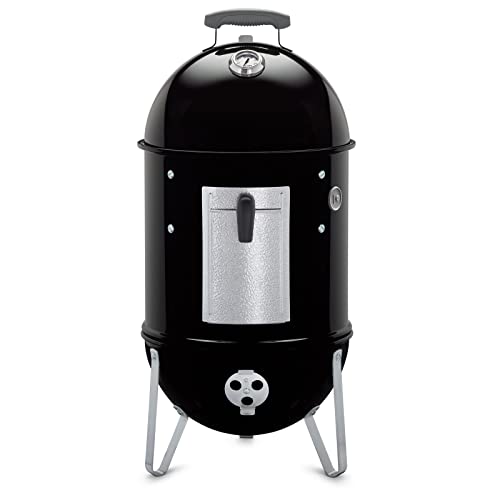
Weber Smokey Mountain Cooker 18-inch
Bullet-shaped design traps smoke for deep, traditional barbecue flavor. Porcelain-enameled steel resists rust through repeated outdoor use. A single charcoal load can hold temperature for many hours, though vents need manual attention.
Pros
- Delivers authentic charcoal and wood-smoke taste
- Enameled steel body withstands years of weather
- Water pan stabilizes heat on long overnight cooks
Cons
- Vent adjustments take practice to master
- No digital temperature display

Masterbuilt MB20071117 30-inch Digital Electric Smoker
A side wood chip loader lets you add chips without opening the main door. Four chrome racks give 730 square inches of space across multiple cuts. Digital thermostat control suits cooks who prefer simple dial-and-forget operation.
Pros
- Digital thermostat removes guesswork for beginners
- Side loader preserves heat while refilling chips
- Four racks handle multiple cuts simultaneously
Cons
- Smoke flavor is milder than charcoal
- Plastic components feel less durable
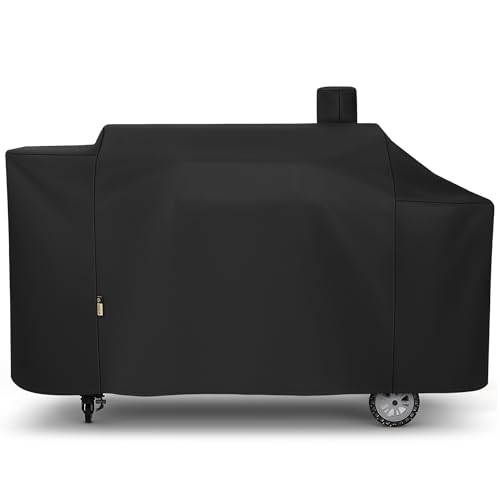
Pit Boss PB1000SC1 Pro Series Wood Pellet Smoker
Over 1,000 square inches of grate space handles multiple briskets or a full rack of ribs at once. A sliding flame broiler plate exposes direct flame for searing. Large hopper capacity reduces mid-cook pellet refills during long sessions.
Pros
- Generous grate space suits parties and batch cooking
- Sear slide plate adds direct-flame grilling option
- Large hopper reduces mid-cook refills
Cons
- Bigger footprint needs more patio room
- Temperature holds less precisely than premium models

Char-Griller E1224 Smokin Pro Offset Charcoal Smoker
A side firebox pushes indirect heat and smoke through the main chamber for classic offset results. Heavy-gauge steel construction keeps cost down compared with premium offset rigs. Owners note gasket sealing improves heat retention once applied.
Pros
- True offset airflow builds real barbecue character
- Side firebox doubles as a standalone grill
- Affordable entry point into offset cooking
Cons
- Seams may need extra sealing for tightness
- Active fire management takes ongoing attention

Cuisinart COS-330 Electric Smoker
Three removable racks and an analog dial keep operation straightforward for new smokers. Compact dimensions suit balconies, patios, and small backyards. Owners use it mainly for jerky, fish, and smaller cuts rather than whole briskets.
Pros
- Lower cost than most electric smokers
- Compact footprint fits tight outdoor spaces
- Analog dial keeps controls beginner friendly
Cons
- Thin insulation loses heat in cold weather
- Limited capacity for larger cuts of meat

Camp Chef Woodwind WiFi 24 Pellet Grill
Multiple meat-probe ports track several cuts at once from a connected app. An ash-cleanout system drops spent pellets without scooping the firepot by hand. Owners note the added electronics push this model toward the pricier end.
Pros
- App and probe combo tracks multiple cuts
- Ash-cleanout system simplifies routine maintenance
- Consistent heat across 811 square inches
Cons
- Costs more than basic pellet smokers
- Extra features add a learning curve
How they stack up
| # | Model | Fuel | Best for | Score | Price |
|---|---|---|---|---|---|
| 1 | Traeger Pro 575 Wood Pellet Smoker | Wood pellets | Best overall | 9.4 | Check price |
| 2 | Weber Smokey Mountain Cooker 18-inch | Charcoal | Best for authentic charcoal flavor | 9.2 | Check price |
| 3 | Masterbuilt MB20071117 30-inch Digital Electric Smoker | Electric | Best value | 9.0 | Check price |
| 4 | Pit Boss PB1000SC1 Pro Series Wood Pellet Smoker | Wood pellets | Best for large gatherings | 8.8 | Check price |
| 5 | Char-Griller E1224 Smokin Pro Offset Charcoal Smoker | Charcoal | Best offset design | 8.5 | Check price |
| 6 | Cuisinart COS-330 Electric Smoker | Electric | Best budget pick | 8.2 | Check price |
| 7 | Camp Chef Woodwind WiFi 24 Pellet Grill | Wood pellets | Best for app and probe control | 8.0 | Check price |
Good to know
Which smoker is easiest for a beginner to use?
Electric and pellet smokers work best for beginners because a digital controller holds temperature automatically. You set a target, load fuel, and monitor progress with a probe or app instead of managing an open flame.
Do pellet smokers produce real smoke flavor?
Yes, compressed hardwood pellets burn to create genuine smoke, though the result reads milder than charcoal or offset cooking. Stronger wood blends and smoke-boost settings push the flavor closer to traditional barbecue.
Pellet vs charcoal: which gives better flavor?
Charcoal typically produces deeper, more traditional barbecue flavor because it burns hotter and less consistently, which builds more smoke ring. Pellet grills offer milder flavor but need far less monitoring during a long cook.
How much cooking area does a smoker need for a family?
Roughly 500 square inches handles ribs and a whole chicken for four people. Regular hosts should look toward 800 square inches or more to avoid cooking in multiple rounds.
Can a smoker be used in cold or windy weather?
Yes, but insulation matters more in those conditions. Heavy-gauge steel and porcelain-enameled bodies hold heat better than thin electric cabinets, which may need extra fuel or time to compensate.
How long does a quality smoker typically last?
With regular cleaning and a cover, a well-built smoker lasts many years. Charcoal bullets and heavy-gauge offset rigs tend to outlast lighter electric cabinets, especially with grease buildup removed after each use.
Is a smoker worth it compared to a regular grill?
A smoker suits low-and-slow cooking like brisket, pork shoulder, and ribs that a standard grill struggles to replicate. Grills remain better for quick, high-heat cooking like burgers and steaks.
Do I need a separate meat thermometer with a smoker?
A reliable internal probe is worth adding regardless of smoker type. Many digital models include one built in, but a second instant-read thermometer helps confirm doneness without trusting the chamber gauge alone.
How often do you need to refuel a smoker during a cook?
It depends on the fuel and target temperature. Large pellet hoppers and full charcoal loads often run six or more hours, while smaller electric or compact units may need a mid-cook top-up.
What is the difference between offset and bullet smokers?
An offset smoker uses a side firebox to push indirect heat and smoke through a separate cooking chamber, giving strong traditional flavor. A bullet smoker stacks fuel, water pan, and grates vertically in one compact body, which is easier to manage for most home cooks.
Our pick
Traeger Pro 575 remains the smoker most backyard cooks should buy, pairing hands-off pellet control with enough room for real family meals. Charcoal fans get the deepest flavor from the Weber Smokey Mountain 18, and anyone wanting the simplest start should choose the Masterbuilt digital electric.
Sierra Daniels
Sierra's background is in landscape design and nursery retail. She focuses on lawn and garden equipment, outdoor furniture and gear durability, weighing published specs against how materials actually hold up outside.