Which Weed Killer Fits Your Yard, Bed or Drive?
Roundup Weed and Grass Killer III leads for driveways, patios and cleared ground where nothing should survive. BioAdvanced All-in-One Lawn Weed and Crabgrass Killer fits lawns instead, since it spares turf. Gardeners avoiding synthetic herbicides do best with Green Gobbler 20 Percent Vinegar Weed Killer, a fast contact spray without lasting soil residue.
Where you plan to spray decides the product, not the brand. Roundup Weed and Grass Killer III clears paving, gravel and beds bound for replanting. BioAdvanced All-in-One Lawn Weed and Crabgrass Killer removes broadleaf weeds without harming turf. Green Gobbler 20 Percent Vinegar Weed Killer gives a fast contact knockdown without synthetic chemicals.
A non selective spray on a lawn is the most common mistake, leaving brown patches that need a season to recover. Contact killers look effective too, yet deep rooted perennials often regrow within weeks. Selectivity, residual soil activity and root uptake all change the outcome for a given yard. We compared active ingredients, label uses, coverage and rainfast times, then ranked seven products by owner feedback and use case fit. Always read and follow the product label, since it carries the legal instructions for safe use.
What we recommend

Roundup Weed and Grass Killer III Ready-To-Use
This non selective systemic spray moves down into the root system, so treated weeds do not regrow from the crown. Its ready to use format skips mixing, and the wand keeps spray off your hands. Because it kills anything green it touches, it belongs on paving, gravel and cleared ground rather than lawns.
Pros
- Reaches roots instead of just burning tops
- Skips mixing and measuring entirely
- Handles deep rooted perennials effectively
Cons
- Kills grass and ornamentals on contact
- Costs more per area than a concentrate

Spectracide Weed and Grass Killer Concentrate
Mixing into a tank sprayer, this concentrate cuts the cost per treated area substantially. Anyone clearing a large drive or a neglected plot benefits most. Results appear fast, making covered ground easy to track. Measuring matters here, since mixing errors waste product.
Pros
- Much lower cost per treated area
- Fast, visible knockdown on weeds
- One bottle covers a large plot
Cons
- Needs a sprayer and careful mixing
- Drift from non selective action harms plants

BioAdvanced All-in-One Lawn Weed and Crabgrass Killer
Broadleaf weeds and crabgrass are this formula’s target, while established turf grasses survive when used as directed. That selectivity is the entire reason to pick it over a general weed killer. Grass type still matters, since some formulations do not suit every species.
Pros
- Leaves established turf standing
- Handles broadleaf weeds and crabgrass together
- Hose end options spread coverage evenly
Cons
- Not suited to every grass species
- Slower results than contact killers

Ortho GroundClear Weed and Grass Killer
Keeping an area clear for an extended period is this product’s job, rather than just killing today’s growth. Gravel drives and fence lines suit it well. That same persistence means it must stay away from beds you plan to plant. Check the residual period on the label before treating any bed.
Pros
- Keeps treated areas clear much longer
- Cuts down repeat spraying on gravel
- Works well on hard surface joints and edges
Cons
- Soil residual blocks future planting
- Runoff can affect nearby plants

Compare-N-Save Concentrate Grass and Weed Killer
Acreage, not a back garden, is this high concentration glyphosate product’s real target. Ready to use sprays get expensive fast at that scale. Careful measuring, protective equipment and calm weather all matter here. Before landscaping a large neglected plot, it offers the most economical route.
Pros
- Lowest cost per treated area here
- Systemic action reaches deep roots
- One bottle covers extensive ground
Cons
- Mixing errors are easy to make
- Overkill for a small garden

Green Gobbler 20 Percent Vinegar Weed Killer
Burning off top growth fast, often within hours in sunshine, is what this high strength acetic acid spray does best. As a contact killer, though, perennials with established roots regrow and need repeat treatment. Vinegar based or not, this concentration is corrosive and requires gloves and eye protection.
Pros
- Very fast visible results
- No synthetic herbicide residue left behind
- Useful on paving joints and young weeds
Cons
- Perennial roots survive and regrow
- Corrosive strength requires protective gear
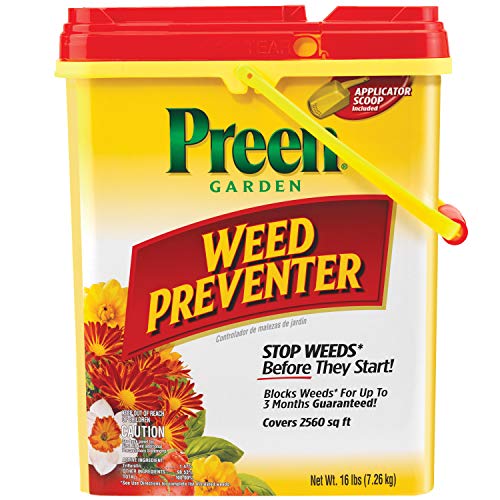
Preen Garden Weed Preventer
Stopping weed seeds from germinating, rather than killing existing growth, is this pre emergent granule’s function. That makes it the right choice for a bed just cleared and mulched. Weed free soil is required before application, followed by watering in. Desirable seeds fail to germinate too, so keep it away from areas you intend to sow.
Pros
- Cuts weeding through the growing season
- Safe around many established ornamentals per label
- Granules spread evenly by hand or spreader
Cons
- Does nothing to existing weeds
- Cannot be used where seed will be sown
How they compare
| # | Model | Action | Best for | Score | Price |
|---|---|---|---|---|---|
| 1 | Roundup Weed and Grass Killer III Ready-To-Use | Non selective, systemic | Best overall | 9.4 | Check price |
| 2 | Spectracide Weed and Grass Killer Concentrate | Non selective | Best value | 9.2 | Check price |
| 3 | BioAdvanced All-in-One Lawn Weed and Crabgrass Killer | Selective for lawns | Best for lawns | 9.0 | Check price |
| 4 | Ortho GroundClear Weed and Grass Killer | Non selective with residual activity | Best for long term control | 8.8 | Check price |
| 5 | Compare-N-Save Concentrate Grass and Weed Killer | Non selective, systemic | Best for large areas | 8.6 | Check price |
| 6 | Green Gobbler 20 Percent Vinegar Weed Killer | 20 percent acetic acid | Best non synthetic option | 8.3 | Check price |
| 7 | Preen Garden Weed Preventer | Pre emergent seed blocker | Best for garden beds | 8.0 | Check price |
What to look for
Selective or non selective: which do you need? Non selective products kill anything green they touch. That trait suits a driveway, gravel path or land clearing project. Lawns need selective products instead, since these target broadleaf weeds while turf survives. Spraying a non selective product on grass is the most common, most regretted mistake here. Dead patches from that error take a season to fill back in.
Contact, systemic or pre emergent: how each one works Contact killers burn off foliage fast and look impressive right away. Anything with a deep root, though, regrows within weeks. Systemic products get absorbed and carried into the root, taking longer to show results but controlling perennials like bindweed and dandelion for good. Pre emergent products stop seeds from germinating and do nothing for plants already established. Matching the action to the weed type saves repeated spraying.
Timing, weather and rainfast windows Actively growing weeds in mild, dry, calm conditions respond best to most weed killers. Rainfast time appears on the label, and rain shortly after spraying can wash a product off before it absorbs. Wind carries drift onto plants you value, while very hot sun can scorch foliage before a systemic product moves through the plant. Early morning on a still day is usually the best window.
Safety, storage and the product label Legally binding instructions for how a product may be used appear on its label, including protective equipment, mixing rates and any wait before children and pets return. Gloves and eye protection matter during application. Keep concentrates in their original containers, well out of reach, and never mix products together. Near a pond or watercourse, check the label for aquatic restrictions before spraying anything.
Good to know
What is the difference between selective and non selective weed killer?
Selective products target certain plants, usually broadleaf weeds, while leaving turf grasses unharmed. Non selective products kill any plant they touch. Lawns need a selective formula, but hard surfaces and cleared ground can take a non selective one.
How long before it rains can I spray weed killer?
Every label states a rainfast period, commonly thirty minutes to several hours. Spraying before rain within that window wastes the application. Check the forecast alongside the label rather than guessing.
Does weed killer stop you from planting in that area later?
It depends on whether the product carries residual soil activity. Many systemic sprays break down, allowing planting after a short interval stated on the label. Extended control products, by contrast, keep soil clear for months. Read the replanting interval before treating any bed.
Is vinegar based weed killer safer than synthetic herbicide?
No synthetic herbicide residue is left behind, which appeals to many gardeners. Horticultural strength acetic acid is still corrosive, though, and needs gloves and eye protection. It also only burns off top growth, so perennial weeds return and need repeat treatment.
When can children and pets go back into a treated yard?
Labels specify this, and for most products it is once the treated area dries completely. Granular products usually need watering in and drying before re entry. Follow the specific product instructions rather than a general rule.
Why do weeds keep coming back after spraying?
A contact killer often removes foliage but leaves the root intact. New seeds can also germinate in the cleared space afterward. Systemic products handle established roots, and a pre emergent applied later reduces the flush of new seedlings.
Can you use weed killer on a gravel driveway?
Yes, and a non selective product with residual activity is the usual choice, since gravel has no plants worth saving. Runoff toward beds or a lawn deserves care, because it carries the product along with it.
Do you need a sprayer, or is ready to use enough?
Ready to use bottles work well for spot treatment and small areas, with accurate, no mix application. Concentrates paired with a tank sprayer cost far less per treated area, which suits large drives, fence lines or plot clearance. Careful measuring still matters either way.
Weed killer vs weed preventer: what is the real difference?
Weed killer removes plants already growing, using contact or systemic action. Weed preventer, a pre emergent product, stops seeds from germinating in the first place. Bare, cleared soil calls for a preventer, while visible weeds call for a killer.
Final word
For paving, gravel and ground under clearance, Roundup Weed and Grass Killer III handles deep rooted weeds without regrowth, and Spectracide Weed and Grass Killer Concentrate does the same job more cheaply with a sprayer on hand. Lawns call for the selective BioAdvanced All-in-One Lawn Weed and Crabgrass Killer instead. Whichever you pick, follow the product label exactly, since it governs both safety and effectiveness.
Sierra Daniels
Sierra's background is in landscape design and nursery retail. She focuses on lawn and garden equipment, outdoor furniture and gear durability, weighing published specs against how materials actually hold up outside.
You might also need
Gas vs Electric Lawn Mowers: Which Fits Your Yard

Which Compost Bin Fits Your Kitchen or Backyard Setup?

9 Gazebos Worth Considering for Your Backyard
