Ergonomic Office Chairs Compared for All Day Comfort
Herman Miller Aeron remains the reference for adjustment range and long term durability, while Steelcase Series 1 offers most of the same support at a friendlier price. Sihoo Doro C300 stands out among newer arrivals for adjustable lumbar without a designer price tag.
Herman Miller Aeron is our overall pick, Steelcase Series 1 offers the better value for most home offices, and Sihoo Doro C300 stands out among the newer, more affordable ergonomic chairs.
Nearly every office chair sold gets labeled ergonomic, which makes the word almost useless on its own. What actually matters is whether a chair adjusts to your body across seat height, seat depth, lumbar position and armrests. We compared published adjustment ranges, materials and warranty terms against what owners report about long sitting sessions and how the mechanisms hold up after years of use.
Our top picks

Herman Miller Aeron
A suspension mesh seat pairs with a posture fit back support that adjusts the sacral and lumbar regions independently. Three shell sizes replace the usual one size frame, which explains why it fits so many body types well. A long warranty and available spare parts make this a chair you repair rather than replace.
Pros
- Three sizes rather than one universal frame
- Mesh stays cool through long days
- Repairable with available spare parts
Cons
- Highest price of any chair here
- Firm mesh seat is divisive for some sitters

Steelcase Series 1
A contract grade back flexes as you move, four way armrests adjust to match arm length, and a weight activated recline needs no tension dial to set up. Build quality reads as clearly commercial, and it survives shared or heavy use well. Owners report the seat cushion strikes a good middle ground between firm and plush.
Pros
- Commercial build quality
- Recline adapts without fiddling
- Good balance of cushion firmness
Cons
- Lumbar support is less adjustable than the Aeron
- Fabric options can be limited in stock

Sihoo Doro C300
A dynamic lumbar system tracks spine movement, and the mesh back offers an unusually wide adjustment range for its price bracket. Armrests move in multiple directions and the headrest tilts, a rare combination below premium prices. Assembly stays straightforward with the included tools.
Pros
- Wide adjustment range for the price
- Lumbar tracks spine movement
- Adjustable headrest included
Cons
- Shorter warranty than contract chairs
- Mesh seat edge can feel firm

HON Ignition 2.0
Adjustable lumbar height, seat depth and four way arms come at a price closer to consumer chairs than contract furniture usually allows. It is a common fixture in offices, which says something about how well it holds up to daily use. Styling stays plain, and that is rather the point.
Pros
- Seat depth adjustment at a modest price
- Proven durability in office use
- Simple, reliable controls
Cons
- Plain office styling
- Foam seat can flatten over years

Branch Ergonomic Chair
Seven points of adjustment come wrapped in a look built for a home rather than a cubicle. Muted colors and a frame that avoids the aggressive gamer aesthetic set it apart visually. Owners report assembly takes about fifteen minutes with clear instructions.
Pros
- Looks right in a living space
- Genuinely useful adjustment set
- Quick, clear assembly
Cons
- Lumbar range is narrower than premium chairs
- Seat suits mid height users best
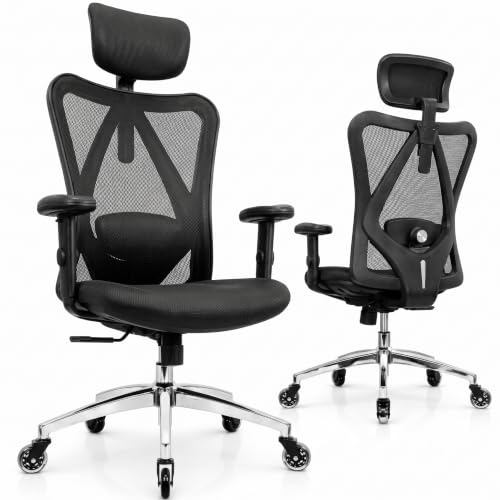
Duramont Ergonomic Adjustable Office Chair
A high back and deep seat suit taller sitters who feel perched on standard chairs, and an adjustable headrest plus lumbar dial fine tune the fit further. Recline locks at several angles for reading or calls. Assembly runs more involved than average, but the parts fit well together.
Pros
- Suits taller sitters
- Headrest and lumbar both adjust
- Solid recline lock positions
Cons
- Assembly takes longer than rivals
- Armrests adjust in fewer directions

Hbada E3 Ergonomic Office Chair
Flip up armrests, adjustable lumbar and a footrest on some versions aim this affordable mesh chair at part time desk use. Most of the basics show up here without the refinement of contract chairs. Shorter sessions suit it better than eight hour days.
Pros
- Very affordable ergonomic basics
- Flip up arms tuck under a desk
- Light and easy to move
Cons
- Padding is thinner than premium chairs
- Less adjustment range overall
How to pick the right one
What to look for before comparing anything else A chair fits you when it adjusts to your leg length, torso height and desk height, not when a listing calls it ergonomic. Prioritize seat height, seat depth, lumbar height and armrest position over cushion claims. A listing that skips its adjustment ranges usually means they are narrow.
Getting the lumbar support in the right place Lumbar support only works when the curve sits in the small of your back, which is why height adjustable lumbar matters more than padding thickness. Fixed lumbar bumps help some people and dig into others. Adjustable depth lets you dial pressure down to something you stop noticing.
Best chairs for tall or short users Seat depth needs two to three finger widths between the front edge and the back of your knees. Too deep a seat pushes you forward and away from the backrest, undoing the lumbar support entirely. Taller users should look at deep seat, high back options, while shorter users need seat depth adjustment more than height range.
Mesh versus foam for long sitting sessions Mesh backs breathe better and suit warm rooms, while foam seats feel plusher at first and can compress over years. Suspension mesh seats such as the Aeron distribute weight evenly but feel firm to people used to padding. Neither wins on ergonomics alone, so temperature and personal preference should decide.
Compared at a glance
| # | Model | Sizes | Best for | Score | Price |
|---|---|---|---|---|---|
| 1 | Herman Miller Aeron | Three shell sizes | Best overall | 9.4 | Check price |
| 2 | Steelcase Series 1 | LiveBack flexing back | Best value premium chair | 9.2 | Check price |
| 3 | Sihoo Doro C300 | Dynamic adjustable lumbar | Best mid range pick | 9.0 | Check price |
| 4 | HON Ignition 2.0 | Height adjustable lumbar | Best for adjustability on a budget | 8.8 | Check price |
| 5 | Branch Ergonomic Chair | Seven points | Best for home offices | 8.6 | Check price |
| 6 | Duramont Ergonomic Adjustable Office Chair | High back with headrest | Best for tall users | 8.3 | Check price |
| 7 | Hbada E3 Ergonomic Office Chair | Mesh with lumbar support | Best budget | 8.0 | Check price |
Common questions
What actually makes a chair ergonomic?
Adjustability to your body, chiefly seat height, seat depth, lumbar position and armrest placement. A chair that fits one body shape and cannot adjust is not ergonomic for everyone.
Is an expensive office chair worth it?
For full time desk work, higher end chairs offer wider adjustment, better materials and long warranties with spare parts. Occasional use is covered well enough by a mid range chair with adjustable lumbar.
Do I need a headrest on an office chair?
Only if you recline regularly for calls or reading. Sitting upright at a desk, a headrest often pushes the neck forward rather than helping.
Mesh or fabric seat, which is better?
Mesh runs cooler and suits warm rooms, while fabric over foam feels softer at first. Suspension mesh spreads weight evenly but feels firm to some sitters.
How should armrests be set on an ergonomic chair?
Low enough that your shoulders stay relaxed and positioned so your forearms rest lightly while typing. Armrests that force your shoulders up cause more problems than they solve.
What if the chair seat is too deep for me?
Look for seat depth adjustment or a sliding seat pan. Without it, shorter users end up perched away from the lumbar support, which defeats the purpose.
How long do good ergonomic chairs last?
Contract grade chairs from established makers commonly carry warranties of a decade or more, and owners report long service when parts stay available. Budget chairs typically show gas lift or foam wear much sooner.
Does a standing desk remove the need for a good chair?
No, since most people alternate between sitting and standing. The chair still carries the majority of the working day for most desk workers.
Herman Miller Aeron vs Steelcase Series 1, which should I buy?
The Aeron offers three shell sizes and deeper lumbar adjustment, which suits a wider range of bodies. Series 1 costs less and still delivers commercial grade durability, making it the better pick when the Aeron’s price is out of reach.
Our take
If you sit at a desk full time and can stretch to it, Herman Miller Aeron is still the chair to beat, mostly because it comes in three sizes and can be repaired rather than replaced. Steelcase Series 1 gets you commercial quality for less, while Sihoo Doro C300 and HON Ignition 2.0 deliver real adjustability at mid range prices. Skip anything that will not publish its adjustment ranges.
Marcus Chen
Marcus covered consumer electronics for enthusiast tech publications for six years before joining ChoiceCrest. He specializes in translating manufacturer spec sheets into plain-language buying advice, with a focus on audio, computing accessories and smart-home gear.